Antseed launches peer-to-peer marketplace for AI inference
Antseed's live network routes AI inference requests directly to independent providers and settles usage in USDC, with documented limits on privacy and provider verification.
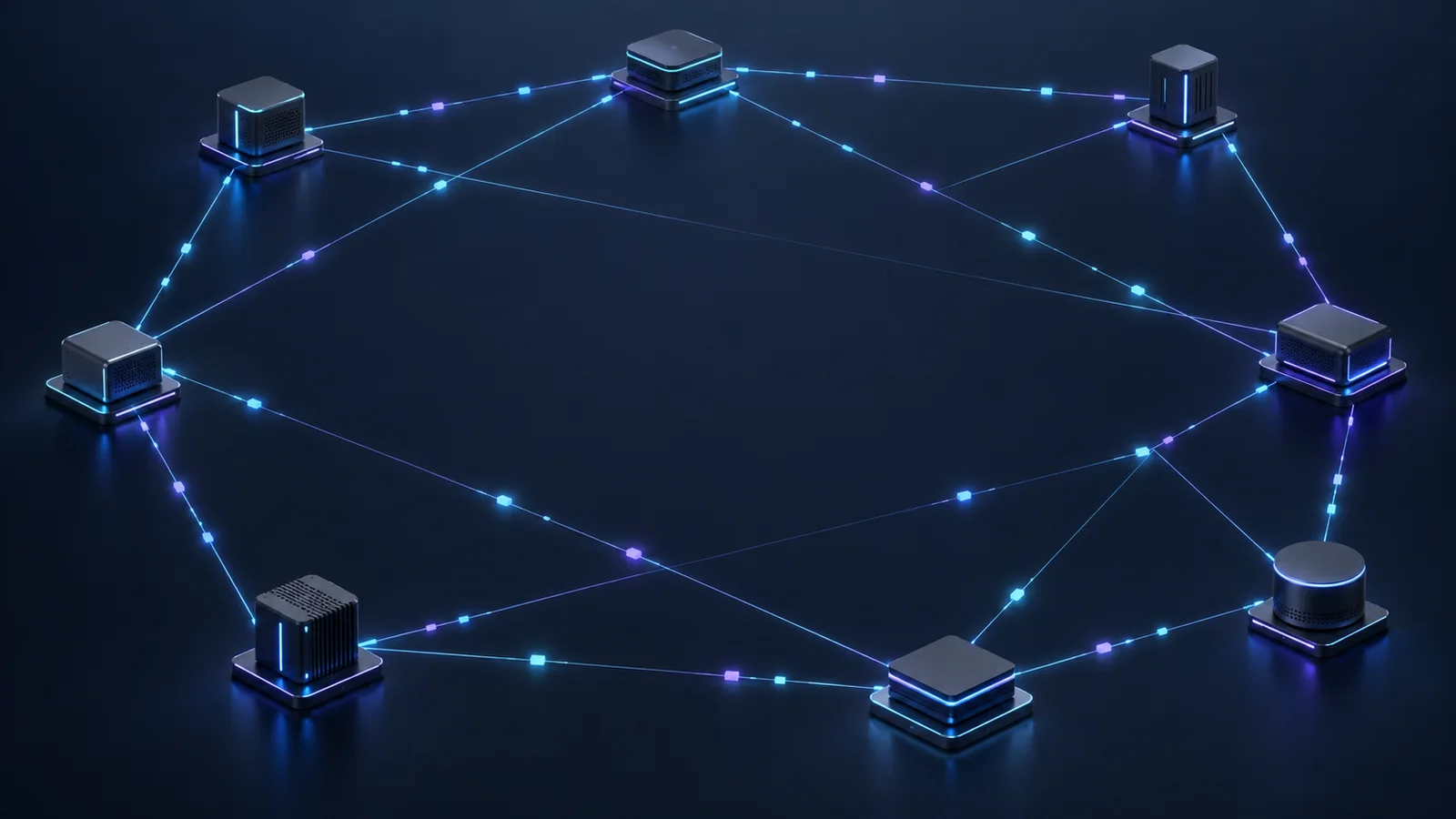
Antseed has launched a peer-to-peer marketplace that lets buyers route AI inference requests directly to independent providers and settle paid usage in USDC on Base. The company says the live network removes the central inference gateway used by conventional API aggregators.
Buyers run Antseed’s local proxy to discover providers, select a route and forward requests over encrypted peer-to-peer connections, according to the company. Providers return model output directly to buyers. Usage is metered per request, and payment sessions are settled between the parties. Antseed’s public repositories contain the node, routing and provider software associated with that design.
Independent providers advertise their own input and output token prices. Antseed says its automatic routing ranks eligible offers using price and trust factors; buyers can also set price ceilings or select a specific provider. Those advertised rates come from providers, not a central Antseed gateway.
That peer-to-peer path does not make every request private. Antseed says buyers need no central account or email and that peer traffic is encrypted. However, its privacy documentation says a standard provider can read prompts. Providers and supporting infrastructure may retain logs, while USDC settlements remain visible on a public blockchain.
Antseed’s provider checks are narrower than a universal guarantee about the model in use. Its technical post on verification says the implemented ResponseAuth layer can link response bytes to a seller, but it cannot prove which model produced them. The company describes model-fingerprint verifier suites as a later layer.
The documentation also sends conflicting signals about trusted execution environment checks. Antseed’s privacy material and FAQ describe local attestation and strict routing that can reject providers. The FAQ also says TEE provider verification is planned for a future release, leaving the current network-wide availability of TEE-verified service unclear.
Availability depends on which independent providers are online. Antseed describes the network as model-agnostic and says routes specifying only a model can fail over after retryable errors. Requests pinned to a particular provider do not switch automatically. The opened sources do not establish a stable inventory of available models or providers, and public offers do not independently verify service quality.
Alongside the network update, the Antseed Foundation announced a $2.4 million token round led by Spark Capital. Participants included Collider, DCG, North Island Ventures, Reciprocal Ventures, Relayer Capital and Venice.ai.
More news

Iterate.ai launches Lifeboat inference engine for private AI agents

Meta sets 2027 deployments for MTIA 450 and MTIA 500 chips

AMD and Cerebras partner on disaggregated AI inference, claiming 5x efficiency gain