CMU researchers give everyday objects expressive OATs avatars
OATs, a Carnegie Mellon research prototype, turns live readings from sensor-equipped everyday objects into expressive avatar cues instead of raw measurements.
Carnegie Mellon University researchers Daehwa Kim and Chris Harrison presented Object-Agent Twins, or OATs, at UIST 2026 as a prototype toolkit for giving sensor-equipped everyday objects simple character-like states. Instead of showing only raw measurements, the system converts live readings into visible cues.
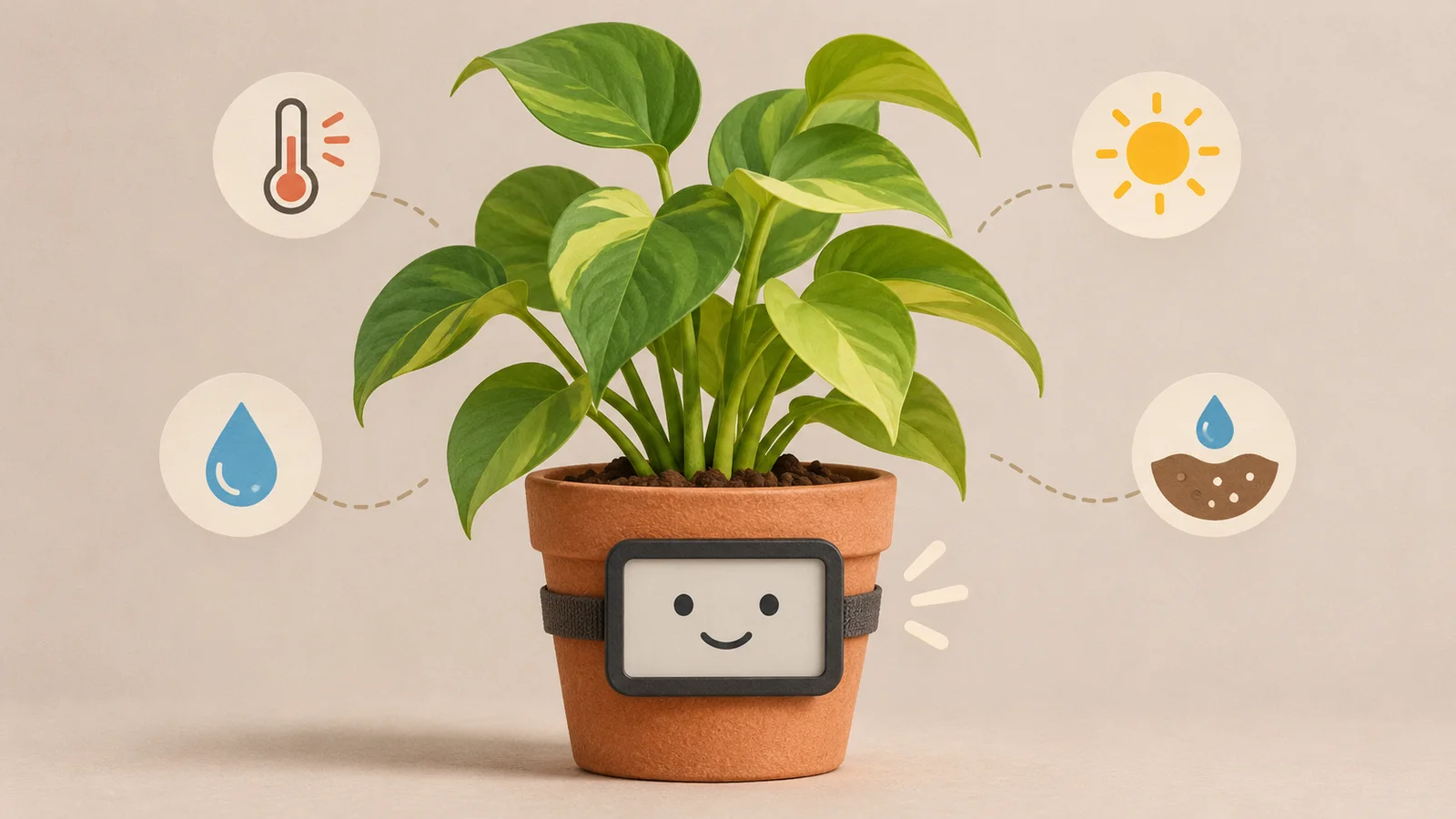
OATs maps temperature, humidity, light, motion, occupancy and soil-moisture data to an avatar’s needs, moods and behaviors. The researchers designed the cues to make changes in an object’s condition easier to notice and interpret.
In the documented browser-based setup flow, a user names and describes the host object, selects its sensors, and reviews generated positive and negative behaviors. The system prepares emotion assets, then restarts the device with its new character.
Demonstrations placed OATs on a plant, an office refrigerator and a space heater. The plant character can reflect water, temperature, humidity and light conditions. The refrigerator example uses motion data, while the heater combines temperature and occupancy sensing.
The prototype supports internal air-temperature and humidity sensing, plus external motion, water-or-soil, light-intensity and occupancy sensors. An OAT updates when its environment changes or once per hour. A web status page explains its current state.
Public pages maintained by Harrison and Kim list paper and demo honorable-mention recognition for the UIST presentation.
The official materials call OATs a toolkit and a first prototype, not a consumer product release. They list no retail price, availability date or manufacturing plan. According to the project page, the first prototype runs for about three to four days without the sound-level sensor and roughly one day when that sensor is active.
More news

Cohere adds third-party open models to Model Vault

Octen expands agent search with Pulse and a $20 plan

World Labs releases Frameboy preview for real-time Atlas exploration