Epsilon deploys Nova Act for multi-tenant UI testing
Epsilon is running a managed UI-testing service that combines Amazon Nova Act with isolated AgentCore Browser sessions, cross-account roles and centralized result capture, according to an AWS case study coauthored with Epsilon staff.
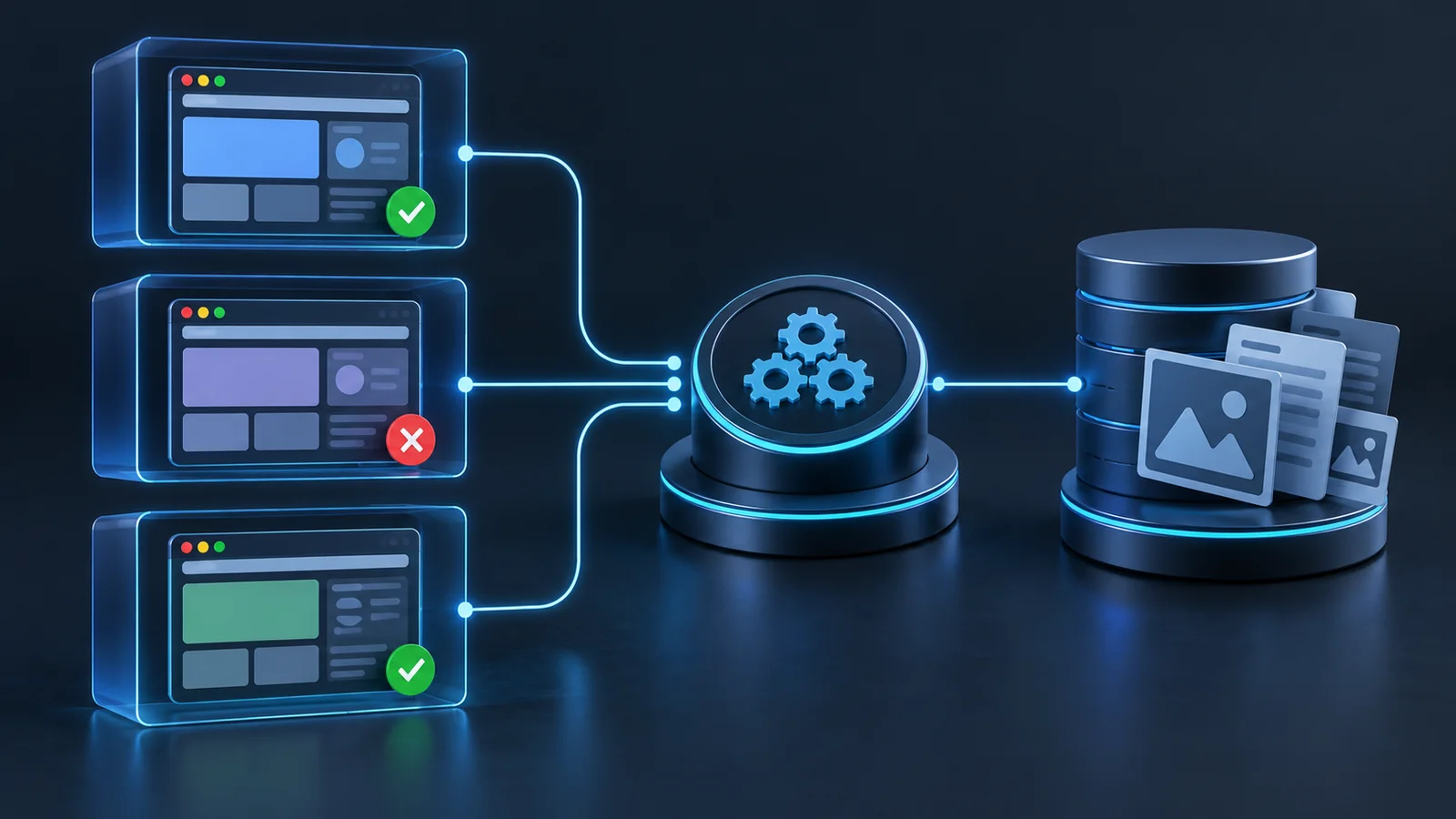
Epsilon has put an intent-driven UI-testing service into production across multiple internal product teams, according to an AWS case study coauthored with Epsilon staff. The deployment gives those teams a centrally managed way to create and run natural-language browser tests while retaining Epsilon’s selector-based Playwright suite as the regression backbone.
Users submit a target URL and natural-language test steps through Epsilon’s platform API. The system registers a Nova Act workflow definition, while authenticated requests pass through Amazon API Gateway to a Django REST API. Jobs move through Amazon SQS to a runner on Amazon ECS. The architecture stores results, screenshots, trajectories and HTML reports in Amazon S3.
The multi-tenant design provisions a scoped cross-account AWS Identity and Access Management role for each onboarded product team. Epsilon registers the team’s target application URLs and grants access through the existing platform API, allowing tests to run under the team’s role in its own AWS account. The case study does not disclose the role or trust policies, tenant count, threat model or results of an independent security review.
A Celery background worker opens an AgentCore Browser session for each execution and sends workflow steps to Nova Act over a Chrome DevTools Protocol WebSocket. Steps can include conditional instructions, such as dismissing an onboarding tour only if it appears. The service captures a screenshot and pass-or-fail state for each step, calculates an overall pass rate, stores result JSON and the browser session ID, and invokes a completion hook to write the result back to Epsilon’s platform.
AWS documentation for AgentCore Browser says sessions are time-bounded, can run concurrently with separate state and execute in dedicated microVMs with isolated CPU, memory and filesystem resources. AWS says each microVM is terminated and its memory sanitized when the session ends. The service also supports live viewing, while recording-enabled sessions can save browser interactions to a configured S3 bucket for replay and analysis.
Epsilon isolates Nova Act and AgentCore Browser dependencies in a dedicated FastAPI runner sidecar that pins Nova Act 3.x, with an in-process fallback when the runner is disabled. The company exposes the capability as a UI-test agent with one skill for interactively recording natural-language steps and another for executing those steps and returning structured results.
AWS and Epsilon said an internal benchmark found that a representative 18-step Nova Act workflow took about 5–10 minutes to author, compared with about 30–90 minutes and roughly 80–150 lines for an equivalent Playwright script. They characterized the result as 4–6 times faster authoring. They also said saved trajectories reached a 100% pass rate across repeated replays after an initial exploration phase that typically took four or five prompt iterations. The post did not disclose the benchmark sample size, number of replay runs, applications tested, evaluation window, failure distribution or statistical method.
More news

Project ProtoStar launches to make public science AI-ready

Sandisk posts $11 billion quarter as data-center revenue jumps 61%

Alphabet says lower AI Mode monetization weighed on Search growth