Google opens Antigravity teamwork tools to external researchers
Google has opened Gemini 4-powered Antigravity /teamwork and /boost tools to outside scientists and developers, though some specialized workflows are still to come.

Google Research said external scientists and developers can now use Gemini 4 models with Antigravity’s /teamwork and /boost tools, along with Deep Review, for long-running research and engineering work.
The company also opened applications for 10,000 academic researchers to receive six months of free access to its highest usage tier. The reviewed sources do not specify rollout geography or model access by plan, while the current /teamwork documentation lists the command as available on paid Antigravity App and CLI plans.
Rather than rely on one continuous model session, /teamwork divides work among specialized agents. Google says it gives those agents task-specific files and tools, allows coordinators to hand work to fresh successors, and has critics and auditors review results from clean contexts. The system can explore several candidate approaches in parallel, then test them with objective checks such as Lean 4, unchanged software tests, simulators and hardware counters.
Google describes Teamwork patterns as task blueprints that are separate from the underlying orchestration code. The framework selects a pattern for a prompt and can adjust the number and structure of agents as a run proceeds. An earlier Antigravity explanation said those patterns include distributed coding, iterative coding, long proof, self-verification and document review. /boost packages the iterative coding approach into a sequential solve-and-verify loop for tightly coupled work.
Google presented internal and academic projects as evidence for the design. The company said researchers from Google, CUHK, USC and CMU used a Long Proof workflow to prove the Courtade-Kumar conjecture. The linked arXiv paper describes a computer-assisted proof and says the full proof, including numerical certificates, was formally verified in Lean. Google also reported results in chemistry, distributed systems, code migration, kernel optimization and its own infrastructure, but the reviewed evidence did not independently reproduce those broader performance and production-impact claims.
Google said researchers set the questions, constraints and acceptance conditions while agents explore, implement and check candidate work. It also said the formal-proof pattern and additional specialized workflows will arrive in later Antigravity updates, meaning the external release does not yet include every workflow described in the research post.
More news

Google begins global Gemini rollout on Apple CarPlay
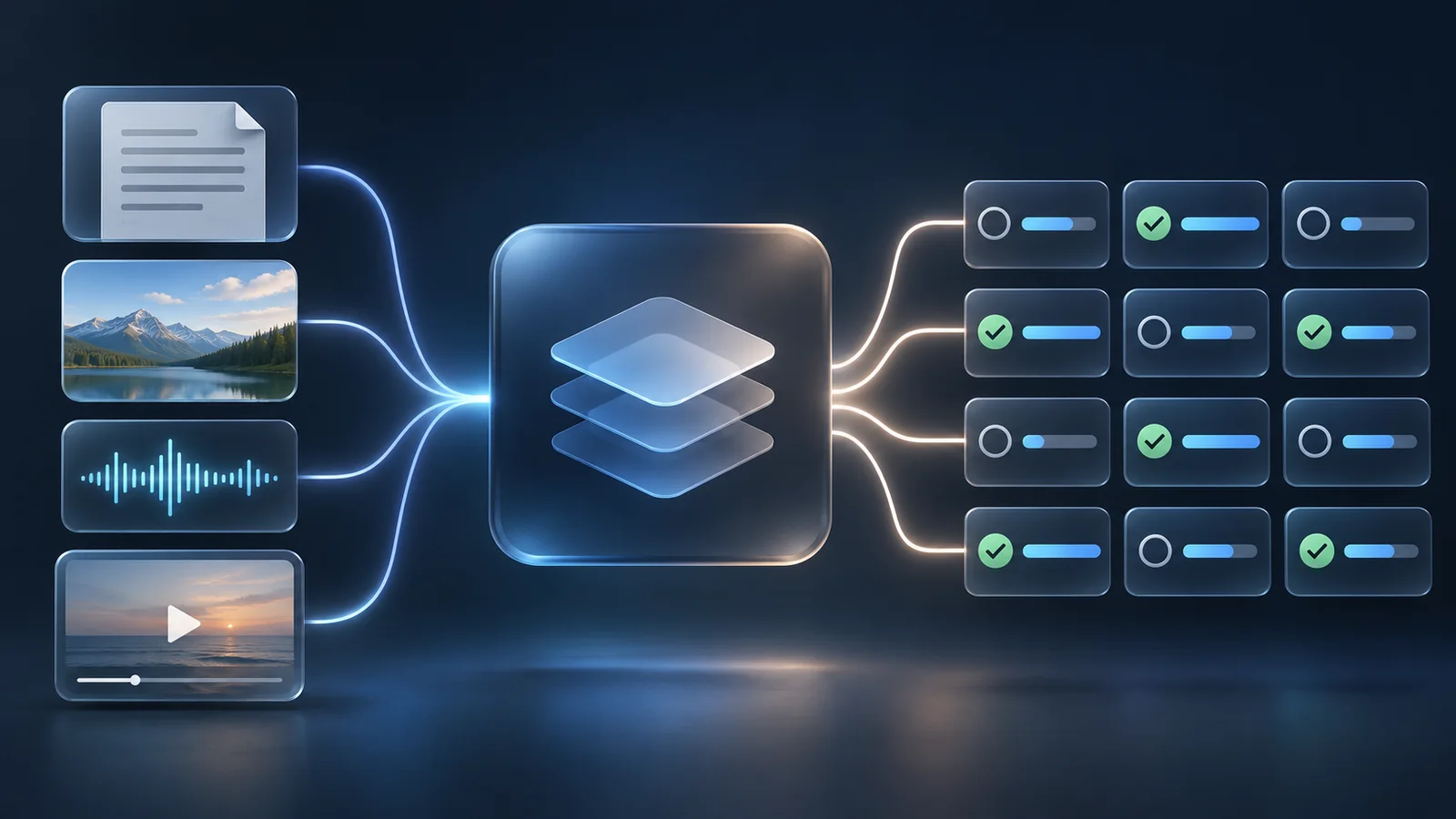
Google launches Gemini Decisions API for closed-set evaluations

Google rolls out Gemini 4 Hydrogen across AI products