Inception releases Mercury 3 diffusion language model
Inception released Mercury 3 through its API and three partner platforms, with a one-million-token context window. The company's speed and comparative-quality figures remain unverified.

Inception released Mercury 3, making its diffusion-based language model available through its own API, OpenRouter, Baseten and Vercel AI Gateway. The model is aimed at latency-sensitive applications and has a published context window of one million tokens.
In its API quick-start documentation, Inception identifies the model as mercury-3 and shows an OpenAI-compatible client connecting to a chat-completions endpoint. OpenRouter, Baseten and Vercel each listed access to Mercury 3 when checked.
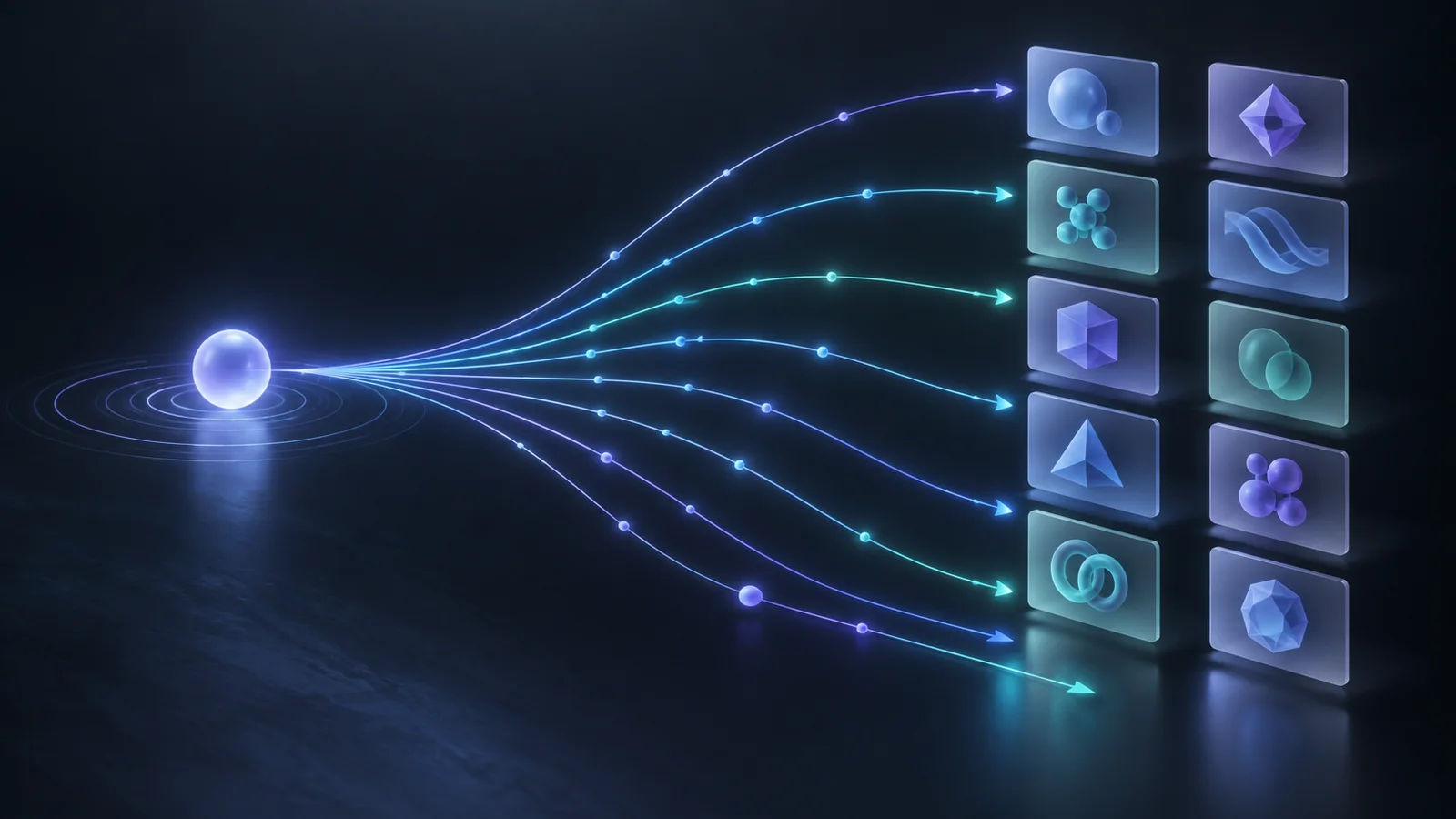
Mercury changes the usual text-generation sequence. Conventional autoregressive language models produce tokens one after another. Inception’s Transformer-based diffusion approach instead predicts and repeatedly refines multiple tokens in parallel. The company’s earlier Mercury research paper describes that mechanism for Mercury Coder models; Inception and Vercel say Mercury 3 also uses parallel refinement.
Standard pricing is $0.20 per million input tokens and $0.70 per million output tokens, according to Inception. Promotional launch rates are $0.10 and $0.35, respectively, while cached input costs $0.01 per million tokens. The company has not said when the discount will end.
The headline performance figures have not been independently verified. Inception claims Mercury 3 generates as many as 1,068 tokens per second on NVIDIA GPUs and runs four to eight times faster than GPT-6 Luna and Claude Haiku 5.5. The company also says Mercury 3 won eight of 12 benchmark comparisons against those models.
The material Inception published does not identify the exact GPU, batch size or decoding settings, nor does it provide a reproducible test harness for the 1,068-token-per-second figure. The sources reviewed did not include an independently reproduced result for that throughput figure or a comparable evaluation of the full benchmark suite.
OpenRouter’s public model page lists tool calling, structured outputs and a maximum completion length of 131,072 tokens. Its live dashboard also shows provider throughput and latency, but those values fluctuate and use conditions that are not specified well enough for a direct comparison with Inception’s claim.
Inception says Mercury 3 is more than 40 times larger than Mercury 1 while retaining comparable speed, but it has not disclosed Mercury 3’s parameter count. The company also attributes favorable latency and quality results to early users in tutoring, search, web agents and customer support; those customer results have not been independently audited.
More news
Apple study finds independent token sampling can distort distributions

MBZUAI and Khalifa University researchers introduce FaceGuardian for identity-safe image editing

Google Research introduces Diffusion Controller to steer image generation