Latent Labs' new model assists protein binder design through a no-code web interface
Latent Labs has made its new frontier model for binding generation, Latent-X, available through a no-code web platform. With Latent-X, Latent Labs aims to accelerate the costly drug design process by drastically shortening the time needed to identify potential binders for novel proteins.
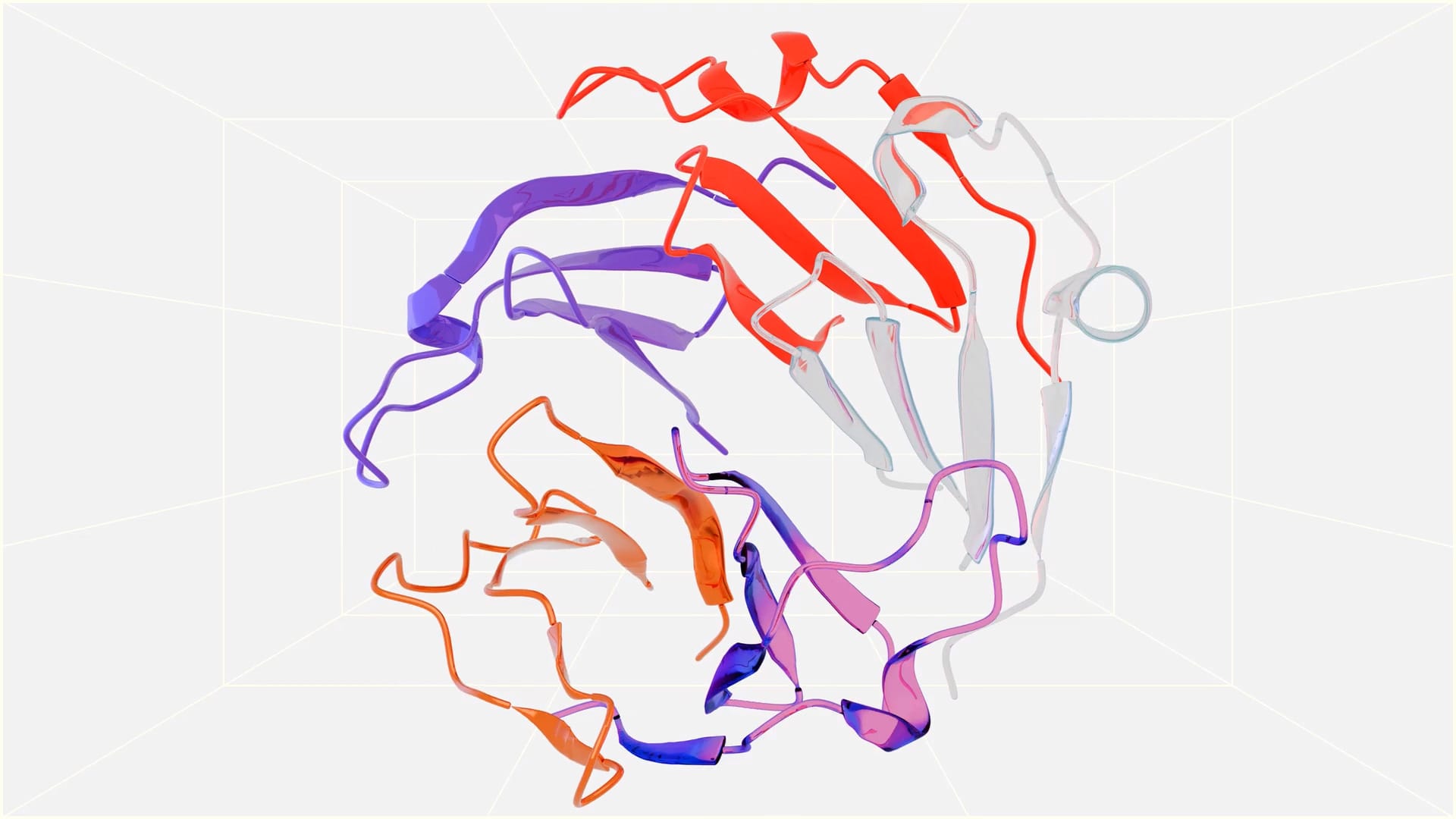
London-based Latent Labs has launched Latent-X, a breakthrough generative AI model that enables scientists to design protein binders for unseen or untargeted proteins with the push of a button. The Latent-X is available for early access through the company's no-code web platform, which includes a free offering for commercial and non-commercial usage.
Latent Labs' no-code platform allows users to upload protein targets and generate cyclic peptides and mini-binders directly in their browser. In addition to its generation capabilities, users can visualize and rank structures before performing lab testing. Binder generation takes seconds, making this approach over 10x faster than previous methods.
Latent-X addresses the costly inefficiencies of traditional drug discovery, where the standard procedure consisting of screening millions of random molecules typically yields hit rates below 1%. This is a stark contrast with wet lab experiments for seven therapeutic targets, where the model achieved remarkable 91-100% hit rates for macrocycles and 10-64% for mini-binders. Overall, Latent Labs claims that its model can be used to reduce the number of candidates to test from millions to as little as 30.
Founded by former AlphaFold 2 co-developers and ex-DeepMind team leads, Latent Labs raised $50 million just five months ago from investors including Radical Ventures and notable AI leaders like Google's Jeff Dean and Anthropic's Dario Amodei. The company envisions a future where effective therapeutics can be designed entirely computationally, similar to how space missions and semiconductors are developed today.
Ellie Ramirez-Camara is the News Editor at Data Phoenix, where she writes the daily AI newsdesk — covering model releases, research, funding rounds, and policy across the AI and machine-learning industry. She tracks announcements from labs and startups alike and distills them into clear, source-linked reporting for practitioners.
More news

Study: Some personal AI agents steer wealthier personas toward pricier options

Databricks adds Workday Data Connect federation to Unity Catalog

Google Cloud introduces a universal Gemini agent for enterprise work