Meta puts AI agents to work across ads-model rollouts
Meta says AI agents now execute most technique propagation across its ads-ranking models, while engineers retain final authority over what ships.
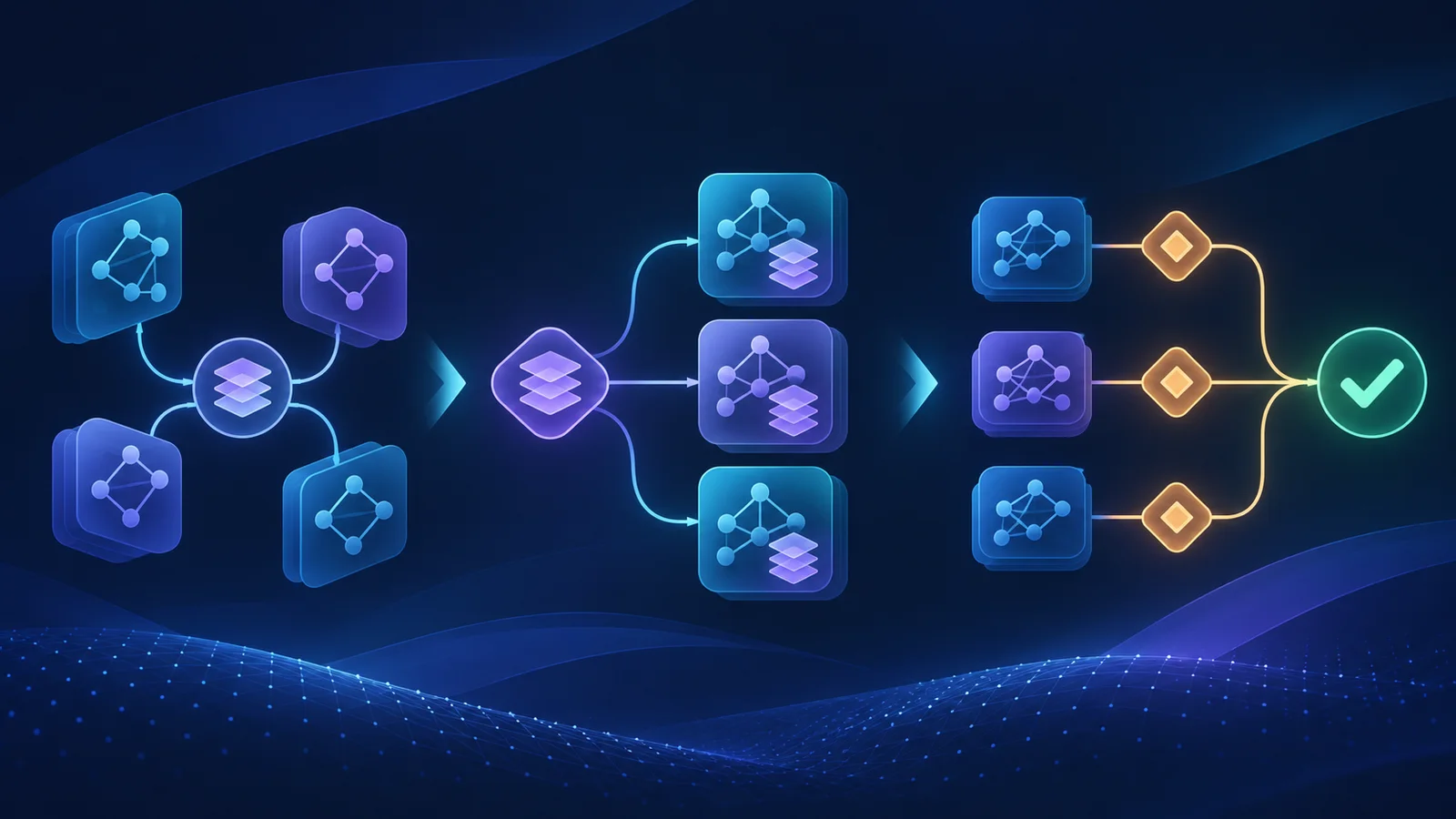
Meta has deployed AI agents across its ads-ranking model workflow, and the company says the agents have handled more than 60% of technique propagation since March 2026. The system automates much of the work involved in carrying a proven machine-learning improvement from one model to others. Engineers still review key decisions, set priorities and approve what ships.
The workflow runs in three stages: discovery, generalization and adoption. In discovery, agents search prior results, assess whether a technique could transfer to other models and rank technique-model pairings by expected impact. Engineers review those assessments before work proceeds. Meta says the system combines language-model reasoning with specialized machine-learning tools and a shared knowledge base containing training runs, model architectures and past technique outcomes.
Generalization turns a successful technique into something reusable. For models built from shared templates, agents test the technique on representative models and, once validated, incorporate it into the template. Meta’s template-driven model ecosystem can then carry the change to models based on that template. For its highest-revenue models, Meta says it still customizes each technique for each model. Agents learn from engineers’ initial adaptations and propose tests for the remaining models.
At the adoption stage, agents launch and monitor multi-day training runs, tune models, diagnose failures and propose targeted fixes or retries. Meta says they also assemble validated changes for review, rank concurrent jobs by revenue importance, technique potential and deadline proximity, and reclaim capacity from stalled or low-value runs.
According to Meta, agent-led changes face the same evaluation gates as work propagated by engineers. A candidate must improve offline predictive metrics without breaching training- or inference-cost guardrails. It must then record a statistically significant win in an online A/B test before it can ship. The company evaluates discovery by candidate precision and recall, tests generalization first on smaller models and then on representative full-size models, and tracks adoption through human-intervention counts and the share of issues agents resolve without help.
Meta reports that the workflow has tripled engineering productivity, defined as each engineer handling three times as many technique-model adaptations. The company also reports a median fourfold reduction in training compute across selected pairings and estimates more than $45 million in compute savings by the end of 2026. It did not publish the underlying workload counts, identify the selected pairings or disclose a methodology for the savings estimate. The figures have not been independently audited.
The agent layer builds on earlier automation. Meta says template-based standardization shipped more than 5,000 technique-model combinations over two years and reduced engineering time per model by 92%. In March, the company introduced its Ranking Engineer Agent, which generates hypotheses, starts training jobs, debugs failures and iterates through long-running ads-ranking experiments under human oversight.
Meta said it plans to make agent-driven workflows its primary propagation method. Its stated goal is to cut fleet-wide propagation time from more than a year to three months by increasing end-to-end throughput fivefold.
More news

Google Cloud adds agent skills to Cluster Toolkit for HPC workflows

Google starts free Gemini Task mode rollout in six markets

xAI deploys five Grok Bots across accounting workflows