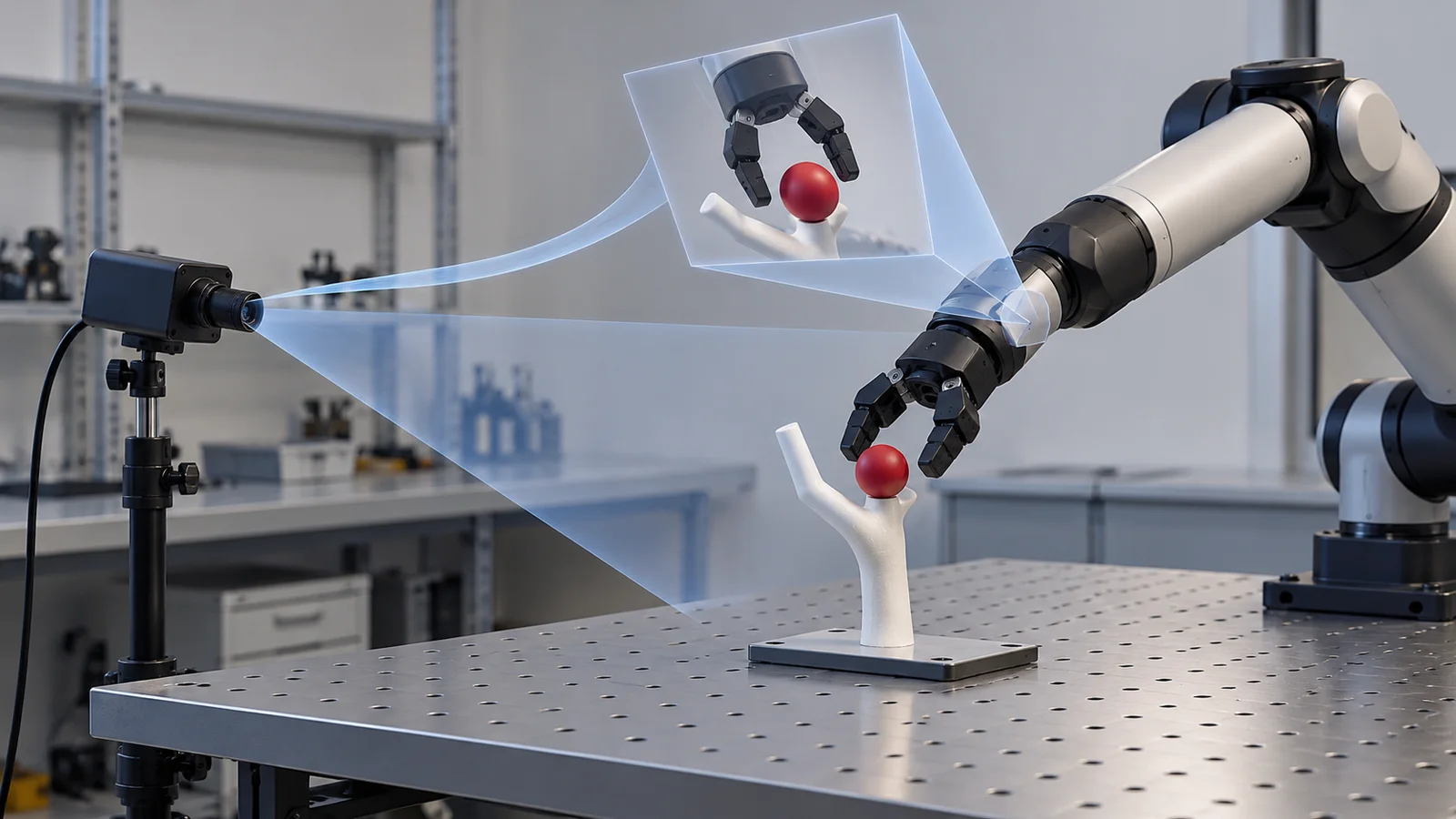
NVIDIA pairs GR00T 2 with Isaac Lab 3.0 for precise robot manipulation
At CoRL, NVIDIA paired GR00T 2 with an expanded simulation stack for training and evaluating robots on delicate tasks involving cables, liquids, small parts and dexterous hands.
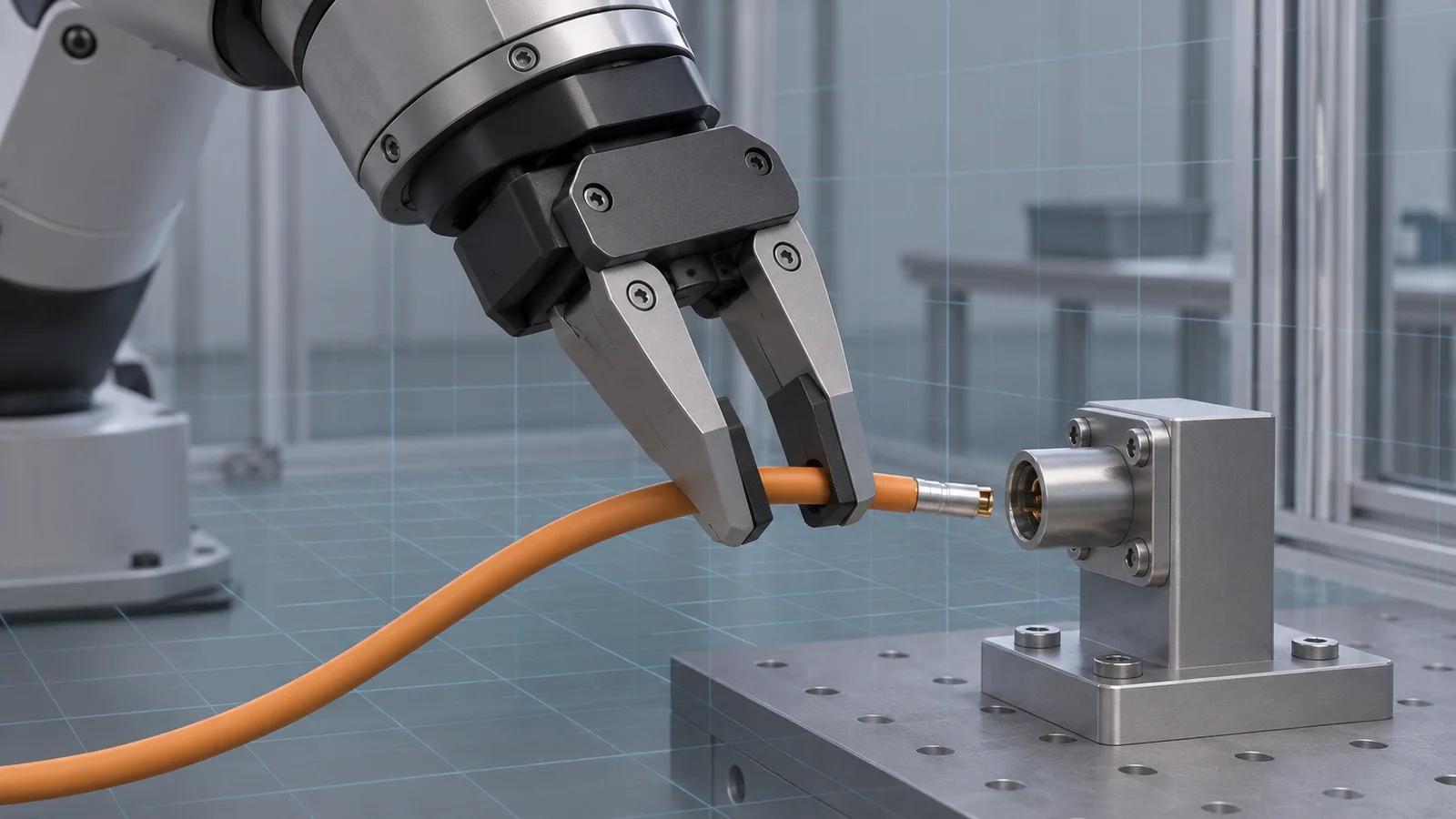
At the Conference on Robot Learning in Austin, NVIDIA introduced GR00T 2 and highlighted new simulation and evaluation tools. The package brings together a robot foundation model, Isaac Lab 3.0, benchmarks and research workflows for training and testing precise actions such as inserting cables, aligning gears and handling small parts.
Isaac Lab 3.0 broadens the simulation coverage. It provides a common task interface across physics, rendering and visualization backends, including Newton and PhysX paths, while allowing many workflows to run without the full Isaac Sim application. Newton-backed workflows support rigid bodies, deformable materials and particles, with examples including cable insertion and liquid pouring. NVIDIA highlighted the software at CoRL on Nov. 9, though version 3.0.0 had already become generally available on GitHub on Oct. 20.
NVIDIA said Isaac Lab 3.0 using Newton delivered up to 2.5 times the training throughput of Isaac Lab 2.3 using PhysX in a vision-based dexterous-manipulation benchmark. The supplied research did not include an independent replication of that company-reported comparison.
GR00T 2 is a world-action model that takes recent camera views, robot state and a natural-language instruction, then predicts future video and a sequence of robot actions. NVIDIA says its pretraining mix combines human egocentric video, handheld-gripper demonstrations and robot teleoperation data spanning parallel-gripper arms, dexterous hands and a humanoid.
In NVIDIA’s Dexter-50 evaluation, GR00T 2 averaged 40% task success without demonstrations from the target robot, 71% with one demonstration per task and 95% with five. The model completed 40 of 50 tasks at least once in the zero-shot setting. The results came from NVIDIA’s evaluation and were not independently replicated in the supplied research.
The research also puts GR00T 2 inside an observe-reason-act-verify loop. A reasoning agent calls the model through an application programming interface, sequences manipulation skills, checks execution and can invoke code-based recovery routines after stalls or dropped parts. NVIDIA’s announcement called GR00T 2 open, while the research page said code would be available in December. The supplied sources did not establish which checkpoint, license or public API terms were available on Nov. 9.
The evaluation layer includes Isaac Lab-Arena 0.4, which NVIDIA described as a developer preview for composing repeatable policy tests, running thousands of simulated variations in parallel and identifying conditions associated with failures. NVIDIA also said DexBench contains 15 tasks across retail, logistics, manufacturing and hospitality scenes.
Other CoRL projects focus on small parts and industrial workcells. AlphaNIST trains one policy across all 20 tasks on NIST Assembly Task Board #1, including parts as small as 4 millimeters. Its authors reported 98.2% training success for the shared policy, compared with 81.4% for separate specialist policies trained with binary rewards.
VABAR defines six industrial task classes: tool sorting, tool hanging, gear meshing, syringe packing, cable insertion and cable routing. It varies object geometry, pose and arrangement within a bounded workcell using controlled seeds and difficulty levels, allowing coding agents to revise policies after simulated execution feedback.
Graph-as-Policy turns a task prompt into a typed computation graph of reusable robot skills. Its multi-agent workflow rehearses the graph in simulation, uses contact and state feedback to locate failures, edits the graph and then deploys the same graph to a physical robot.
More news
NVIDIA says Skild AI’s S1 learns robot tasks from one video

NVIDIA and Elith release nine million synthetic Japanese finance personas
Google DeepMind rolls out Gemini Robotics 2.5 to partners