NVIDIA releases RFD4-Proteina, details healthcare AI collaborations
NVIDIA released the open RFD4-Proteina model and detailed healthcare collaborations spanning adaptive radiotherapy, scientific agents, drug discovery and hospital workflows, most of which remain in development.
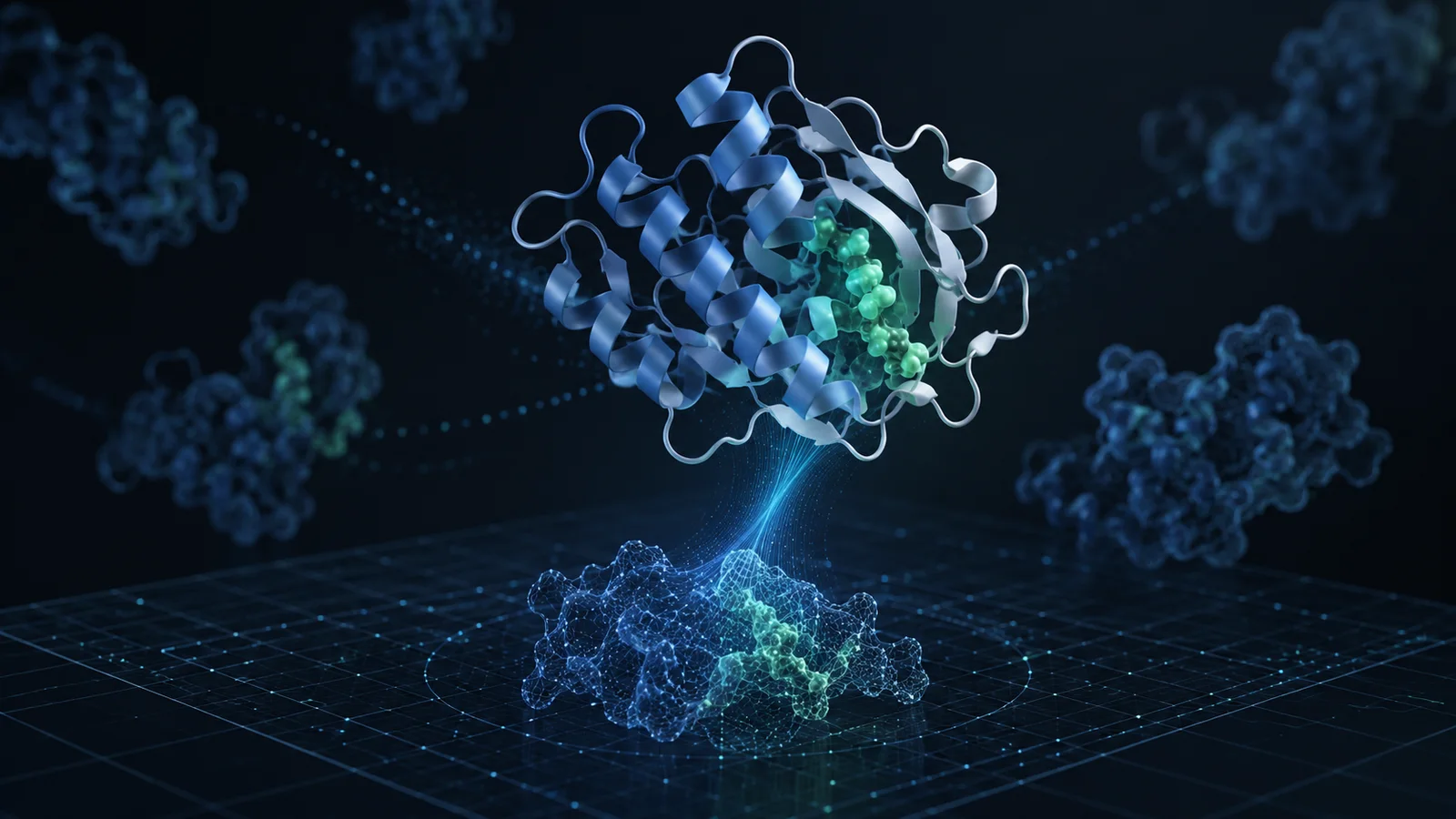
NVIDIA released an open protein-design model called RFD4-Proteina and announced healthcare and life-sciences collaborations covering adaptive radiotherapy, scientific agents, drug discovery and hospital operations. Researchers can download the model artifacts now, while many of the partner projects remain in development or preview rather than clinical deployment.
RFD4-Proteina was co-developed by NVIDIA GenAIR and the Baker Lab at the University of Washington’s Institute for Protein Design. The model jointly generates protein sequences and all-atom structures, using molecular context, design constraints and scoring objectives to guide its output. An optional reward-guided search evaluates generation paths against structure-prediction tools or other metrics so researchers can prioritize candidates for further testing.
The model weights and model card are available on Hugging Face, and the code is available through the RosettaCommons repository. The model card lists the model and weights under the BSD 3-Clause license but says optional third-party assets and training data carry separate terms. It also warns that computational designs require structural and experimental evaluation.
NVIDIA said a research draft showed higher computational success rates and generation throughput than the evaluated baselines across four benchmark suites: protein binding, small-molecule binding, enzyme scaffolding and DNA binding. The project materials also describe laboratory testing, but those results come from the research team; they are not independent validation or evidence of an approved medicine, diagnostic product or clinical benefit. The repository now links a 2026 paper labeled as a preprint.
In cancer care, Siemens Healthineers and NVIDIA are developing adaptive-radiotherapy systems around agent-assisted treatment co-planning, patient-specific simulation or digital twins, and real-time treatment-data processing. NVIDIA describes these as development areas and says Nemotron models are being explored, with the aim of helping oncologists evaluate and refine treatment strategies. Its announcement did not identify regulatory clearance, clinical validation or deployed patient outcomes for the systems.
NVIDIA also named Benchling, Biolevate, Boltz, Automata, Danaher with Genedata, Hologen and Therna Biosciences among organizations developing or previewing workflows for data grounding, molecular prediction and design, automated laboratories, protein testing, clinical-trial insights and RNA-medicine design. NVIDIA’s release did not provide measured discovery or productivity results for those efforts.
For hospital and care workflows, NVIDIA said Avelios, Corti, Dedalus, Dawn Health and Sword are building uses based on Nemotron; PolyAI is working with Corilus on a multilingual dialogue deployment; and Apian and VitVio are building hospital digital twins. The announcement provided no clinical-effectiveness, patient-safety or operational-impact measurements for those projects, and NVIDIA said statements about product availability and benefits are forward-looking.
More news

Scale opens Nemotron post-training service to enterprises

Mercedes-Benz and NVIDIA expand automated-driving partnership

Volvo Cars and NVIDIA expand automated-driving partnership