NVIDIA, Rebellions and SK Telecom plan R200 systems for SK Telecom data center
NVIDIA, Rebellions and SK Telecom signed an agreement to integrate the in-development Rebel R200 processor with NVIDIA interconnect and rack technology, then test the planned systems in SK Telecom's AI data center.
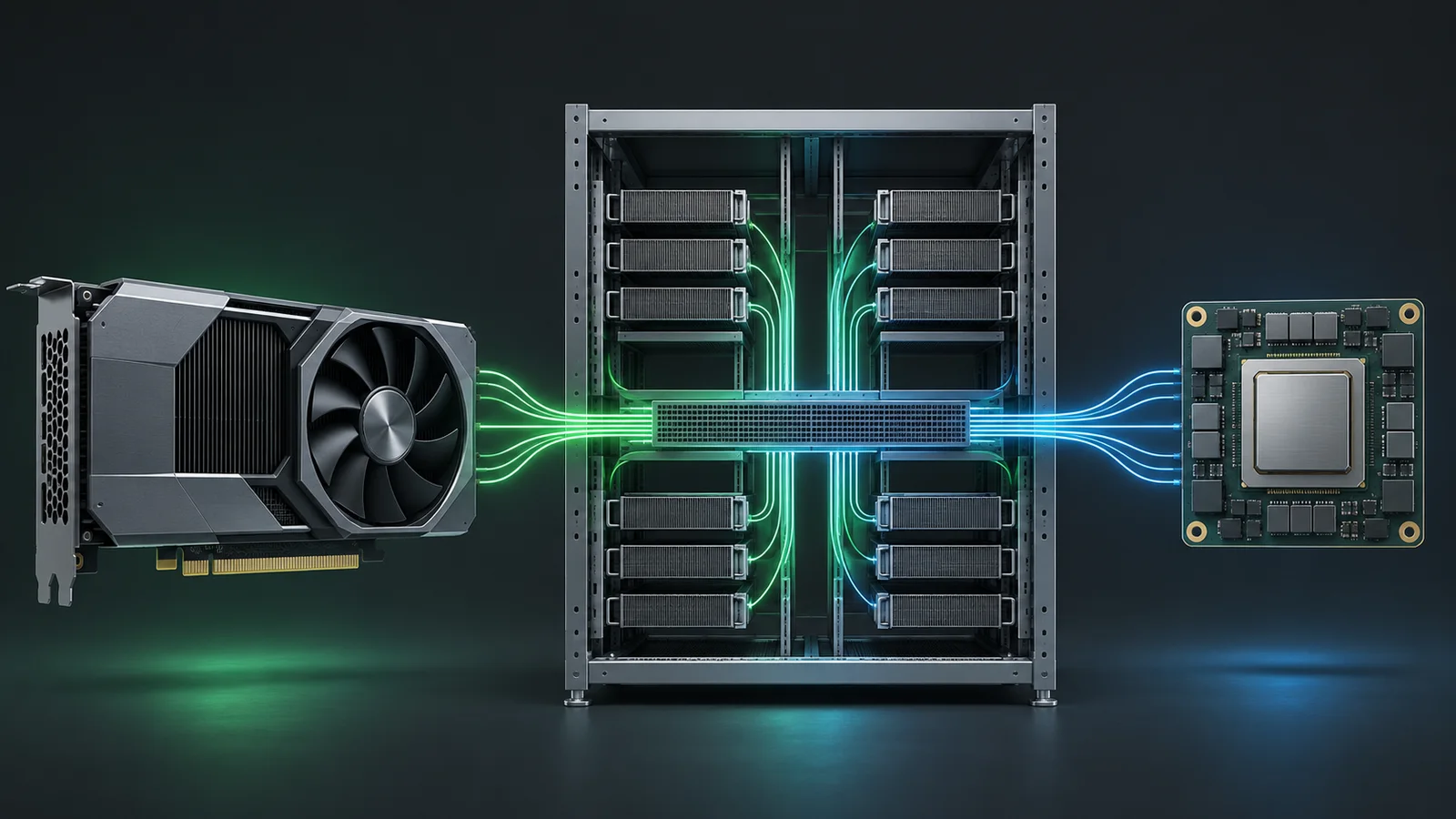
NVIDIA, Rebellions and SK Telecom signed a memorandum of understanding to develop and validate AI infrastructure that combines Rebellions’ in-development Rebel R200 processor with NVIDIA interconnect and rack technology. The companies plan to install the integrated systems in SK Telecom’s AI data center for performance and stability testing and an assessment of potential commercial use.
The three-company agreement covers development and a planned deployment, not a completed installation. The announcements disclose no working R200 integration at SK Telecom, order value, deployment volume or measured results. NVIDIA said R200-based systems are expected to be ready for deployment in 2028.
Rebellions plans to connect R200 neural processing units within a rack using NVIDIA NVLink Fusion, a version of NVIDIA’s high-speed scale-up interconnect designed to incorporate custom processors. It also plans to use NVIDIA’s MGX rack architecture and reference designs to develop rack-scale systems. NVIDIA’s role is to provide the integration technology and supporting ecosystem; the agreement does not say NVIDIA will manufacture or operate SK Telecom’s data center.
SK Telecom said it plans to introduce the combined systems into its AI data center, test their performance and stability, evaluate commercialization and real-service use, and connect the infrastructure with its AI models and customer-facing services. The companies disclosed no site, rack count, processor count, power capacity or production timetable for the SK Telecom deployment.
The companies also plan to split AI inference between two processor types. NVIDIA GPUs would perform prefill, the compute-intensive stage that processes an incoming prompt, while Rebellions NPUs would handle decode, the stage that generates output tokens.
The MGX and NVLink Fusion design is intended to let GPU- and NPU-based systems share elements of rack footprint, power delivery and cooling. The companies describe higher throughput, lower latency, better power efficiency and lower token costs as goals. None of the opened sources provides benchmark data for an R200-plus-NVIDIA system deployed by SK Telecom.
South Korea’s Ministry of Science and ICT is supporting the collaboration as part of its sovereign-AI and domestic semiconductor policy. The announcements state no government funding amount for this agreement, financial commitments among the companies, purchase obligations or exclusivity terms.
More news

NVIDIA and Meta deepen Muse collaboration on training and inference
NVIDIA and SK Group commit more than $500 billion to Korean AI factories
NVIDIA and NAVER plan gigawatt-scale sovereign AI factory in South Korea
 Dmytro Spodarets·Jun 10, 2026