South Korea expands tech plan to three pillars worth $872 billion, adding robots
South Korea on June 29, 2026 detailed a three-pillar 'Mega Projects' plan worth more than 1,350 trillion won (about $872 billion), adding humanoid robotics and a chip-packaging hub to its chip and data-center push.
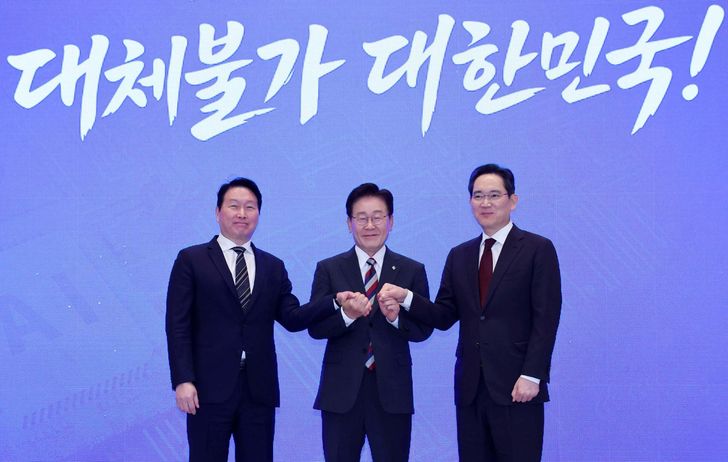
South Korea expanded its national technology drive on June 29, 2026 into a three-pillar “Mega Projects” plan totaling more than 1,350 trillion won (about $872 billion) over a decade, adding a humanoid-robotics cluster and a chip-packaging hub to the semiconductor and data-center commitments. President Lee Jae Myung presided over the briefing.
This is an update to coverage from earlier that day. The first announcement centered on a roughly $519 billion southwestern chip hub; the fuller plan now spans three pillars and a larger total, with a robotics arm and packaging investment that were not in the initial framing.
The semiconductor pillar has Samsung Electronics and SK Hynix each building two new memory-chip fabs in the Gwangju and South Jeolla region, 800 trillion won (about $518 billion) with suppliers, forming what officials call the Honam Semiconductor Belt. A second pillar commits SK Group, GS Group and Naver to 550 trillion won (about $356 billion) in AI data centers, targeting 8.4 gigawatts of capacity by 2029.
The new pillar is physical AI. A cluster in Gumi and Saemangeum aims to lift South Korea’s share of the global humanoid-robot market from 1% to 20% by 2030, with Hyundai Motor and its Boston Dynamics unit as anchor investor. A further 81 trillion won (about $52.5 billion) is earmarked for a chip-packaging hub in the central Chungcheong region.
The figures carry real uncertainty: dollar totals vary by outlet because of differing exchange rates and whether public or private commitments are counted. Execution risk is the harder problem. Academics at POSTECH, KAIST and Sangmyung University cited labor shortages and energy infrastructure as the main hurdles, and opposition parties called the southwestern siting politically motivated.
An entrepreneur with over a decade of experience in AI, Cloud, and HPC. He is currently a DevOps Architect and the founder of Data Phoenix, an influential media voice for the AI industry, with a strong focus on community building and open source.
More news
SK hynix commits $38 billion to two new AI-memory fabs
CoreWeave plans 240 MW India expansion with AdaniConneX
SpaceX Reportedly Seeks $40 Billion in Debt to Buy Nvidia Chips