Abstract
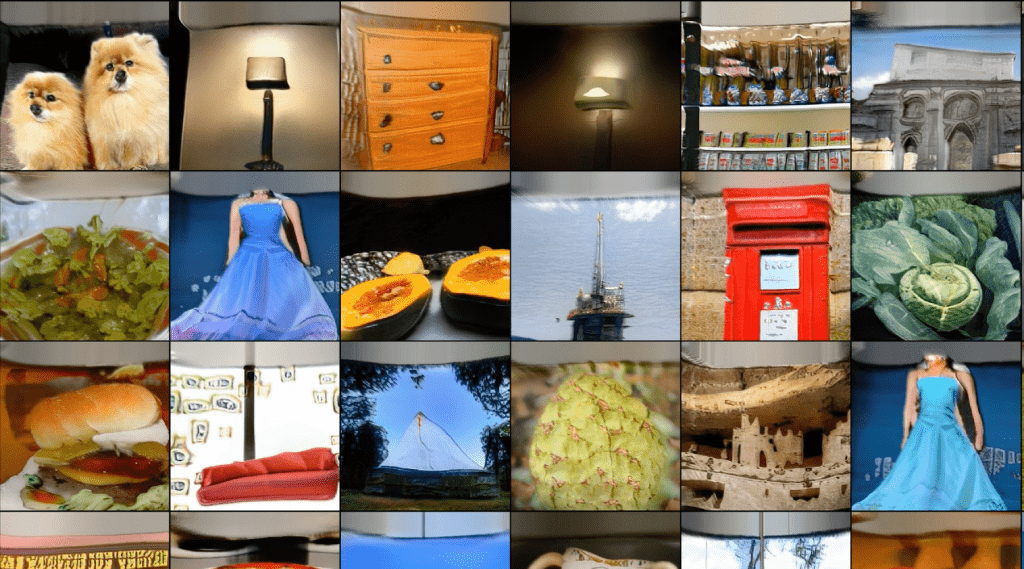
Existing 3D-from-2D generators are typically designed for well-curated single-category datasets, where all the objects have (approximately) the same scale, 3D location and orientation, and the camera always points to the center of the scene. This makes them inapplicable to diverse, in-the-wild datasets of non-alignable scenes rendered from arbitrary camera poses. In this work, we develop a 3D generator with Generic Priors (3DGP): a 3D synthesis framework with more general assumptions about the training data, and show that it scales to very challenging datasets, like ImageNet. Our model is based on three new ideas. First, we incorporate an inaccurate off-the-shelf depth estimator into 3D GAN training via a special depth adaptation module to handle the imprecision. Then, we create a flexible camera model and a regularization strategy for it to learn its distribution parameters during training. Finally, we extend the recent ideas of transferring knowledge from pretrained classifiers into GANs for patch-wise trained models by employing a simple distillation-based technique on top of the discriminator. It achieves more stable training than the existing methods and speeds up the convergence by at least 40%. We explore our model on four datasets: SDIP Dogs 256x256, SDIP Elephants 256x256, LSUN Horses 256x256, and ImageNet 256x256 and demonstrate that 3DGP outperforms the recent state-of-the-art in terms of both texture and geometry quality.
Video
An entrepreneur with over a decade of experience in AI, Cloud, and HPC. He is currently a DevOps Architect and the founder of Data Phoenix, an influential media voice for the AI industry, with a strong focus on community building and open source.