Articles by Dmytro Spodarets
163 items
Data Phoenix Digest - ISSUE 61
Webinar "Vertex AI Pipelines infrastructure with Terraform", data version control with DVC and Git, the 5 stages of ML validation, 10 quick pandas tricks, InstructPix2Pix, DAMO-YOLO, ReFace, DiffusionInst, DiffusionBERT, and more.
Dec 17, 2022
Data Phoenix Digest - ISSUE 60
Webinar "Vertex AI Pipelines infrastructure with Terraform", bringing GitOps to ML with dstack, “You Can’t Predict the Errors of Your Model”… Or Can You?, time series analysis introduction, DeepAR, DiffusionDet, Galactica, Versatile Diffusion, CodeGen, and more.
Dec 9, 2022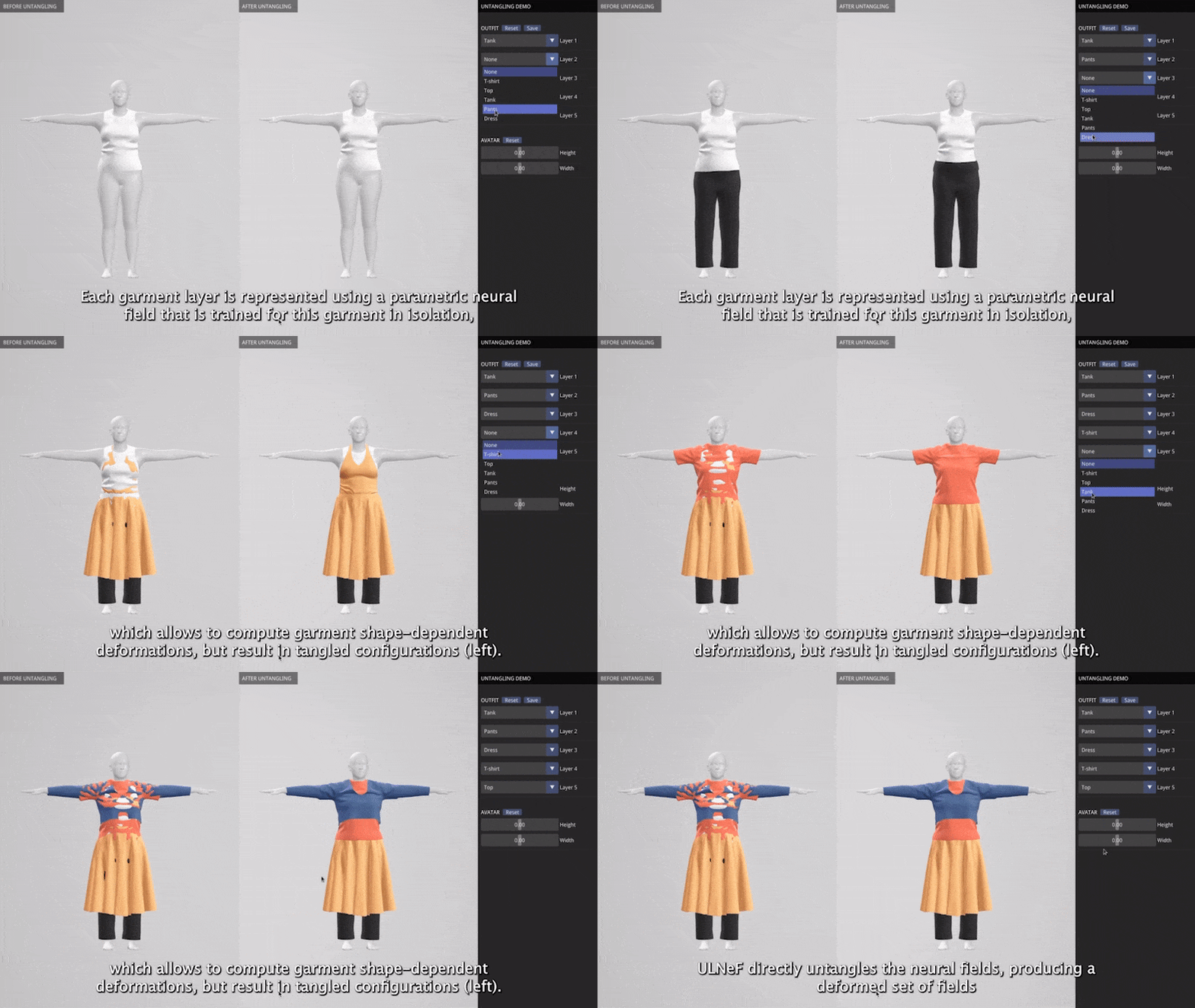
ULNeF: Untangled Layered Neural Fields for Mix-and-Match Virtual Try-On
Recent advances in neural models have shown excellent results for virtual fitting tasks (VTO), where a 3D representation of a garment is deformed to fit the target body shape. However, existing solutions are limited to a single layer of clothing and cannot solve the combinatorial complexity of mixing different types of clothing. To address this limitation, scientists present non-overlapping layered neural fields, ULNeFs, which solve the multi object interaction problem using implicit object rep
Nov 19, 2022
Data Phoenix Digest - ISSUE 59
Efficiently scaling transformer inference, MLOps pipeline with GitLab in minutes, monitoring ML models with Vertex AI, scaling instruction-finetuned language models, Colossal-AI, InternImage, AnimeRun, PhaseAug, and more.
Nov 18, 2022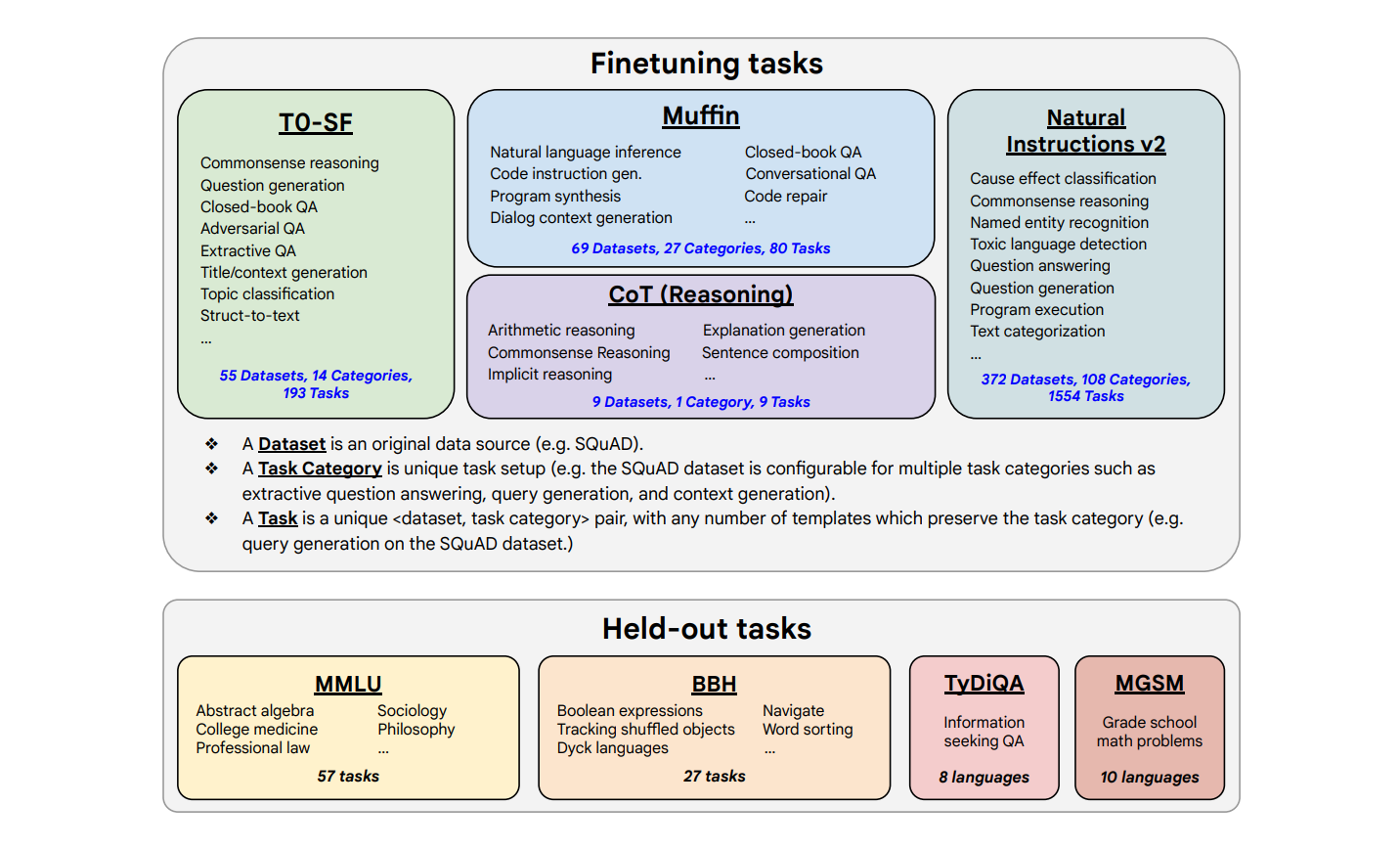
Scaling Instruction-Finetuned Language Models
An important goal of artificial intelligence is to develop language models capable of generalizing data in the form of instructions to solve complex problems. Finalizing language models on a set of data formulated as instructions improves model performance and generalization to unseen tasks. Google has presented its work to promote fine-tuning these instructions in several ways. For example, they are exploring finnasizing, focusing on scaling the number of tasks, scaling the size of the model,
Nov 17, 2022
Data Phoenix Digest - ISSUE 58
Webinar "dstack – a command-line utility to provision infrastructure for ML workflows", a unified benchmark for mathematical reasoning, fine-tuning language models via epistemic neural networks, how Uber optimizes the timing of push notifications using ML, news, and more.
Nov 11, 2022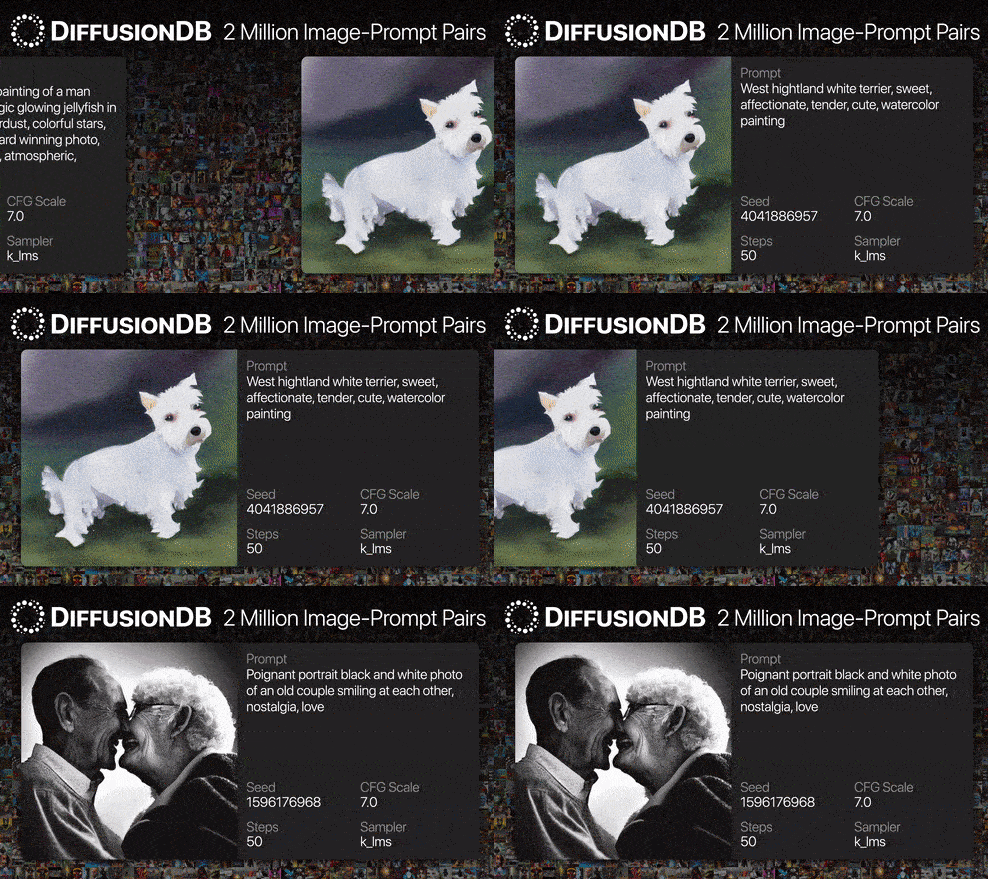
DiffusionDB: A Large-scale Prompt Gallery Dataset for Text-to-Image Generative Models
Diffusion models have recently gained enormous popularity, due to the ability to generate high-quality and controlled images based on textual cues written in natural language. However, generating images with the desired details is challenging, because it requires users to write appropriate cues indicating the exact expected results. Developing such cues requires trial and error, and can often seem random. The DiffusionDB human-interaction dataset is the first large-scale text-to-image cue datab
Nov 10, 2022
eDiffi: Text-to-Image Diffusion Models with Ensemble of Expert Denoisers
eDiff-I is the next generation of generative AI content creation tool that offers unprecedented text-to-image fusion, instant style transfer, and intuitive word-painting capabilities. This diffusion model for image synthesis from text is based on T5 text inlays, CLIP image inlays, and CLIP text inlays. This approach generates photorealistic images that match any input text query. The eDiff-I consists of a cascade of three diffusion models. The first is a base model that can synthesize samples
Nov 8, 2022
Data Phoenix Community Survey
At DataPhoenix, we work hard to offer you the best experience with our digest and events. Our goal is to make it easier for you to access the right information in the right place at the right time. Just to learn more about you, our readers, we decided to launch a small survey initiative. Because the better we know you, the better content we can feature in the digest. Simple. Push the button below to help us make DataPhoenix better! Get Started
Nov 7, 2022
Musika! Fast Infinite Waveform Music Generation
Fast, user-controlled music generation opens up new possibilities for composing and performing music. But today's music generation systems require large amounts of data and computing resources for training, and slow output. This makes them impractical for real-time interactive use. Marco Pasini and Jan Schlüter's work, called Musika, is a music generation system that can be trained on hundreds of hours of music using a single consumer GPU, and which allows for much faster than real-time generat
Nov 7, 2022
Data Phoenix Digest - ISSUE 57
Webinar "NLP and ML in Healthcare", Gen AI market map by Sequoia Capital, AutoAvatar, high fidelity neural audio compression, DreamBooth, MetaFormer baselines for vision, I made an AI that can study for me, news, videos, and more.
Nov 4, 2022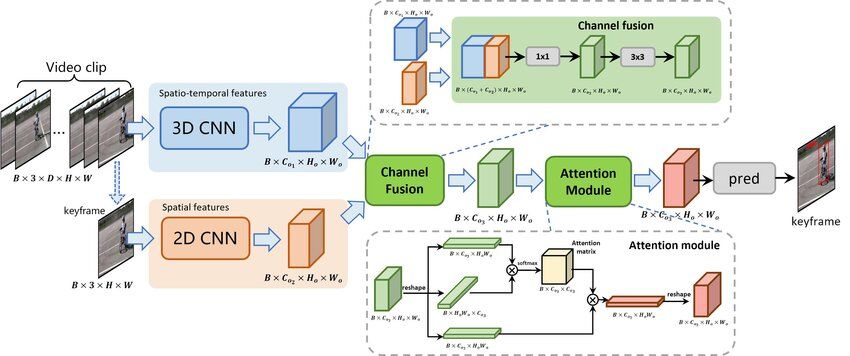
YOWO-Plus: An Incremental Improvement
Spatiotemporal Action Detection (STAD) is a fundamental and important task in video understanding. It aims to detect actions in the current input frame and is widely used, for example, in video surveillance and somatosensory games. Developers are making many changes to the design of YOWO to make it better. For the network structure, they use the same elements of the official YOWO implementation, including 3D-ResNext-101 and YOLOv2, but use the better pre-trained weight of the re-implemented YOL
Nov 3, 2022