Android scam defenses span calls, messages and apps
Google’s October Android guide pulls together AI-assisted scam defenses, separating Android 17 app monitoring from safeguards on earlier versions.
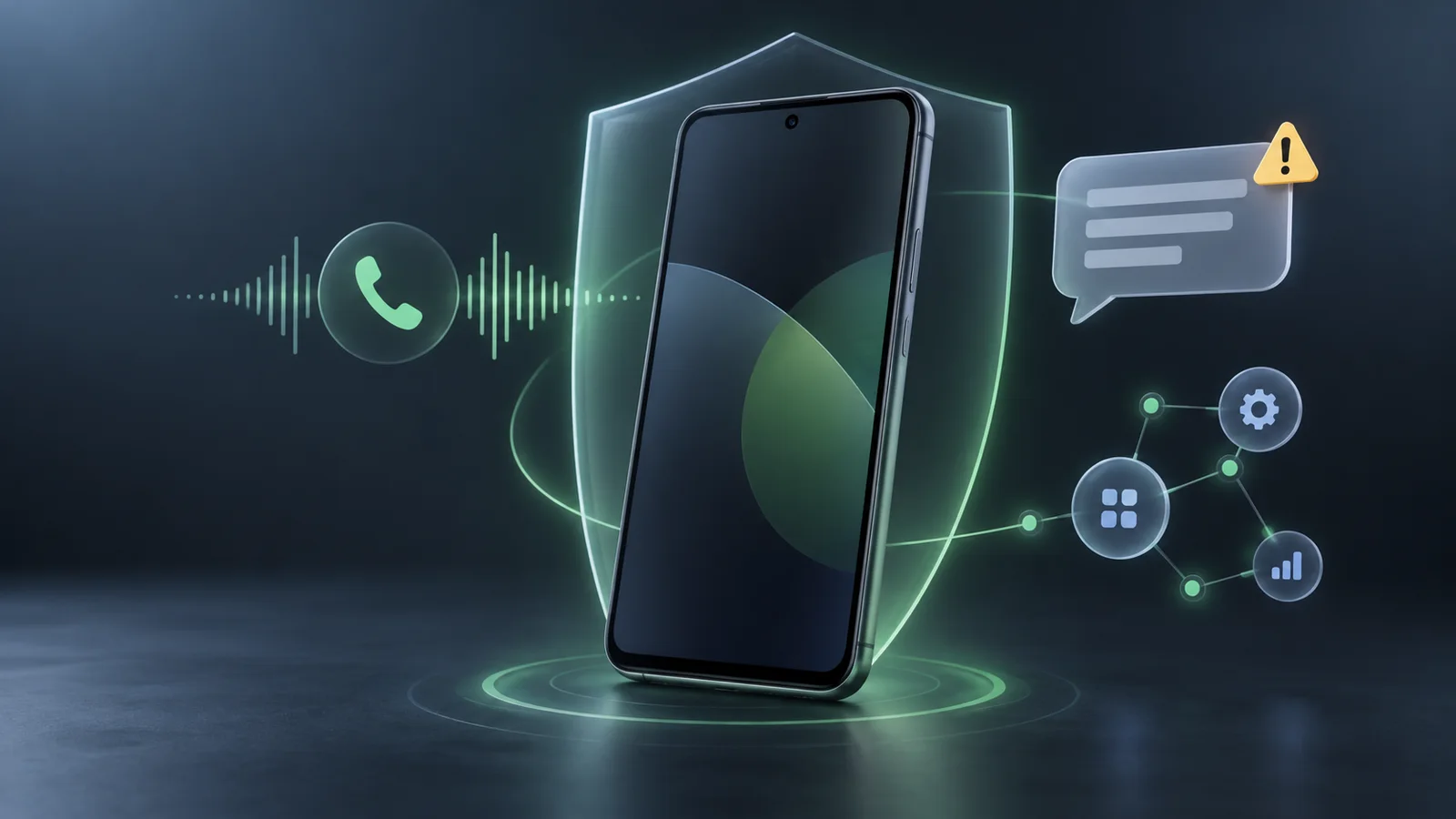
Google published an Android guide that brings together scam defenses for calls, messages and app activity. The protections apply to different Android versions, and the October 7 guide does not represent a single launch date for all of them.
Expanded Live Threat Detection with dynamic signal monitoring is the Android 17-specific piece. Protections in Google Messages, Phone by Google and Advanced Protection either predate Android 17 or work on earlier versions. Google says availability varies by region, carrier and device.
On Android 17, Google says Live Threat Detection analyzes app interactions with the system in real time. It looks for suspicious behavior such as SMS forwarding, accessibility overlays or permission abuse, hidden or changed app icons, and unexpected background launches. Google announced the expansion in May and said it would roll out in the second half of 2026. The company says the analysis runs on the device and personal data is not sent to cloud servers, though the opened sources do not provide an independent audit of that privacy claim. The monitoring expansion is part of Google’s broader Android AI rollout, but its Android 17 requirement is narrower than those for the message and call defenses below.
Google Messages’ conversational Scam Detection is not tied to Android 17. Introduced in March 2025, it evaluates suspicious patterns in SMS, MMS and RCS conversations with people outside a user’s contacts. It can then display a likely-scam warning and offer controls to report and block the sender. Google says the analysis happens on the device and conversations are not shared unless a user reports them. In May 2025, the company said expanded scam-category detection applied to all Google Messages users.
For calls, fake-call detection began rolling out globally in June 2026, starting with Pixel devices, for devices running Android 12 or later and using Phone by Google. Both caller and recipient must use Phone by Google for the contact-device verification flow. Google says the feature is on by default and uses an end-to-end encrypted RCS confirmation signal between the devices. If that signal is missing, the recipient’s phone can check the contact’s actual device and warn of possible impersonation. Those security and privacy descriptions are Google’s claims.
A separate verified-financial-calls feature supports Android 11 and later. Google’s help page says it requires the participating institution’s official app and a signed-in user. Android asks the bank app whether an apparent bank call is genuine and ends the call if the app cannot confirm it. Calls displaying numbers reserved for inbound use can also be ended. Google announced an initial rollout with Revolut, Itaú and Nubank, but says support varies by institution and does not cover every bank or call.
Other controls have their own requirements. Google introduced Advanced Protection as an Android 16 setting that coordinates security controls across apps including Chrome, Google Messages and Phone by Google. The same 2025 update said in-call blocking of attempts to disable Play Protect was available on Android 6 and later. Blocks on first-time sideloading and accessibility-permission changes during calls were available on Android 16. Google’s guide does not provide a complete device, carrier or country availability matrix for every protection.
More news

Google launches Guided Vision in Gemini Live on Android

Google Assistant retirement on Android starts September 4 as Gemini takes over

OpenAI launches sponsored GPT-Rosalind plan for U.S. academic labs