Anthropic says Claude agents found a novel CRISPR-like enzyme system
Anthropic reports that about 950 Claude agents searched DNA sequence databases and identified array-associated reverse transcriptases, a phage enzyme system whose function is still unknown.
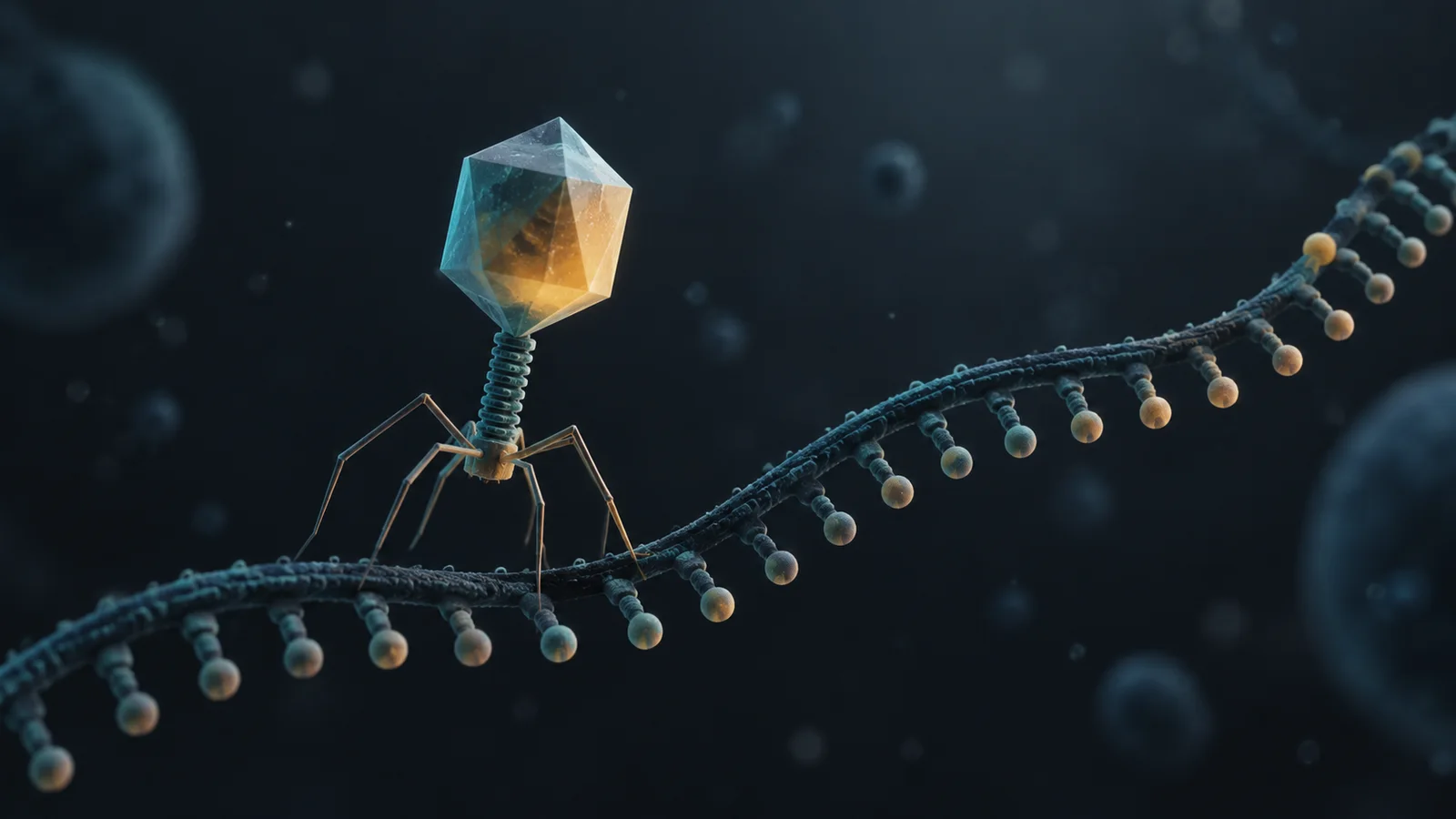
Anthropic says about 950 Claude agents identified a previously undescribed enzyme system called array-associated reverse transcriptases (ART), found primarily in bacteriophages. The system includes an array of repeating DNA that resembles the structure of CRISPR arrays. Its function is not yet known, Anthropic says.
According to Anthropic, the agents searched a large DNA sequence database over roughly 21 hours and used about 210 million tokens. The company says work to understand ART is ongoing.
The agents started from more than 200,000 reverse transcriptases, enzymes that copy RNA into DNA, and narrowed them to about 3,500 candidates and then to 20 that Anthropic describes as compelling. Anthropic describes an ART system as having three components: a reverse transcriptase, a partner gene, and an array of evenly spaced DNA repeats that is expressed as distinct short RNAs.
Anthropic says its first experiments show that the ART array is expressed as a set of distinct short RNAs, which it says suggests something analogous to CRISPR may be at play. The function has not been confirmed, and no laboratory validation of CRISPR-like activity is reported.
Anthropic has released a preprint with more detail. It says its laboratory work involves only biosafety levels BSL-1 and BSL-2 and does not involve pathogens that can infect humans.
Anthropic’s life-sciences verification program gives life-science professionals access to Claude models with safeguards that are more permissive for biology-related work.
The announcement includes a comment from Feng Zhang, one of the pioneers of CRISPR genome editing and a professor at MIT and the Broad Institute, who welcomes the result as an example of AI agents contributing to biological discovery and says the findings merit further investigation.
More news
Anthropic pledges $150 million to US Genesis Mission
Anthropic adds Claude safeguards for autonomous hardware and model abuse

Anthropic says Claude leads 26% of measured AI R&D work