Apple study finds language cues narrow gaps in multilingual speech models
Apple-affiliated researchers say two language-aware pretraining methods narrowed different performance gaps in a controlled English-French HuBERT study.
Apple-affiliated researchers say two language-aware pretraining methods narrowed different gaps between bilingual and monolingual speech models in a controlled English-French experiment. The arXiv preprint reports gains in phonetic, lexical and prosodic measures. The findings, however, cover one language pair, one model architecture and three training seeds—not a production system.
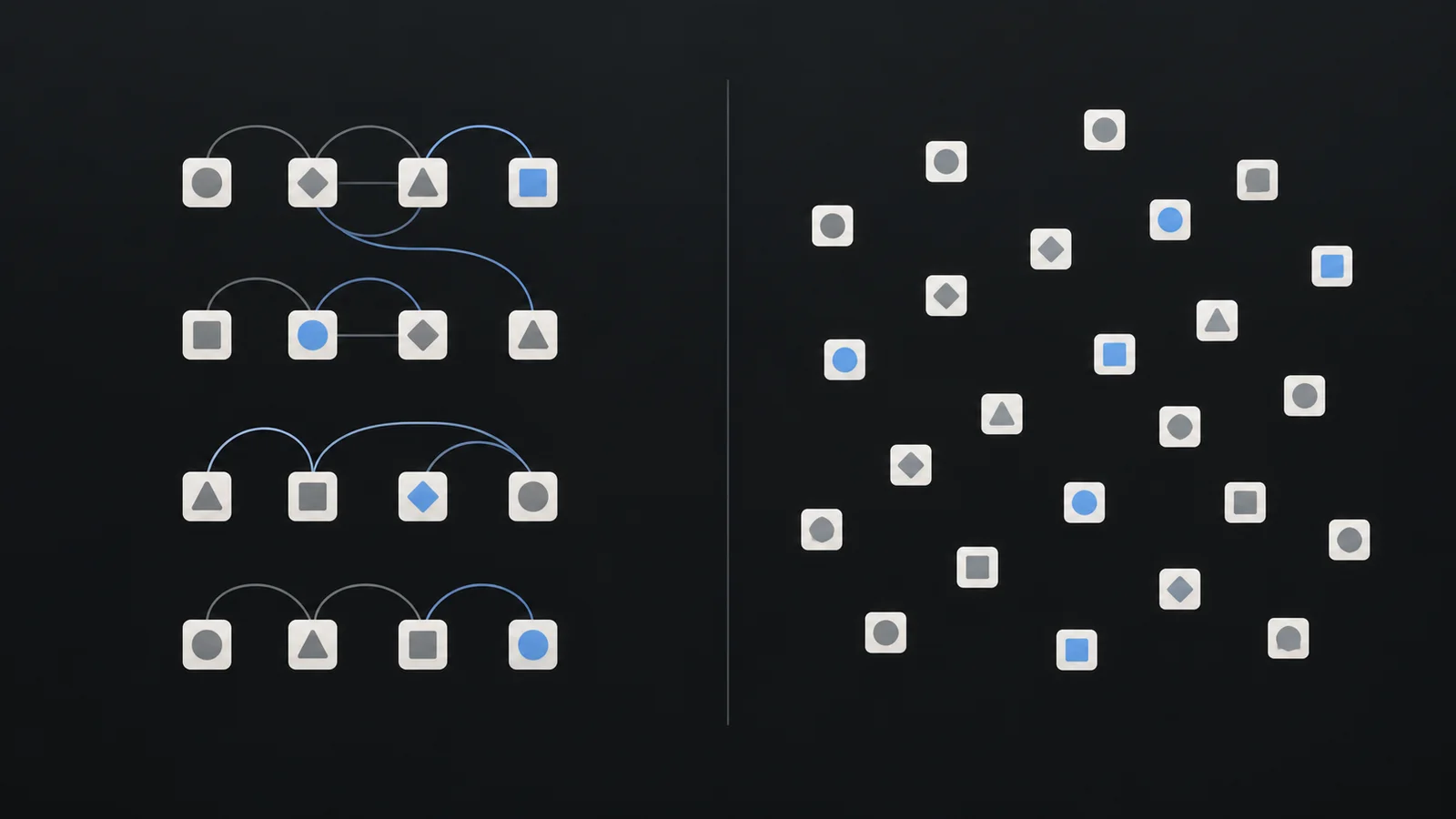
The study focuses on a specific balance in multilingual speech training: a model needs to distinguish language-specific patterns without separating languages so completely that it loses useful cross-language sharing. The researchers tested two interventions in 95-million-parameter HuBERT-Base models trained from scratch, then compared the reported means with matched monolingual references.
The baseline bilingual model received 500 hours each of English Libri-Light and French Audiocite speech, the same 1,000-hour total budget as each monolingual reference. It trailed those references on continuous phone ABX error, where lower is better, at 11.6% versus 10.8%; on sWUGGY lexical accuracy at 52.1% versus 58.5%; and on ProsAudit lexical accuracy at 68.9% versus 72.6%. The authors reported no baseline gap on ProsAudit’s protosyntax measure.
For the first intervention, the researchers attached a two-way language classifier to HuBERT’s sixth layer during the first of two pretraining iterations. Its cross-entropy loss carried a weight of 0.3 after ramping up over the first 32,000 steps. They removed the classifier before generating targets for the second iteration, and it was not needed at test time.
With the temporary classifier, the authors reported that language ABX error fell from 27.0% to 5.2%, indicating stronger language discrimination. At the same time, their same-language clustering measure stayed close to the bilingual baseline, at 0.52 versus 0.51. Continuous phone ABX improved to 10.4%, sWUGGY rose to 55.2%, and ProsAudit lexical accuracy reached 72.9%. A shuffled-label control did not reproduce the lexical gains in the reported three-seed means.
The second intervention left the first iteration unchanged. For the second iteration, it replaced a shared inventory of 500 prediction targets with two separately indexed, language-specific codebooks of 250 targets each. According to the paper, this changed the targets without adding model capacity or increasing the number available to either language. It also did not require language identity at test time.
Per-language targets delivered the study’s lowest language ABX error, 2.9%, while the same-language clustering measure remained comparatively low at 0.54. Continuous phone ABX reached 11.2%, sWUGGY rose to 56.7%, and ProsAudit lexical accuracy reached 71.9%. Those means narrowed the baseline gaps, but did not uniformly match the monolingual references.
Neither method was best on every measure. The temporary first-iteration classifier delivered the best continuous phone ABX and ProsAudit lexical results, while per-language targets delivered the best sWUGGY result. The paper’s abstract draws its best result for each metric from across the interventions.
The timing of the classifier mattered, too. Applying it in the second iteration or in both iterations produced stronger final language discrimination, but worse phone, sWUGGY and ProsAudit lexical results. Those schedules also raised the clustering measure to 0.55 and 0.57. The authors interpret this pattern as evidence that greater segregation can reduce useful sharing and offset some of the benefit of stronger language discrimination.
Two exposure controls support a narrower conclusion within this experiment. Monolingual models trained on 500 hours still beat the bilingual baseline with the same per-language exposure. Meanwhile, a bilingual model trained on 1,000 hours per language did not fully recover the 1,000-hour monolingual results. Separate language-specific codebooks used only for the final 50-unit tokenizer also failed to reproduce the main pretraining gains.
The work is separate from Apple’s latent-space distillation work on streaming audio encoders. Here, the authors characterize the interventions as evidence for a causal role for language discrimination in the English-French HuBERT setup, while noting that they did not directly measure the transfer-versus-interference explanation. The paper does not establish independent replication, statistical significance, broader-language generalization, downstream product performance or use in an Apple production system.
More news

Apple study finds tool-discovery gains shift with task complexity

Apple researcher, Johns Hopkins team let AI agents decide when to compact context

Apple spotlights Normalizing Trajectory Models for four-step image generation