AWS adds HyperPod Spaces controls to SageMaker Studio
AWS has brought HyperPod development-space controls into SageMaker Studio, combining setup, access and lifecycle actions in one interface.
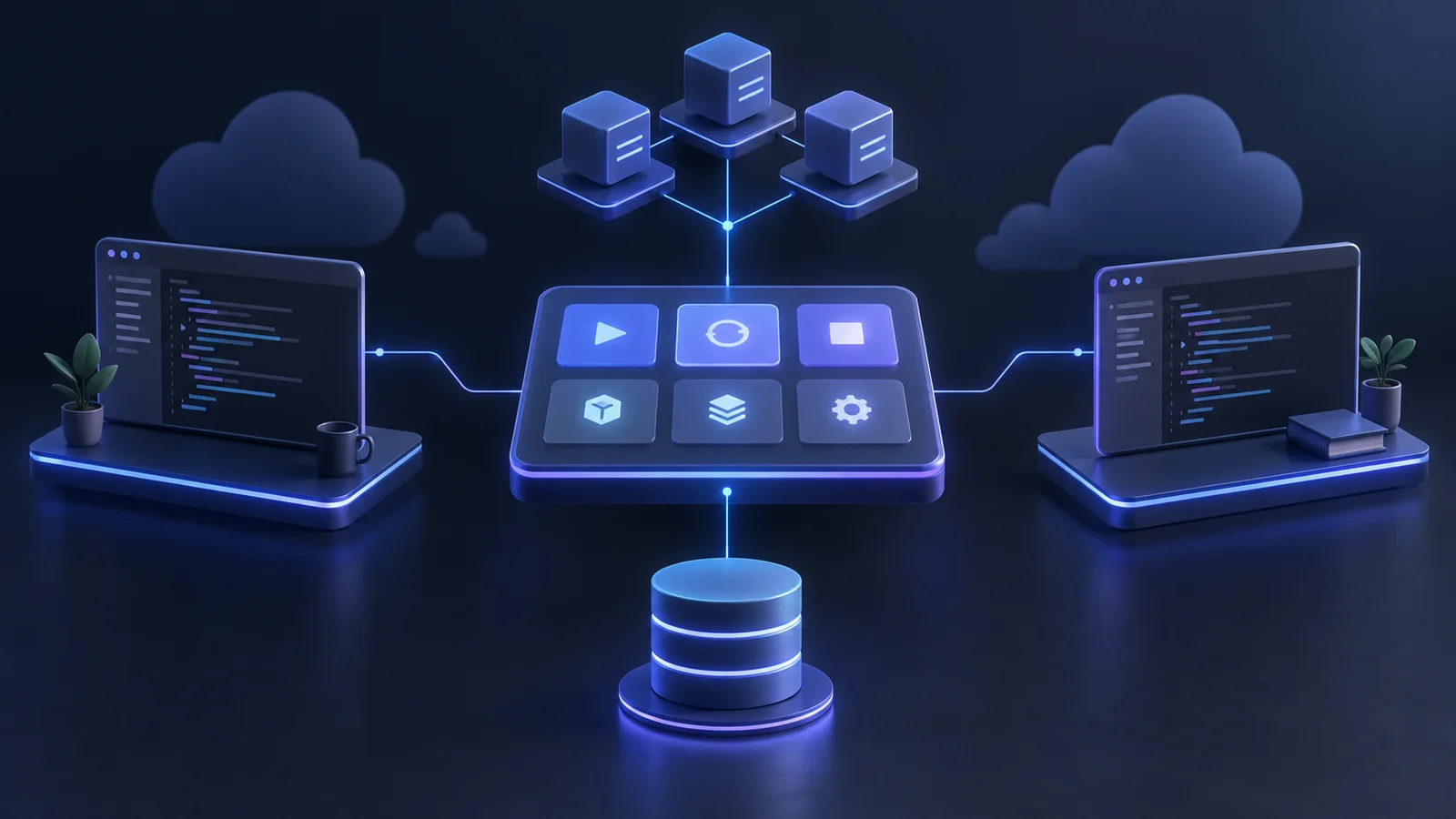
AWS has brought creation and lifecycle controls for development spaces on HyperPod EKS clusters into Amazon SageMaker Studio, according to its SageMaker documentation. Teams can configure, start, stop, open and delete JupyterLab or Code Editor spaces without leaving Studio.
The creation flow lets users select a team namespace and template, then set CPU or GPU resources, memory, an administrator-provided container image and persistent EBS storage. Fractional-GPU deployments can expose GPU partition choices. When administrators enable HyperPod task governance for a namespace, spaces also participate in resource management and priority scheduling.
Studio’s searchable inventory lists each space’s application type, status, access type, storage, GPU allocation and vCPU allocation. From the same view, users can start or stop a space, open it in a browser, connect through Remote IDE or delete it.
AWS says stopping a space releases its compute resources while preserving its data on EBS, which the company presents as a way to manage compute costs. Users can reopen the space as a browser-hosted JupyterLab or Code Editor environment. They can also connect a local IDE through AWS’s SSH-over-SSM method, without managing SSH keys or exposing port 22.
Before the interface is available, administrators must install the HyperPod Spaces add-on on the cluster and configure the EKS cluster for Studio. For private spaces used by people who share an execution role, AWS also requires ExecutionRoleSessionNameMode to be set to USER_IDENTITY. The space username then comes from the Studio authentication context: the IAM role session name for IAM-authenticated domains, or a sanitized IAM Identity Center username for Identity Center domains.
AWS’s HyperPod IDE documentation says the Spaces add-on or operator carries no additional charge. Remote IDE connections, however, use an AWS-managed instance registered in Systems Manager as an Advanced On-Premises Instance, which AWS bills by compute hour.
The HyperPod-backed environments are distinct from SageMaker AI Studio Spaces configured with a Positron custom image. AWS documentation previously described administrators managing HyperPod spaces through the HyperPod console, kubectl or HyperPod CLI, with developers using the CLI. The new Studio page brings those lifecycle controls and the space inventory into the web interface.
The spaces themselves predate the Studio controls. AWS introduced HyperPod support for IDEs and notebooks in November 2025 for interactive work on the same persistent EKS clusters used for training and inference.
More news

AWS maps Claude 5.5 access across Bedrock endpoints in GovCloud

AWS brings local model caches to SageMaker HyperPod inference

AWS adds feature-level UpdateRecord writes to SageMaker Feature Store