Axiom Math releases Lean formalizations of CFSG and the Stacks Project
Axiom Math released public, AI-assisted Lean formalizations of the Classification of Finite Simple Groups and the Stacks Project, tackling the distinct demands of a long proof and a reusable mathematics library.
Axiom Math has released AI-assisted Lean formalizations of the Classification of Finite Simple Groups and the Stacks Project. It dated the CFSG announcement October 26 and the Stacks Project announcement November 4, making public two computer-checkable artifacts built for different kinds of formal-mathematics work.
The CFSG repository and Stacks repository make the code available under Apache-2.0 licenses. Axiom says the CFSG formalization contains about 43.1 million lines of Lean code and the Stacks library about 16 million. No independent full rebuild or line-by-line expert audit of either complete repository was identified in the supplied research, so the line counts, coverage and fidelity remain company claims.
Lean is a proof assistant. Its kernel checks whether formal deductions follow from encoded definitions, hypotheses and axioms; that check does not establish by itself that an encoded statement perfectly matches the intended natural-language mathematics. Axiom’s CFSG post makes the same distinction between mechanical checking and human review of whether the definitions and final statement express the intended classification. Readers can compare the scope of Axiom’s work with a separate release of machine-checked Lean proofs for software verification.
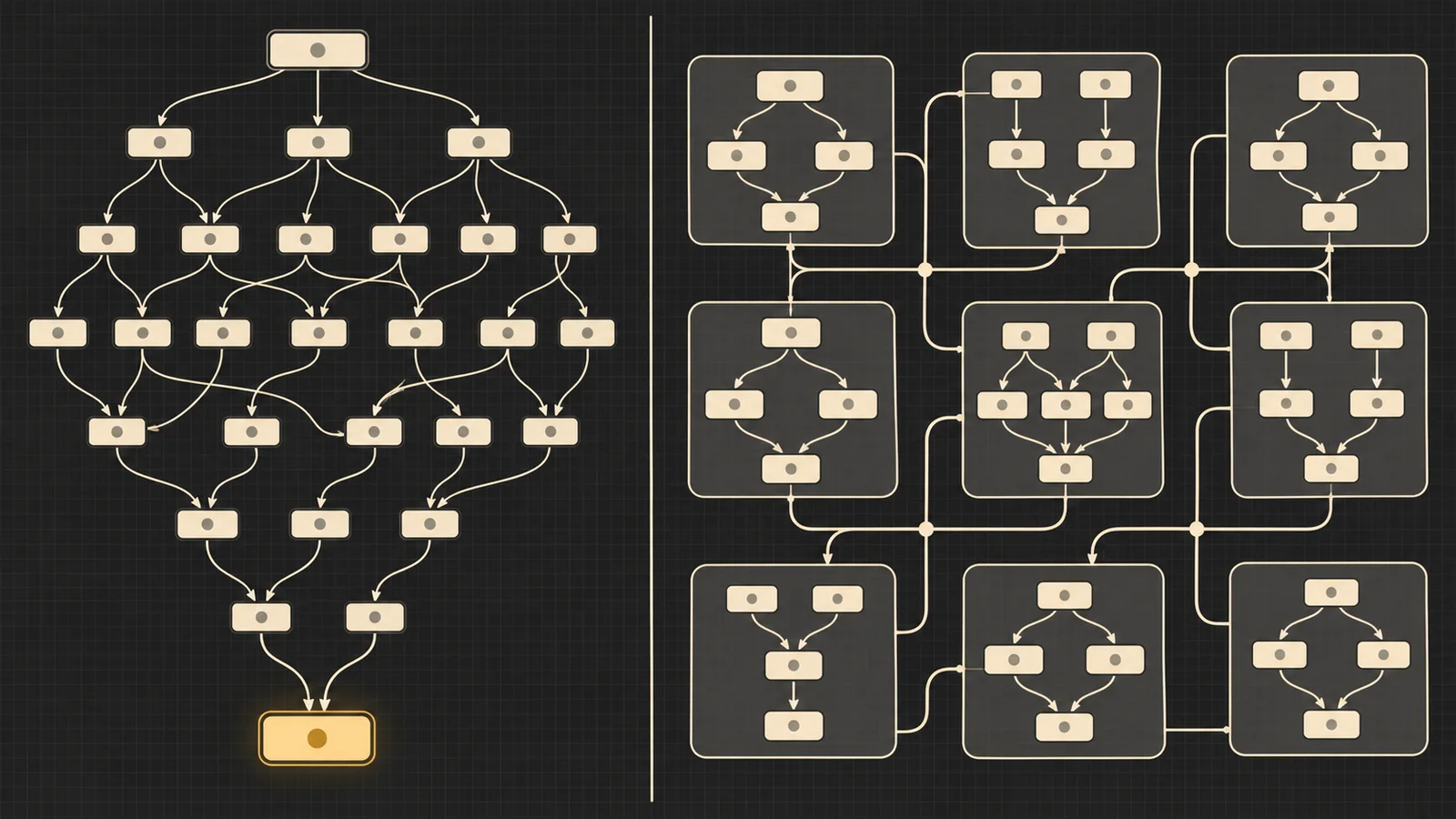
For CFSG, the challenge was to connect a large prerequisite tree to one classification theorem. Axiom says engineers and mathematicians directed swarms of dozens of AI agents for 24 days, organizing the first-generation proof into 108 milestones and roughly 380 smaller tasks. Axiom chose the first-generation route because the second-generation proof remains unfinished. The repository describes the result as a sorry-free Lean 4 proof built on Mathlib and TauCeti, using the standard axioms Classical.choice, propext and Quot.sound; it documents lake build as the command for checking the full project.
Axiom says the formalization uncovered 34 noteworthy deviations from published arguments. Its account describes typographical errors, dropped hypotheses and more substantial issues, including a closure assertion in a published route to the Unbalanced Group Theorem. The company says its team consulted group theorists and formalized an alternative route where needed. Those are Axiom’s findings, not conclusions from an independent audit of the classification literature.
The Stacks effort presented a different problem. Rather than driving dependencies toward a single theorem, it had to keep definitions, interfaces and abstractions compatible across a broad reference library so later proofs could reuse them. The original Stacks Project describes itself as an open-source algebraic-geometry reference and, when observed for the research package, listed 7,654 pages, 21,446 tags, 3,298 sections and 116 chapters. Axiom says permanent Stacks tags map Lean declarations back to that source material and let researchers or AI agents import definitions and theorems into new formal proofs.
The public repository’s coverage is narrower than saying every part of the source received the same treatment. Axiom says every Stacks tag with formalizable content has been formalized, but the repository leaves some examples, exercises and remarks as contributor tasks. It also separates the code into human-reviewed StacksCore and AI-written StacksFrontier. Both tiers are kernel-checked, according to the repository, but Frontier code still needs human review before promotion to Core.
The release is maintained separately from the upstream Stacks Project. On October 21, Stacks founder Johan de Jong asked contributors not to submit AI-written comments or pull requests to the original project for the time being. Axiom’s Lean code remains in its own repository, whose README invites contributors to formalize remaining material and review Frontier code.
More news

KPMG rolls out Clara intelligence audit platform in the US

Perplexity adds 16-agent Multiagent mode to Computer

Microsoft and Oracle link AI agents to enterprise data and work apps

Microsoft Ignite 2026: New AI Models, Agents, Developer Tools and Azure Hardware
 Dmytro Spodarets·Nov 17, 2026