Microsoft Ignite 2026: New AI Models, Agents, Developer Tools and Azure Hardware
Microsoft Ignite 2026 brought new coding models, shared Copilot workspaces and tools for building and governing agents. Cobalt 200 VMs are now generally available, while Maia 300 deployments remain on the 2027 roadmap.
MAI Code 2 is available in GitHub Copilot, shared agent workspaces are in early access, and Azure’s Cobalt 200 virtual machines are generally available. Microsoft’s next inference accelerator is on a different schedule.
At the opening keynote of Microsoft Ignite in San Francisco on November 17, Satya Nadella described how Microsoft wants companies to build agents with the same kinds of tools it uses for Copilot: a choice of models, access to company records and a way to see what an agent did. He closed with the hardware underneath them. Azure customers can now rent virtual machines powered by Microsoft’s Cobalt 200 CPU; Maia 300, the chip Microsoft designed to run models, is slated for production deployments in 2027.
For customers deciding what to test after Nadella’s keynote, the distinction is between what they can put to work now and what Microsoft is still testing. The product teams’ accompanying releases spell out where that line falls.
Coding models arrive in GitHub Copilot; a smaller model routes requests
Microsoft’s two new coding models are generally available in GitHub Copilot. MAI Code 2 targets multi-file changes and debugging; Code 2 Flash is aimed at routine edits and explanations and also has a limited-access Foundry preview. Microsoft compared Flash with GPT-6 Luna and Claude Haiku 5.5 on three coding benchmarks. A maintainer choosing between them has a different denominator: the cost of a change that actually passes the repository’s tests and gets merged, retries and review included.
Microsoft-Decision-1.1 is generally available too. It can accept images, including screenshots, and is designed for bounded choices such as routing or classification. Copilot already uses it to decide whether Copilot or Cowork should handle a request. A router can be evaluated before anyone judges the eventual answer: did the request reach the right destination?
Foundry’s catalog extends beyond Microsoft’s models. Microsoft made GPT-6.2 Astra and Sol generally available in Foundry. Nadella also said Meta’s latest models would follow, without giving a date in his remarks.
The other MAI releases have different routes to customers. Image 2.7 and its Flash variant are in public preview; speech-to-speech MAI Realtime 1 has a limited-access Foundry preview. Dragon Copilot Transcribe, based on MAI Transcribe 2, already handles doctor-patient transcription in Dragon Copilot. MAI Cyber 2 Flash is coming through Microsoft security products, with the change for eligible Codename MDASH customers starting in mid-December. That is distinct from the general availability of Perception, Microsoft’s platform for coordinating security agents, which Nadella announced onstage.
For selected customers who want more control than an API provides, MAI Licensed Weights is coming soon through Microsoft’s Frontier Company engagements. The arrangement is intended to let selected customers adapt models using proprietary data and deploy them in their own Azure environments. “Licensed” matters here: Microsoft has not made those weights a public download.
Copilot gets shared workspaces and connections to business apps
Microsoft introduced Home, Code and Autopilot in September. Ignite changed who can use them. Home brings Chat and Cowork together, and Office in Copilot lets people work in Word, Excel and PowerPoint without leaving that experience. Both are generally available. Workspaces, the successor to Copilot Notebooks, is in the Frontier early-access program: people and agents can share a project’s files and conversations rather than passing around the answer from someone’s private chat.
Autopilot, which can keep working on recurring tasks between visits, started rolling out to Frontier customers on November 17. It gets its own Entra identity, a named manager and scoped access. That matters when a task continues after its owner has signed off: the administrator needs to know which actions the agent took, not merely whose project it was working on. Copilot Code, the tool for creating apps from a description, is due to reach general availability in the coming weeks. The managed runtime that hosts those apps in a customer’s tenant is already generally available.
Nadella also introduced plugins for Dynamics 365 and announced a partnership with Salesforce. The Salesforce in Copilot plugin entered public preview with more than three dozen sales skills. A seller preparing for a customer meeting can draw on CRM records as well as the correspondence in Microsoft 365, without treating the two as interchangeable sources.
What happens when the answer isn’t in one document?
Suppose a supplier warns a manufacturer about a late component. Which orders are affected, what do the contracts say about delays, and who can approve a substitution? Those are three different lookups. In Microsoft’s supply-chain example, Fabric IQ supplies the relationships between components and orders; Foundry IQ retrieves the relevant contracts; Work IQ identifies the person responsible. A business plugin packages those choices so each agent doesn’t need its own instructions about which source to trust. The broader Microsoft IQ platform also incorporates Web IQ. Nadella said hundreds of new connectors would bring outside data into that mix.
Foundry IQ’s knowledge graphs and Microsoft Retriever 1 are both in public preview. With graphs, teams can bring an existing map of entities and relationships, or specify the relationships Foundry should extract during indexing. An agent can ask about those connections in ordinary language; a developer can query the graph directly using GQL. Results can cite the underlying sources. Retriever 1 does a different job: it plans the searches needed to ground an answer without requiring a separate frontier-model deployment for that step.
The distinction is easy to miss in a demo. Two contracts can use almost identical language yet cover different parts. Finding the relevant clause isn’t enough if the agent attaches it to the wrong order. An engineer testing this workflow could remove one component-to-order link and check whether the agent reports a gap or confidently says no orders are affected. Access deserves a separate test: the indexed SharePoint knowledge source already supports permission enforcement and is generally available, even as the graph features remain in preview.
How a mistake becomes a test case
Foundry’s improvement tools start with a trace: the request, the steps the agent took and the answer it returned. In preview, a subject expert can mark the exact step that went wrong and describe what should have happened. Teams can turn annotated traces into evaluation cases, then freeze a reference set against which to score future versions. Sending a recurring production issue to agent optimizer is also in preview. The optimizer proposes changes and tests them; the team chooses whether to adopt them.
That process needn’t change a model at all. If a procurement agent keeps reaching for the wrong source, changing its instructions or a reusable skill may solve the problem. For teams that do need to adjust model weights, Programmed Training is in public preview for supported open-weight models: engineers write the training loop in Python and Foundry supplies the compute.
Alaska Airlines tested a narrowly defined task: could MAI Code 2 Flash assign the right ATA classification code to an aircraft maintenance report? Its accuracy was 81.2% out of the box and 91.1% after tuning, according to Microsoft’s account of the evaluation. The qualified employees reviewing the reports still made the final call.
A session can survive its runtime. Who owns its next action?
In October, Microsoft put the Copilot harness into public preview in Foundry, giving developers a managed version of the loop that calls a model and runs its tools. The Microsoft Copilot SDK 2.0, formerly the GitHub Copilot SDK, takes a different route: developers can embed the runtime in their own application. Its Rust core can host separate sessions in one process while keeping each session’s state, credentials and allowed tools apart. A journal records messages, tool calls, results and checkpoints. Another process that can read the journal can resume the work after a restart.
That journal can tell an engineer what happened. It doesn’t decide what should be allowed to happen next. The Entra firewall for Model Context Protocol connections is in preview; Agent 365 Business Analytics, including spend forecasts, is in Frontier preview. Nadella also announced the Microsoft AI Transparency Initiative, including expanded work with NIST’s Agent Standards Initiative. The aim is an industry standard for examining AI behavior, not a claim that one is already in force. A model explaining its own actions is not an independent audit.
Azure hardware: Cobalt 200 ships, Maia 300 is planned for 2027
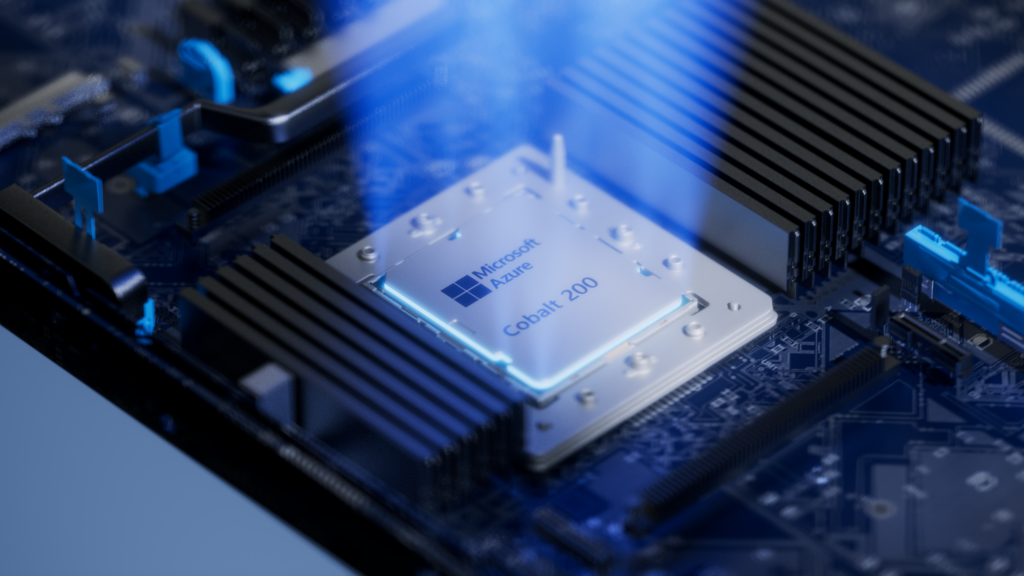
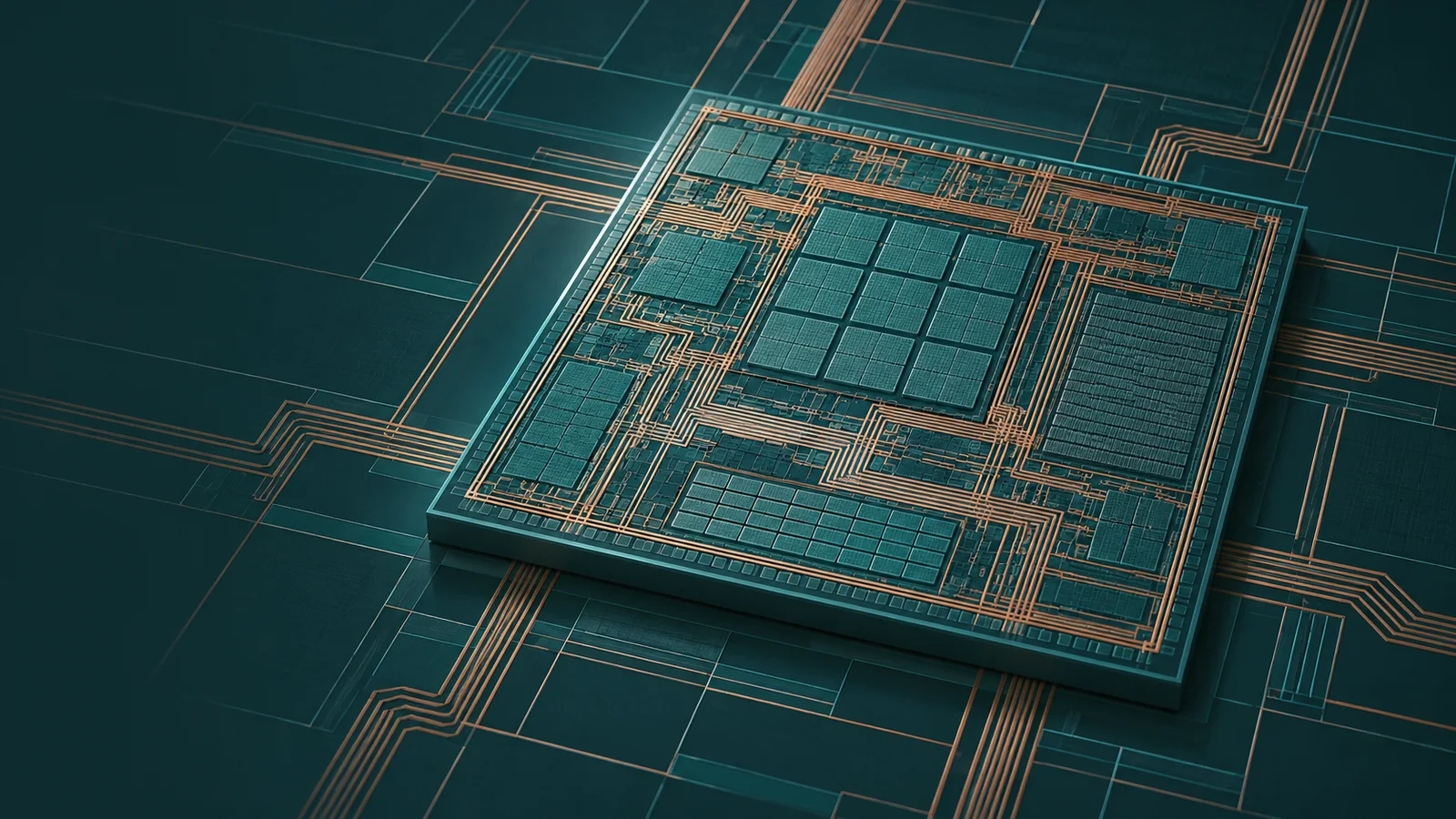
The hardware release Nadella announced onstage was a general-purpose CPU offering. Azure’s Arm-based Cobalt 200 virtual machines went generally available in 14 regions. Microsoft reports up to 50% better CPU performance than Cobalt 100. There is already a less abstract illustration: Microsoft has been using Cobalt 200 to run design and verification tools for next-generation Cobalt chips. Those jobs keep CPUs busy. An agent waiting for a model response may not. Neither the chip-design results nor the generational CPU figure tells a buyer how much faster an entire agent will finish.
Maia 300 serves a different purpose. It is a custom inference accelerator for running trained models, not the CPU in the new virtual machines. Nadella revisited a roadmap Microsoft announced in October: Maia 200 was already serving production workloads, while Maia 300 deployments are planned for 2027. Microsoft expects 40% more tokens per watt than leading GPU-based systems. That measures output for a given amount of power, not how quickly a user gets an answer, and it is a company projection.
Nadella also cited two examples of work Azure moves off the main processor. Azure Boost handles infrastructure tasks such as storage and networking on dedicated silicon. Azure Integrated HSM handles cryptographic operations while keeping keys inside a hardware security boundary. Neither was presented as a new VM release.
For developers planning a trial now, the release dates matter as much as the benchmark numbers. A team can test the coding models against changes its maintainers would actually merge, or measure a CPU-bound service on Cobalt 200. Testing how a group works with Autopilot requires Frontier access. Planning capacity around Maia 300 means working with a roadmap, not measurements from a service available to rent today.

An entrepreneur with over a decade of experience in AI, Cloud, and HPC. He is currently a DevOps Architect and the founder of Data Phoenix, an influential media voice for the AI industry, with a strong focus on community building and open source.
More news
Microsoft puts Cobalt 200 VMs to work on chip design

Microsoft denies Azure cost-cutting directive after reported 20% request
Microsoft opens Surface AI hardware preorders and releases agent containers