Databricks launches Agent Memory beta built on MemCurrent
Databricks released Agent Memory in beta for Agent Bricks, combining Lakebase-backed session and memory stores with the MemCurrent architecture. Its performance figures come from an internal benchmark that has not been independently reproduced.

Databricks launched Agent Memory in beta for Agent Bricks on October 20, adding managed stores that let agents retain conversation history and durable facts across sessions. The feature uses Lakebase, and Databricks says the beta’s APIs and behavior may change.
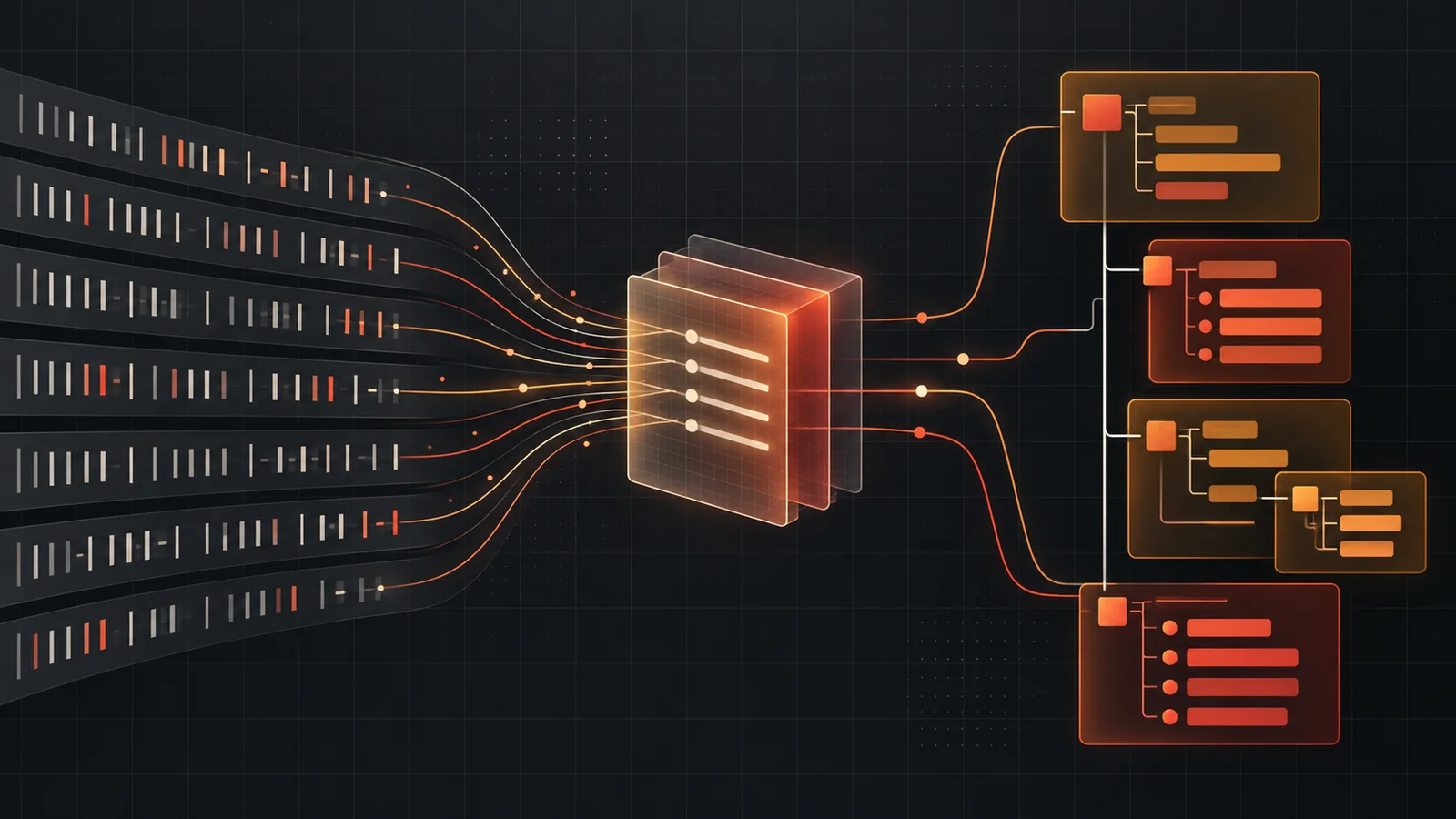
Agent Memory keeps two kinds of records. A session store preserves an ordered history of messages, tool calls and tool results. A memory store holds longer-lived facts, including user preferences, for retrieval in later conversations. Databricks says background pipelines distill information from sessions into durable memory, remove duplicate entries and replace facts when newer conversations contradict them.
The product is built on MemCurrent, Databricks’ persistent-memory architecture. MemCurrent separates stored context into append-only episodic memory for raw session traces and mutable derived memory for distilled learnings. The latter uses a structured knowledge base with an automatically generated index. In practice, the system preserves the underlying interaction history while maintaining a separate, editable set of facts for agents to reuse.
MemCurrent provides three ways to access that memory. Automatic plugins can insert relevant context without requiring an agent to initiate a search. Agent-invoked tools allow an application to read from or write to memory explicitly. An asynchronous “dreaming” pipeline consolidates information outside the live request path. Databricks says the architecture powers Agent Bricks Memory and is also used behind the scenes in Genie.
Databricks evaluated the system using what it calls its Internal Memory Benchmark. The company says the benchmark contains 114 test cases spanning 29 users and 2,233 history sessions, selected from more than 12,000 Genie sessions after an initial pool of 3,000 candidates was narrowed. Databricks says it used Claude Opus 4.6 as the agent model and GPT 5.6 sol as the memory model, averaging the results across three runs.
The findings are company claims, not independently reproduced results. Databricks reports that MemCurrent passed 68.4% of the test cases, compared with 22.3% for its no-memory baseline and 78.6% when agents received gold, or ideal, memory. It also reports average use of 418,000 tokens per task, which it characterizes as 31% fewer tokens and 1.44 times cheaper than the no-memory baseline. Databricks reports average latency of 252 seconds per task and describes that result as 26% faster, or 1.35 times faster, than the same baseline.
The opened Databricks materials do not fully align on retrieval mechanics. The launch post says agents search managed memory through a combination of keyword and semantic search. The current Agent Memory developer documentation instead says natural-language searches rank entries using BM25 full-text relevance rather than vector similarity. The materials do not explain whether those descriptions refer to different interfaces or versions.
The opened materials do not specify beta pricing, supported cloud regions, service-level commitments or a target date for general availability.
More news

Databricks makes multi-statement transactions generally available

Databricks expands Lakeflow Designer with data-quality and output controls
Databricks releases Funke for native HL7v2 parsing