Databricks pitches Omnigent with Nimble search across agent harnesses
Databricks is pitching Omnigent as a shared definition layer for coding agents, with Nimble offering a consistent web-search option across supported harnesses.

Databricks on Thursday presented Omnigent as a common layer for defining agents across coding harnesses, with Nimble as a selectable web-search provider. The company says teams can keep a model, tools, policies and limits in one agent specification while running it through interfaces including Claude Code, Codex or a raw API.
Selecting Nimble for Omnigent’s built-in web-search tool carries that provider across each supported harness instead of leaving every interface to use a different search implementation. Omnigent sits above those harnesses as a shared configuration layer; it does not replace them with a managed agent platform.
Databricks’ Omnigent documentation describes the managed offering as a beta. According to the company, the service includes a Databricks-operated server, workspace identity integration, model access through Foundation Model APIs and AI Gateway, and Databricks Sandboxes in select AWS regions. Databricks also says calls to a Databricks-hosted model route through its Foundation Model APIs, allowing cost, audit and governance records to be handled centrally. Access requires the Omnigent preview to be enabled and a workspace region that supports Databricks Unity Gateway. Sandbox sessions have additional preview and region requirements.
The open-source Omnigent repository describes the project as a common orchestration layer spanning Claude Code, Codex, Cursor, OpenCode, Hermes, Pi and custom agents. Its agent definition keeps the declared model, tools and controls together as the interface executing the work changes.
Nimble says its Omnigent integration has a lite search mode that returns titles, URLs and snippets, along with a deep mode that extracts page content. Its integration announcement says users can request between one and 100 results. Databricks also attributes to Nimble Web Search Agents the ability to coordinate search and extraction across sources, cross-check results and return claim-level citations. Those capabilities are vendor claims and were not independently tested in the supplied research.
Databricks cites Nimble testing that it says raised benchmark accuracy from 46% to 71% while cutting web-search costs by half. The supplied sources do not disclose enough methodology, task-level data, sample size, latency results or raw output to validate the comparison independently.
The integration predates Databricks’ September 17 post. Nimble announced on June 18 that it was a built-in web-search provider and launch partner for Omnigent. On August 28, Omnigent announced Nimble research and extraction tools, noting that Nimble was already available in the web-search provider slot. Databricks’ new post therefore adds its product framing to an existing integration rather than marking the capability’s first public availability.
More news

Microsoft opens Surface AI hardware preorders and releases agent containers
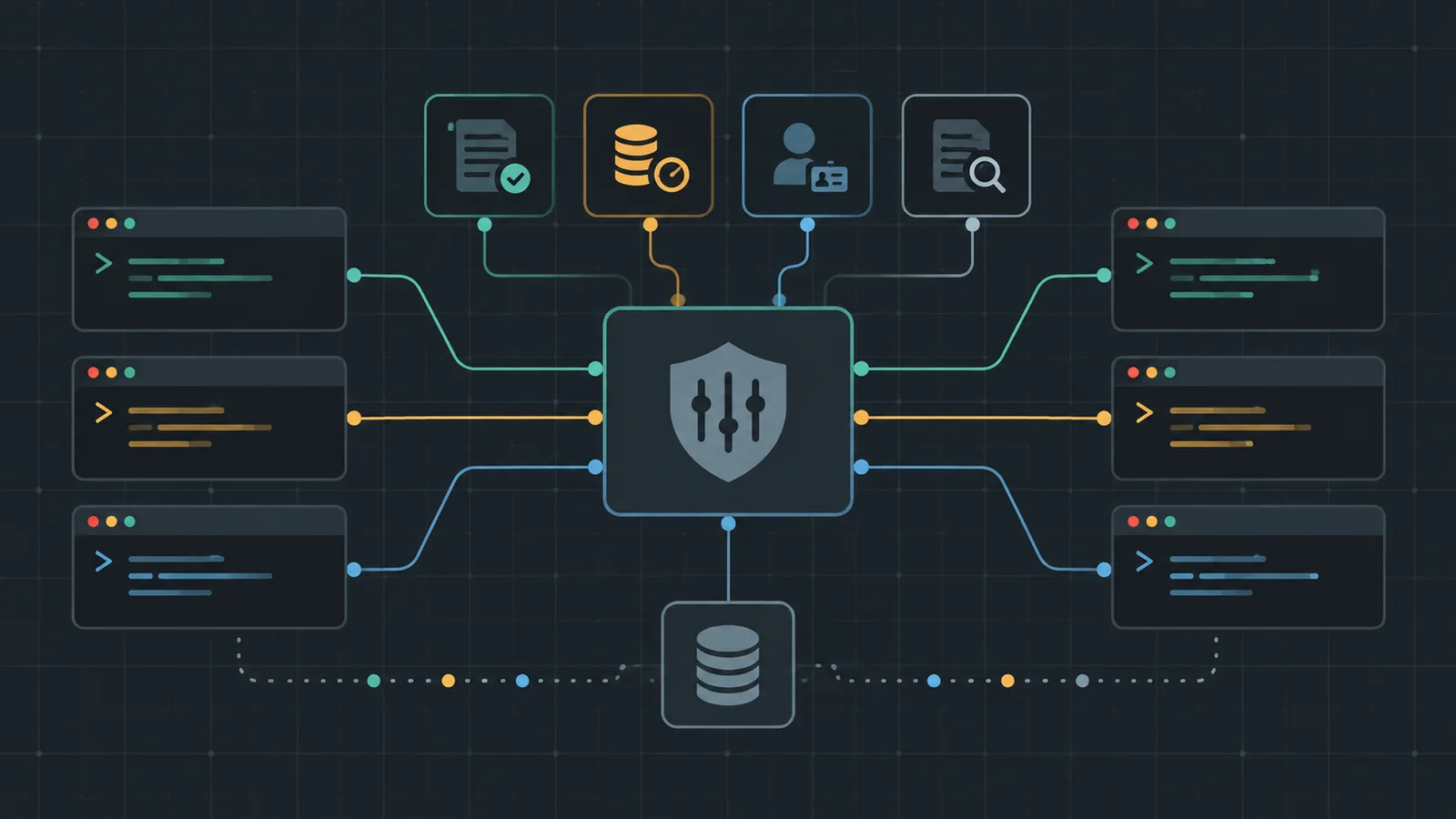
Databricks launches Unity Gateway CLI to govern coding agents

Gearset launches Cam for governed Salesforce development