DeepSeek brings app search, files and voice tools to its API
DeepSeek opened its API to search, URL reading, file input, safety checks, OCR and voice tools, with some capabilities built into V4.1-Flash and others offered as standalone services.
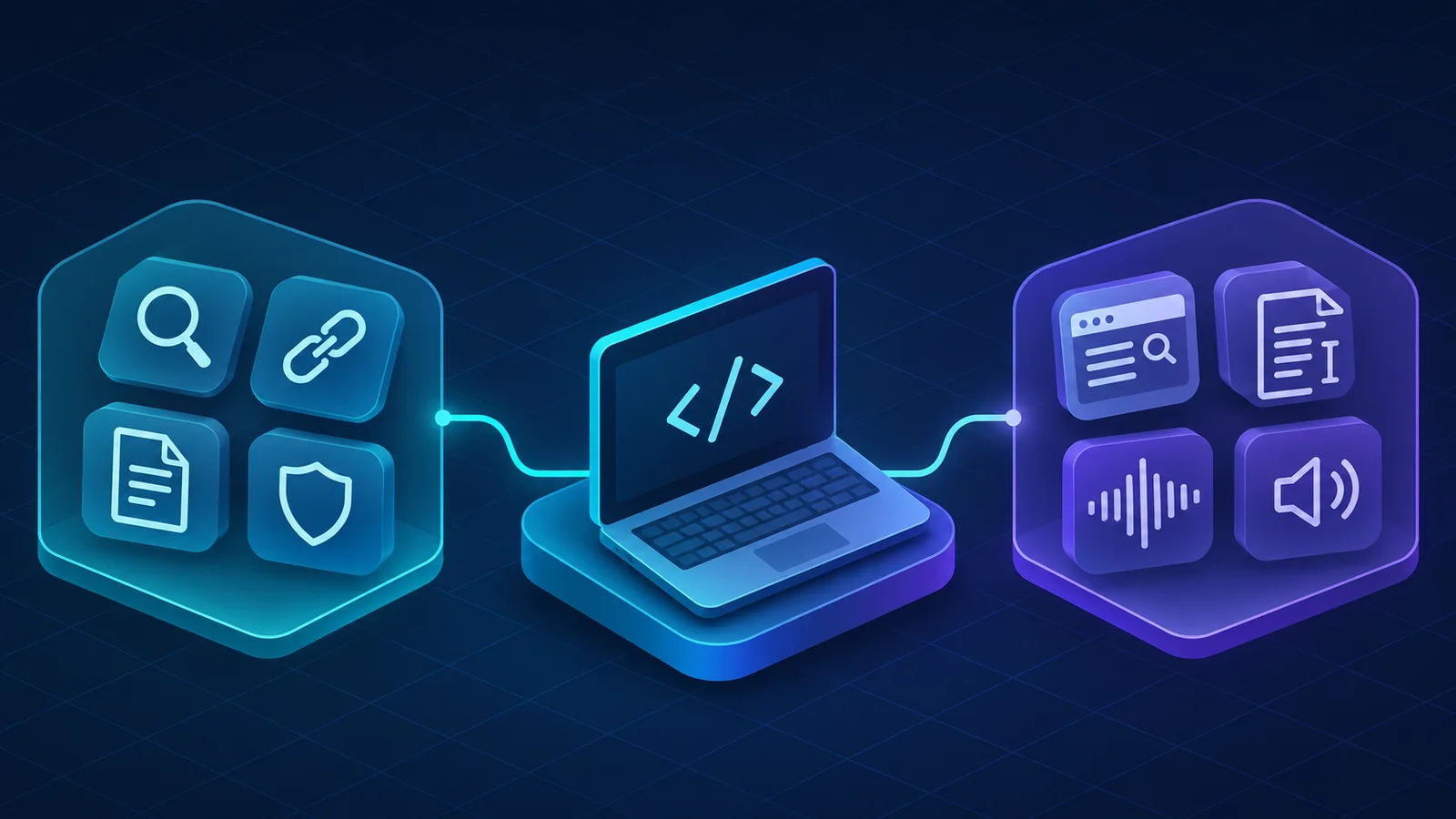
DeepSeek said it opened a set of its app capabilities to API developers on November 13, bringing web search, URL reading, file input and safety checks around its V4.1-Flash model alongside separate search, document and voice services. According to the company, the release gives developers ready-made components for app workflows, with tool-usage fees charged in addition to ordinary model-token costs.
DeepSeek’s documentation says the built-in conversation features run through the deepseek-flash API model name, which the release identifies as V4.1-Flash. The features work across the company’s Messages, Responses and Chat Completions protocols. According to DeepSeek, its service performs searches or reads URLs, assembles the resulting context and handles the model’s tool calls; the client displays returned content blocks and sends them back unchanged on the next turn.
DeepSeek documents two web-search modes. Non-thinking mode can search the web or images and return an answer with citations, while thinking mode can search and open pages across multiple reasoning steps. A separate deepseek_read_url tool detects links in a user’s message, retrieves the pages and places their contents in the model’s context.
DeepSeek says file input is also integrated with deepseek-flash. Developers upload a PDF, Word document, PowerPoint file or image through the Files API, then include the returned file_id in a conversation request. DeepSeek’s file-parsing documentation offers a text-recognition mode that omits figures and a rich-layout mode that crops detected figures into their original positions in the model context. The company warns that figure detection is not guaranteed.
For model inputs and outputs, setting safety_check to high enables what DeepSeek calls a basic review across all three conversation protocols. The service may reject risky input or end an output with a refusal indicator. DeepSeek says public-facing services must enable the checks, but its safety documentation assigns developers primary responsibility for reviewing content and for applicable requirements such as model registration and labeling AI-generated material. The documents do not establish which requirements apply in every jurisdiction.
For developers building custom pipelines, a second group of capabilities is available as standalone services. DeepSeek says its Search and Fetch endpoints return structured web results and a single page as Markdown, respectively, without requiring the model-directed web tools. Its OCR endpoint returns recognized text page by page without storing the file through the Files API or sending it to a chat model.
DeepSeek says the standalone speech-to-text API accepts a complete audio file and returns a complete transcript. Requests are capped at 120 seconds of audio, and streaming recognition is not supported. Its text-to-speech service offers an HTTP endpoint that streams generated audio for full text and a WebSocket mode that accepts text chunks and returns audio frames. DeepSeek also published an MIT-licensed static chat demo that uses deepseek-flash with compatible Messages and Files APIs while connecting speech features to the separate ASR and TTS endpoints.
More news

Microsoft launches MAI streaming transcription and two Voice 2.1 models
xAI releases Grok Voice Transcribe 2.0 for its speech-to-text API

OpenAI adds native animated GIF creation with Images 2.6