Google, Constellation sign 20-year deal for 890 MW of nuclear power
Google and Constellation signed a 20-year power deal supporting 890 MW of nuclear uprates, alongside separate energy-supply and cloud technology agreements.
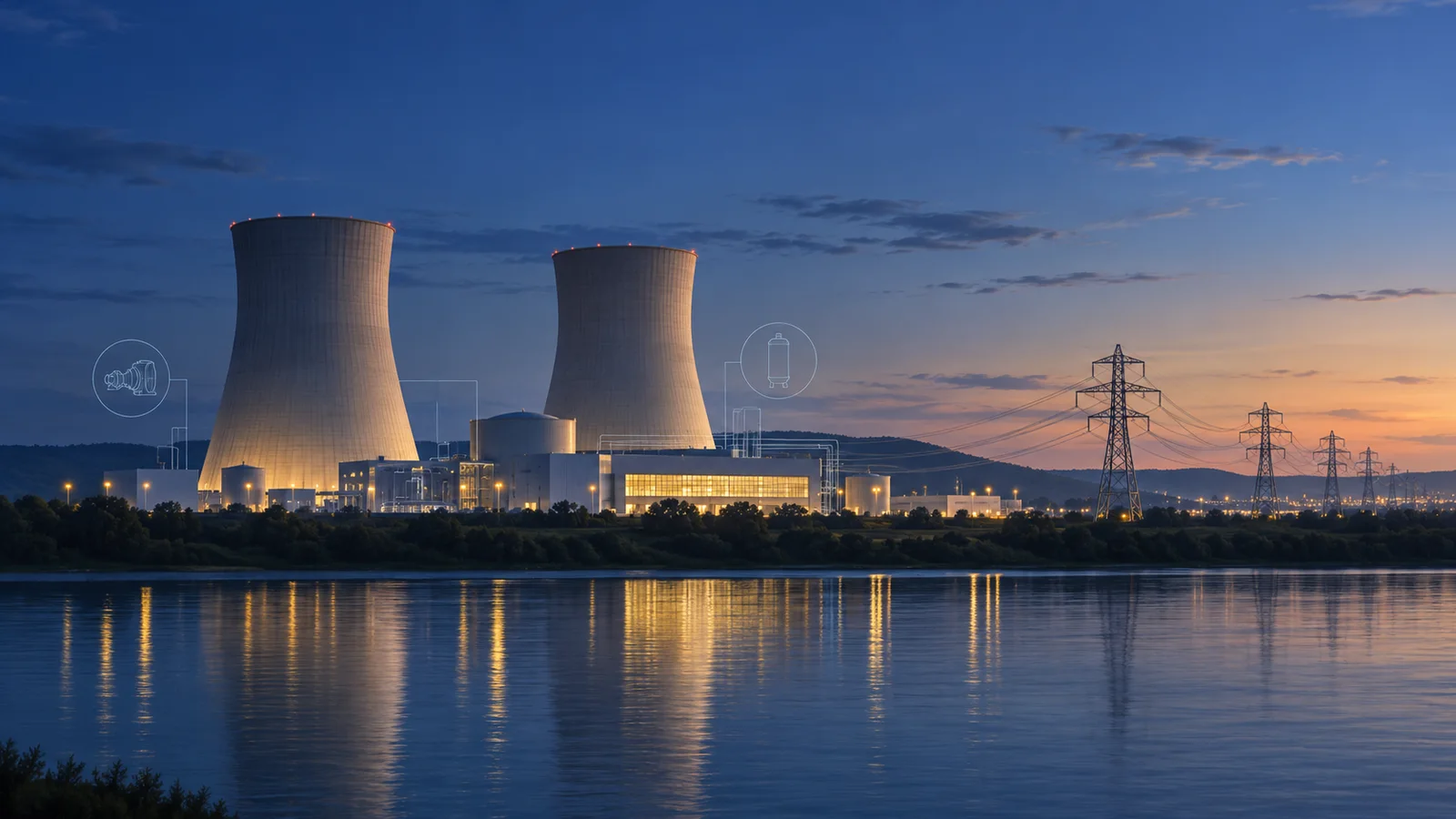
Google and Constellation Energy signed a 20-year power-purchase agreement intended to support 890 megawatts of additional nuclear capacity on the PJM grid. The companies expect the first uprate in 2028 and say all 890 MW is planned to be added before the end of 2032.
The program spans equipment and technology upgrades at 11 Constellation-owned reactor units across six sites in Illinois, Pennsylvania and New Jersey. The companies said it represents more than $4.3 billion of Constellation investment, will sustain about 4,400 existing jobs and create roughly 7,200 construction jobs during the buildout.
The planned uprates cover turbines, steam generators and digital control systems, with the aim of increasing thermal and electrical efficiency at operating plants. Google said its long-term power commitment provides the revenue certainty needed for the work and that other grid customers will not bear the associated costs. The affordability, investment and employment figures are company claims; the agreement’s pricing and the allocation of the stated investment were not disclosed.
The PJM agreement is separate from Google’s support for Georgia Power nuclear uprates.
The nuclear agreement is one part of a broader commercial package. Google and Constellation also entered a separate 15-year energy-supply arrangement covering another 2,700 MW from Constellation’s existing PJM fleet. The companies said that structure is intended to support continued operation of those assets in the regional market.
In a separate, expanded five-year technology alliance, Constellation selected Google Cloud and Gemini Enterprise. The companies said they plan to use the tools for site selection, power-flow modeling, permitting and interconnection planning, asset monitoring, outage management, construction optimization and protection of operational-technology networks.
The agreement also includes load-shaping and demand-response provisions intended to curtail non-critical power use during periods of grid stress. Google and Constellation described those measures and the cloud-security work as ways to improve resilience, but those benefits are expected outcomes rather than demonstrated results.
Google said the uprate projects are driven by growth in its data-center operations. PJM says its regional grid serves more than 67 million people across 13 states and Washington, D.C.
The announcements did not name the six plants or 11 reactor units, disclose project-specific approval requirements, or identify which approvals have been obtained.
More news

Google schedules first Suncatcher orbital TPU test for October 1

Google backs 96 MW of Georgia Power nuclear uprates

Google launches WeatherNext 3 across Search, Gemini, Maps and Cloud