Google Research opens generative-UI library and school pilot
Google Research released more than 30 teacher-reviewed STEM interactives and opened a school pilot with approval gates for AI-generated simulations.
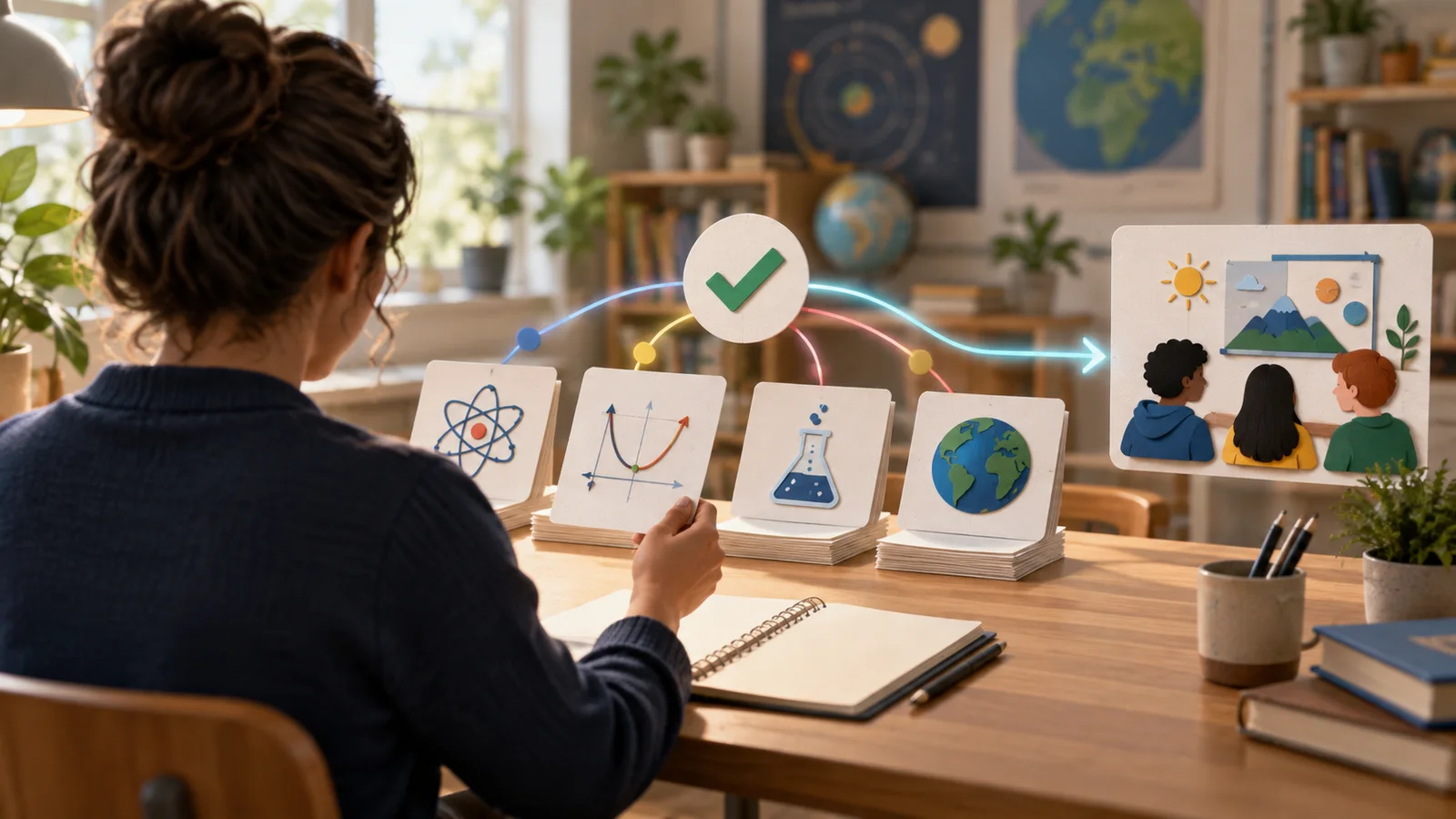
On September 17, Google Research released a public library of more than 30 AI-generated, teacher-reviewed STEM learning interactives and invited eligible schools to join a pilot for requesting custom simulations. Teachers approve the learning objectives before generation, and no pilot-generated interactive can enter the public library until the requesting teacher validates it.
The English-language library is aimed at middle- and high-school learning. Google says it spans biology, chemistry, computer science, earth science, mathematics and physics. Schools using Google Workspace for Education can express interest in the pilot, but signing up does not guarantee access. The program’s enrollment page says applicants must be their institution’s Google Workspace for Education administrator. Google contacts schools when a study or feature matches their profile.
The workflow starts with an educator’s subject, grade level and request. Gemini proposes learning objectives for the teacher to review, edit and approve before generation continues. The system then creates progressively harder challenges and supporting guidance, including hints, feedback and worked solutions. The accompanying technical report describes a Gemini-powered, multistage pipeline for customized interactive simulations.
Generated simulations go through automated critique and refinement loops covering visual presentation, solvability, telemetry and mechanics. One evaluation opens the simulation in Chrome, interacts with it and tests adversarial control settings, including extreme values. These are quality-control checks in Google’s pipeline, not evidence that a simulation improves student learning. For related research context, Google has also described a ToolGrad system for answer-first tool-use data generation.
The pilot adds a separate human gate. Google says each newly generated interactive goes back to the teacher who requested it and can enter the public library only after that teacher validates and approves it. The company says teachers also vetted and approved the interactives already in the library.
The research has not measured student learning gains or engagement in real classrooms. Google says it plans user-experience research and classroom field studies. The announcement and technical report do not disclose a pilot start date, participating schools, geographic scope, selection count or timetable for adding approved interactives to the public library.
More news

Google outlines three building blocks for autonomous wet labs

Google trial finds AI improves patent drafts, but junior judgment does not improve on average

Google Research lays out unresolved privacy and security risks for AI agents