Google schedules first Suncatcher orbital TPU test for October 1
Google’s first Project Suncatcher prototype is scheduled to launch October 1, testing four TPUs against tight orbital power, cooling and radiation limits.
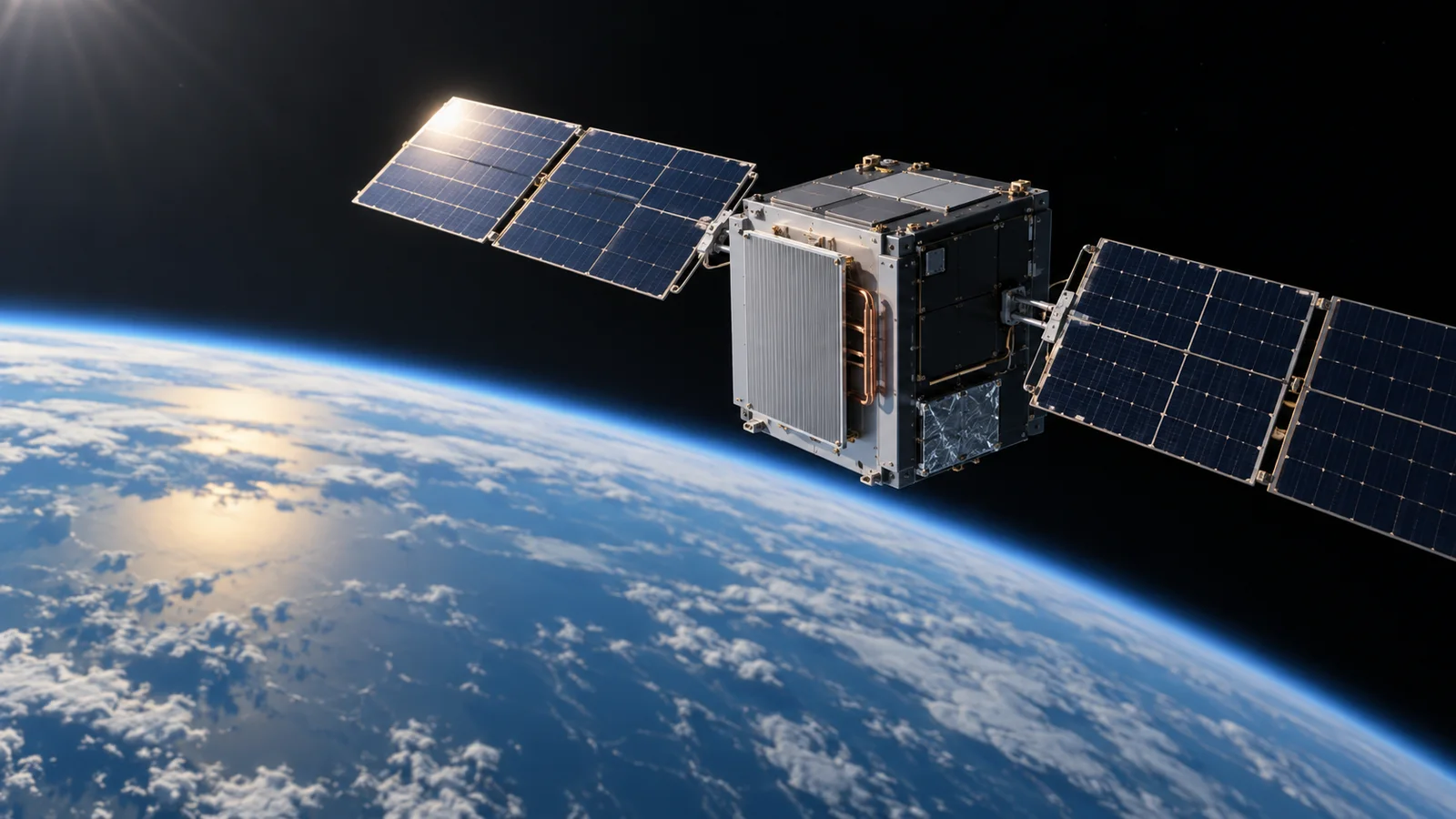
Google is scheduled to launch its first Project Suncatcher orbital prototype on October 1 aboard SpaceX’s Transporter-18 rideshare mission. A single satellite will test AI hardware under launch, radiation and thermal stresses. It is an engineering experiment, not a functioning orbital data center or production compute service.
The prototype, called MVP, was developed with satellite operator Planet. The scheduled-flight report describes a refrigerator-sized spacecraft carrying four Google Tensor Processing Units. It says the satellite’s solar panels supply about one kilowatt and that Google plans to run Gemini workloads for roughly 15 minutes at a time before shutting down the TPUs so the radiator system can catch up. Terrestrial data centers can use thousands of accelerators.
Google says the mission will collect in-orbit data on how its TPUs handle rocket vibration, sustained acceleration, radiation and temperature extremes. The company says it tested the satellite on three vibration axes and ran AI workloads on Trillium TPUs during proton-beam testing at UC Davis’s Crocker Nuclear Laboratory. Google reported that the chips tolerated a total ionizing dose above its estimate for a five-year space mission. That ground-test result has not been independently reproduced.
Cooling is especially constrained in a vacuum, where there is no airflow to carry heat away. Google says the prototype uses heat pipes and radiators, a setup it tested in a thermal-vacuum chamber before the flight. The planned pauses between short compute runs are intended to let that cooling hardware dissipate accumulated heat.
Project Suncatcher is a long-term research program exploring whether solar-powered satellite clusters could eventually support large machine-learning workloads. Google says a two-satellite test of the high-bandwidth laser links needed to connect such a cluster remains planned for 2027, separate from the October flight. The October 1 launch date may change.
More news
Google and Synaptics move Coral NPU into commercial edge chips
Google, Constellation sign 20-year deal for 890 MW of nuclear power

Google backs 96 MW of Georgia Power nuclear uprates