Google adds TPU 8tx and TPU 8i Max systems
Google expanded its eighth-generation TPU portfolio with TPU 8tx for confidential inference and TPU 8i Max for memory-intensive, high-density workloads.
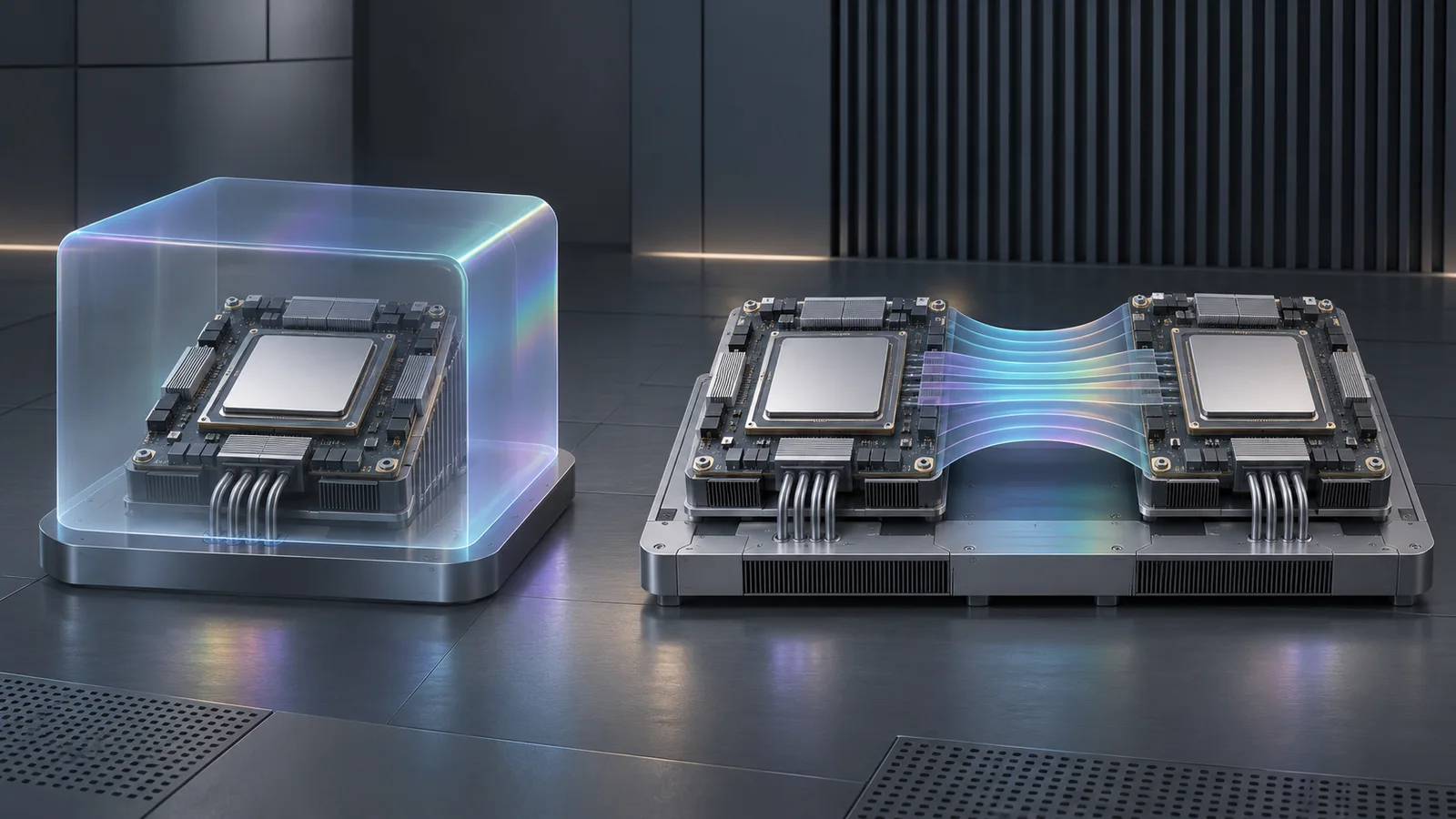
Google announced TPU 8tx and TPU 8i Max on November 9, expanding its eighth-generation TPU portfolio to four systems. TPU 8tx targets confidential inference and other sensitive-data workloads, while TPU 8i Max is intended for high-density workloads with large context windows.
The lineup now includes TPU 8t, TPU 8i, TPU 8tx and TPU 8i Max. Google describes the additions as systems, not newly designed chips: they change the compute, networking, storage, packaging, memory or security around existing TPU silicon.
Google says TPU 8tx uses the same silicon as TPU 8t, paired with fifth-generation AMD EPYC CPU hosts and the Boardfly network. It positions the system for small-scale training, private fine-tuning, model distillation and reinforcement learning involving sensitive data.
The company claims TPU 8tx provides hardware-level protection and isolation for sensitive data and model weights while they are in use. It also claims up to two times lower latency than TPU 8t with a near-zero performance penalty. None of those security, latency or performance claims has been independently verified in production.
TPU 8i Max combines two low-latency TPU 8i chips in one package, according to Google. The company claims the system doubles TPU 8i’s compute, SRAM and high-bandwidth-memory bandwidth. It also says the system fits twice the silicon into the existing rack footprint and increases computing power per square foot and per watt. Those performance, density and efficiency comparisons have not been independently verified in production.
Google did not specify pricing, supported regions, orderability, deployment timing or a general-availability date for either system.
More news
Google acquires Crusoe's Wyoming data-center site
Drax, Brookfield and Radiant plan UK data-center campus
OpenAI outlines community commitments for future compute campuses