Google and Synaptics move Coral NPU into commercial edge chips
Google and Synaptics introduced Astra SR200 processors and the forthcoming Coralboard SR, made Coralboard SL generally available, and opened an IREE/MLIR compiler foundation.
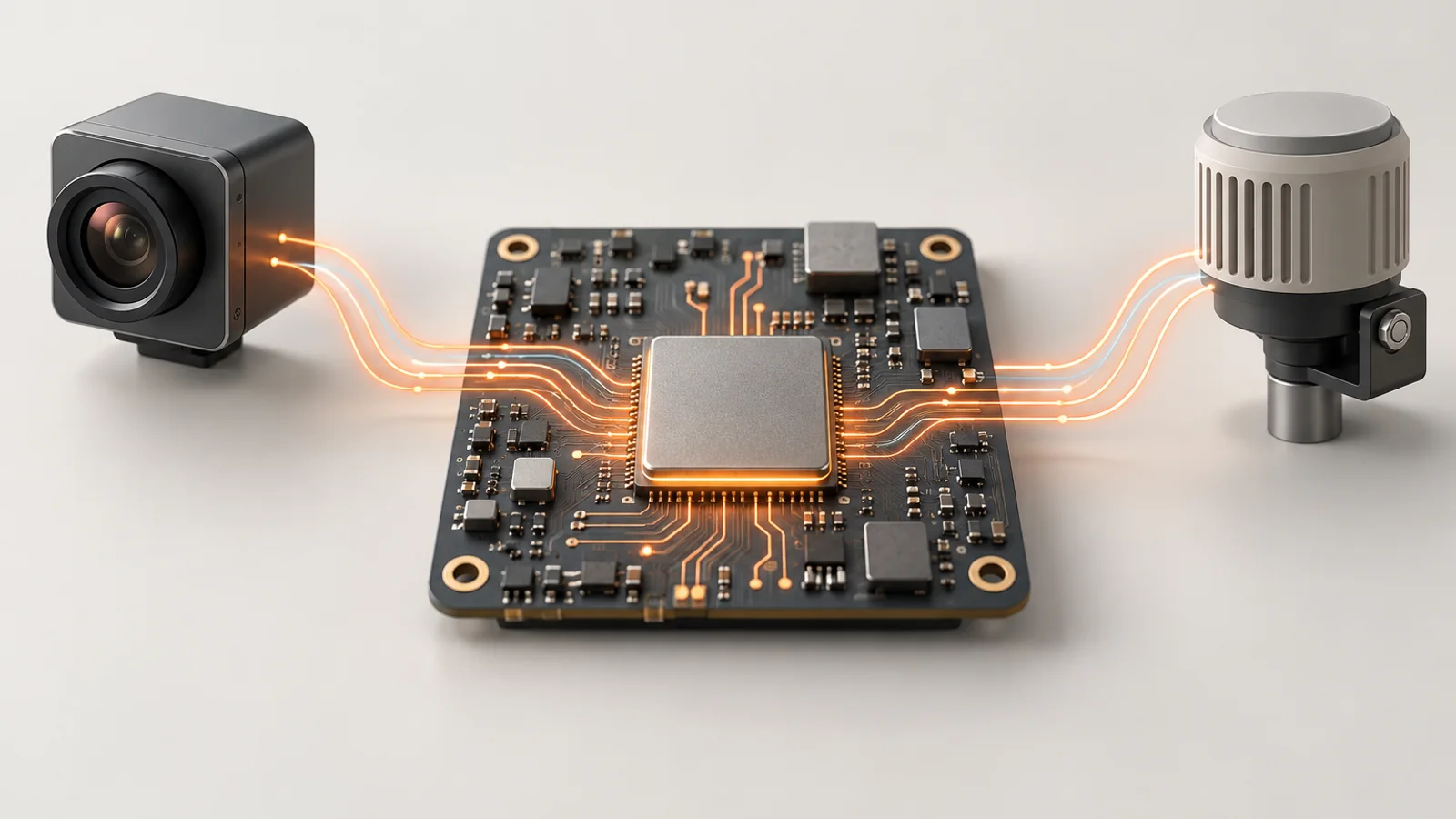
Google and Synaptics introduced a new family of edge processors built with Google’s second-generation Coral neural processing unit. They also unveiled the forthcoming Coralboard SR developer kit and made the existing Coralboard SL generally available on October 20. Together, the releases move Coral beyond an earlier limited-edition board and into a commercial Synaptics processor line, while making development hardware more widely available.
The SR and SL families are being aligned around an open, MLIR-based software workflow designed to move models across devices with different power and performance limits. MLIR is an intermediate representation that helps compiler tools translate a model into instructions for different hardware components. Google released the Coral Compiler v1.0 foundation as an IREE compiler and simulation stack. Its repository, however, says the current end-to-end flow relies on host-side simulation rather than physical hardware.
Google Research said it has completed the four planned milestones for the 32-bit Coral NPU architecture and published the complete RTL — the chip-design source used to implement the processor — in the Coral NPU repository. The design combines scalar, vector and matrix execution components. Google says its configurable Matrix Execution Unit can reach up to 1 trillion operations per second while targeting about 10 milliwatts of average inference power. Those figures are company specifications and have not been independently benchmarked.
Synaptics’ Astra SR200 family includes three pin-compatible processors: the SR210 at a claimed 200 billion operations per second, the SR230 at 300 billion and the SR250 at 400 billion. The chips pair Coral NPU intellectual property with RISC-V vector-core support. Google described the family as taped out, meaning the physical chip design had been finalized for manufacturing.
The forthcoming Coralboard SR is based on the SR250 and is specified with up to 8 MB of integrated SRAM and 256 MB of custom DRAM. The opened announcements did not give a firm sale date or price for the board.
Coralboard SL, first previewed in a limited-edition run at Google I/O, is now generally available through DigiKey. It uses Synaptics’ Astra SL2619, includes 2 GB of DDR4 memory and has a Torq/Coral NPU subsystem that the companies rate at 1 trillion operations per second. The announced performance and efficiency figures remain vendor claims.
More news

Google, Constellation sign 20-year deal for 890 MW of nuclear power
Google schedules first Suncatcher orbital TPU test for October 1

Google backs 96 MW of Georgia Power nuclear uprates