Google details AI tuberculosis screening deployments across six countries
Google says licensed chest X-ray software now supports tuberculosis screening across six countries, including offline use at a mine, as Indonesia adapts its open medical AI models.
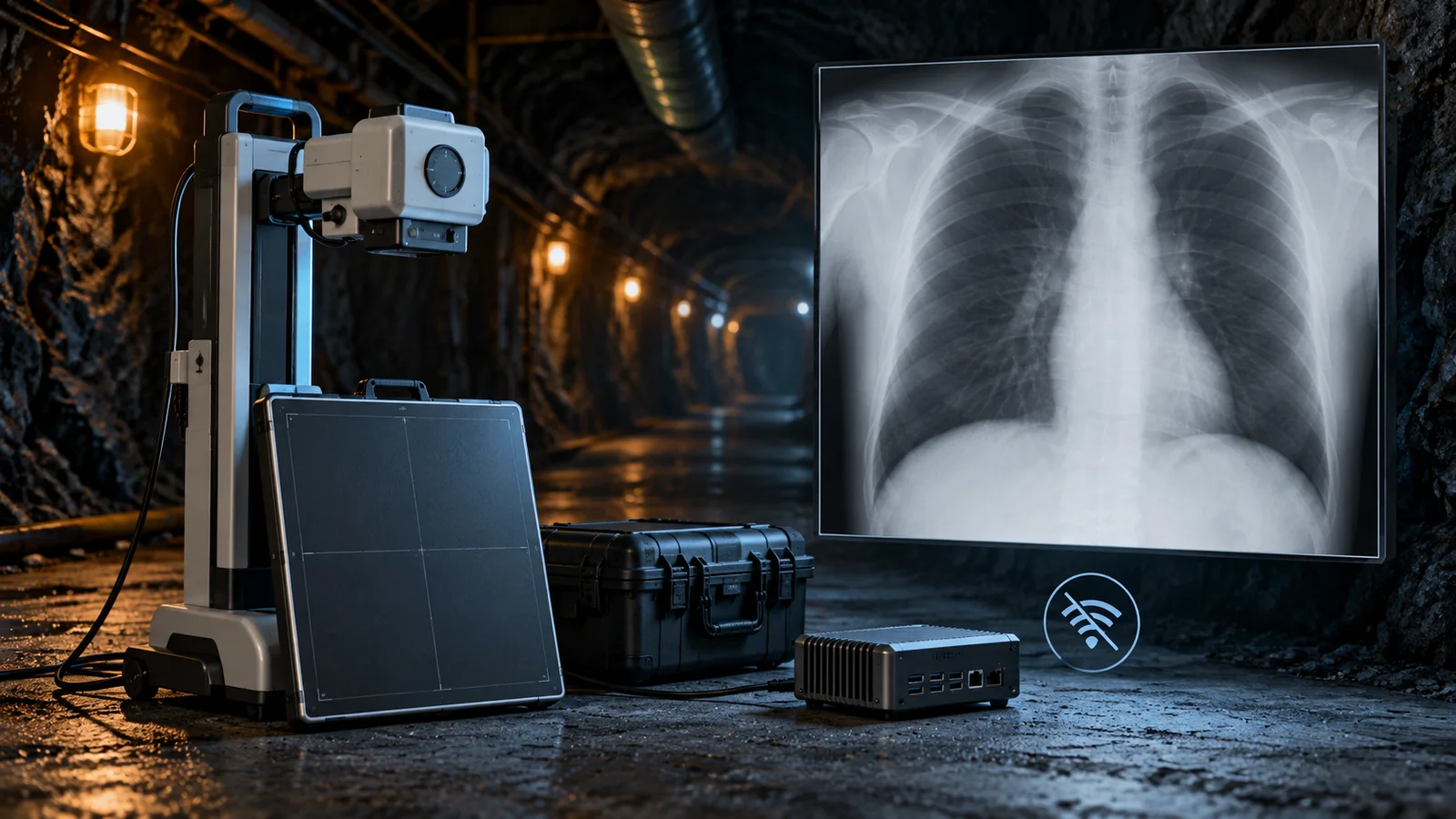
Google Research says its tuberculosis-screening work has moved into clinical deployments across six countries. In its October 23 update, Google said more than 90 clinicians had evaluated over 25,000 chest radiographs with Nexus AI CXR at about 40 facilities. Healthcare professionals retain final diagnostic decisions.
One of those deployments works without a dependable network connection. Google says portable digital X-ray equipment and offline AI were used to screen miners nearly four kilometers underground at South Africa’s Mponeng Gold Mine. People flagged for presumptive TB can then be referred for confirmatory molecular testing.
Pretoria-based Nexus Intelligence licensed Google’s chest X-ray model and developed Nexus AI CXR. Nexus describes the product as a CE MDR Class IIb medical device for screening and triage, and says it holds ISO 13485:2016 quality certification. The cited materials do not include an authoritative registry record independently confirming either status.
The software runs two models on each image. One flags lung fields that appear abnormal; the other identifies patterns suggestive of pulmonary TB. Heatmaps and confidence scores support review by trained professionals, but Nexus says the output does not replace diagnostic interpretation. It must be considered alongside clinical context, medical history and other test results.
Alongside the operational software, Google is working to make the underlying research adaptable. MedSigLIP places medical images and text in a shared representation. Developers can classify or search images using text labels and fine-tune the model for specific tasks with local labeled examples. Google says this can support specialized models without training a system from scratch. For related context on Google’s clinical AI work, see its AI-assisted maternal ultrasound study.
The MedGemma technical report describes an open-weight family built on Gemma 3. It includes a 4-billion-parameter multimodal model, a 27-billion-parameter text model and the standalone MedSigLIP image encoder. Google presents them as foundations for downstream adaptation, not finished diagnostic products.
Google says Indonesia’s Ministry of Health is fine-tuning MedGemma and MedSigLIP on domestic chest radiographs and running them on local infrastructure so patient data stays within the country. Neither the opened ministry update nor the WHO material confirmed that specific integration. The ministry separately said portable X-ray and near-point-of-care molecular testing were supporting nationwide case finding, and that TB screening had been added to the country’s free health-check program.
More news

Bayer Crop Science builds multi-agent analytics engine on AWS

Barclays plans 5,000 job cuts in technology efficiency push

Zoom launches Unified Context Layer for enterprise AI agents