OpenAI outlines community commitments for future compute campuses
OpenAI’s new compact sets out energy-cost protections, local consultation, resource reporting and workforce plans for future campuses it owns and operates. A separate blueprint proposes broader industry rules.
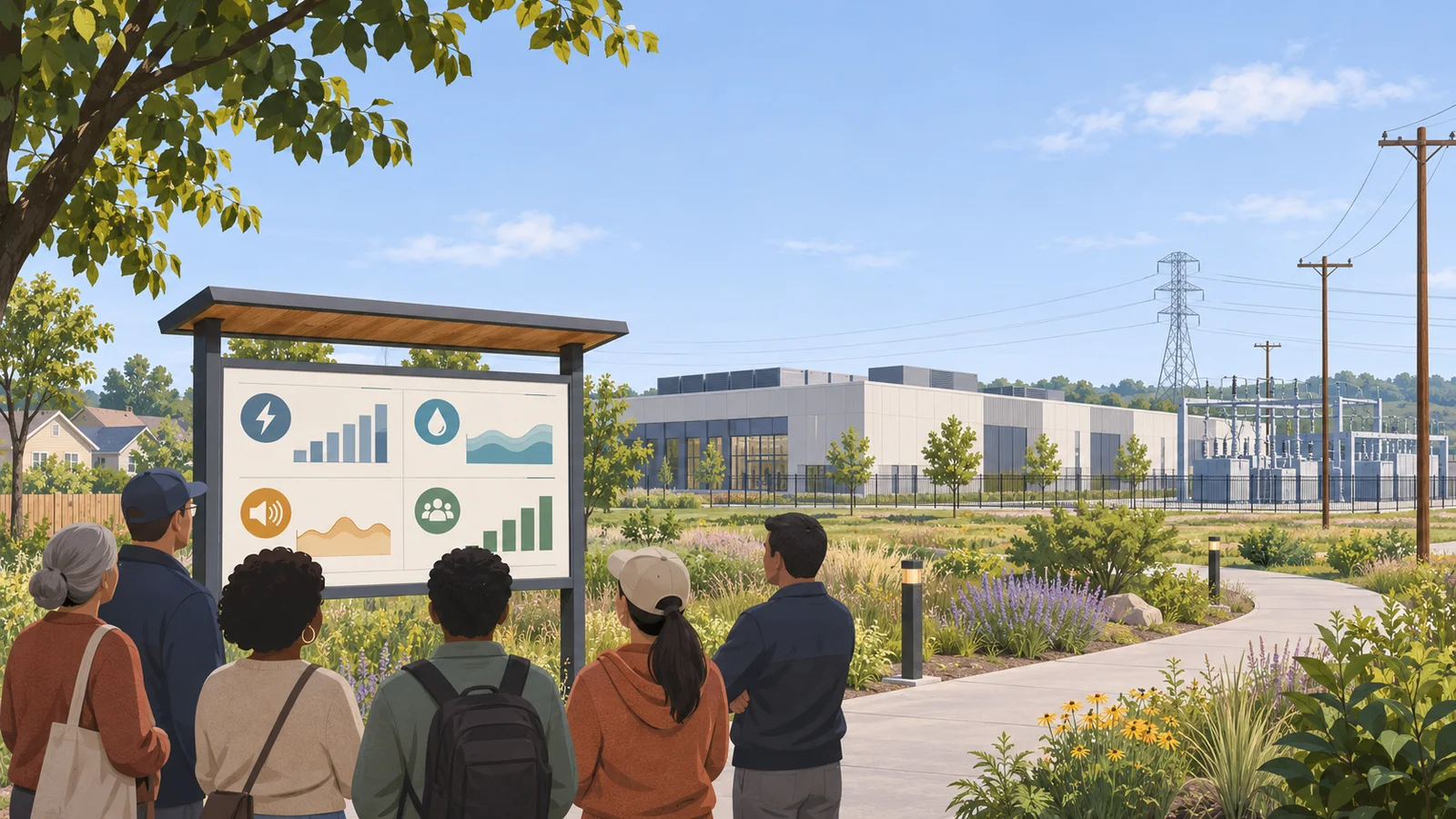
OpenAI published a National Community Compact on Nov. 5, setting out commitments for future compute campuses it owns and operates. The company says it will cover energy-related costs, consult local communities and publicly report site impacts. Each covered campus is due to receive its own local compact and annual progress reports.
The framework applies only to sites OpenAI both owns and operates, not every facility that supplies the company with computing capacity.
Under the compact, OpenAI says it will pay the full cost of the electricity it uses and the infrastructure needed to serve each covered site. It also promises financial assurances before utilities make major investments, intended to protect other customers if a project is delayed, reduced or canceled. For related grid context, DataPhoenix has covered OpenAI’s Georgia grid pilot.
OpenAI says it will begin consulting communities early enough to influence plans. Each campus will have an accessible local contact throughout its operating life, and the company will publish annual progress reports on its commitments.
The reporting promises cover site-level water and electricity information, cooling and water-management practices, and construction-impact plans addressing traffic, noise and lighting. OpenAI also says it will commission and publish independent noise studies before operations begin and every year afterward.
OpenAI says it will not require public officials to sign nondisclosure agreements as a condition of negotiations over covered sites. Narrow confidentiality exceptions remain for legitimate security information, trade secrets, and proprietary or competitively sensitive information.
The compact also calls for site-specific workforce strategies explaining the jobs expected and how residents can prepare for them. OpenAI says it will report annually on hiring, training and apprenticeships, and set local hiring targets where local labor conditions allow.
A separate Compute Campus Policy Blueprint asks federal, state and local policymakers to extend similar protections across the wider industry. Those proposals are public-policy recommendations, not additional company promises for all infrastructure used by OpenAI.
The blueprint recommends electricity tariffs that make large customers cover incremental grid costs, financial protections against stranded infrastructure spending, voluntary programs to reduce or shift demand, and faster processes for connecting projects and building transmission. It also advocates technology-neutral clean-electricity tax incentives.
Its transparency proposals include public reporting on construction effects, water, energy, noise, hiring and economic impacts; narrow exceptions for nondisclosure agreements; measurable tax incentives with clawbacks; purchasing forecasts for local suppliers; and workforce planning tied to expected jobs. The document says campus hardware must be refreshed every three to five years over an assumed 30-year operating life, which OpenAI presents as a source of recurring work.
The documents do not identify every future campus that will meet the owned-and-operated test or provide a schedule for site-specific compacts. The research found no independent evidence that the promised consultation, reporting, ratepayer protections or hiring programs have been implemented at a covered campus. The documents also set out no external enforcement mechanism for most commitments.
More news

US voters back local restrictions on data-center expansion
OpenAI launches Grid Protectors with 1,000 MW Georgia pilot

Murata plans ¥1 trillion MLCC expansion through fiscal 2030