Hugging Face launches SimReady Central with more than 2,000 robotics assets
Hugging Face has launched SimReady Central, a searchable catalog of prepared OpenUSD assets for robotics simulations and AI-factory digital twins. The catalog is open to browse, but each contributed dataset and package retains its own license terms.
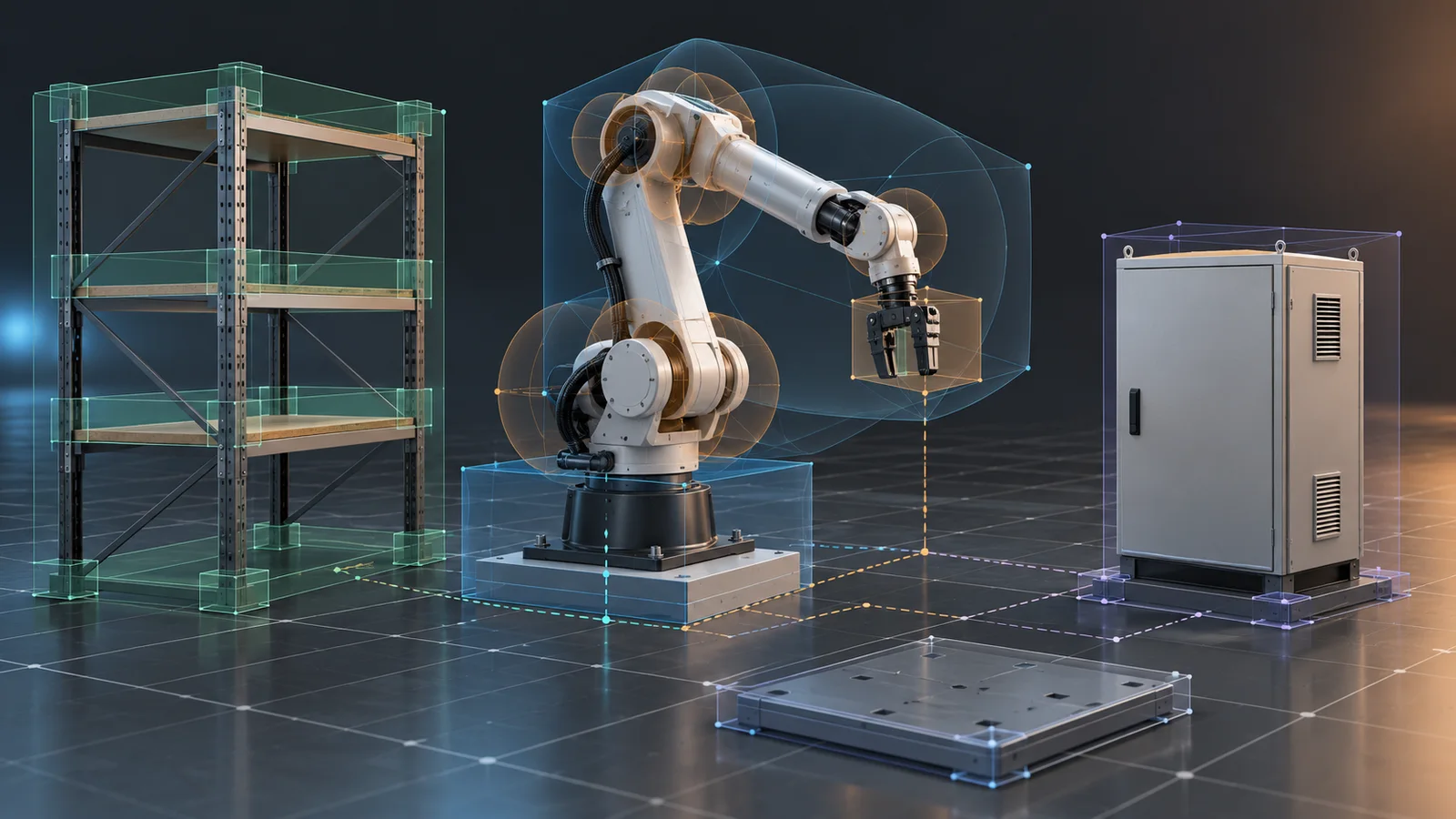
Hugging Face has launched SimReady Central, a catalog that NVIDIA says brings together more than 2,000 simulation-ready OpenUSD assets for robotics training environments and AI-factory digital twins. Developers can browse the public collection without collaborator approval, search participating datasets and combine assets from different suppliers in one scene.
The catalog provides a shared discovery layer for robot arms, grippers, warehouse equipment, racks and cooling infrastructure, while contributors continue to host the underlying packages. The catalog does not impose a single license across those packages.
A SimReady asset contains more than visual geometry. It combines OpenUSD content with the structure, simulation metadata and validation evidence required for a defined use case. Depending on the asset’s profile, those elements can include collision geometry, mass and friction, joint structures and limits, semantic labels, materials, sensor attributes, or electrical and thermal metadata. SimReady Foundation organizes the requirements into named, versioned profiles and provides machine-checkable rules for testing whether an asset meets them.
Developers can start in the Hugging Face Space or use the SimReady Central endpoint and the simready-search Python package for natural-language discovery. Hugging Face indexes USD properties and simulation metadata across participating datasets. After selecting assets whose profiles fit the intended workflow, developers can load packages as OpenUSD references or payloads and assemble the stage with application code. NVIDIA’s library documentation tells users to review the target profile, validation evidence and license, preserve referenced materials and textures, and use the registered dataset revision to reproduce the same asset version.
The catalog uses a distributed publishing model. Contributors host and version packages in their own public Hugging Face datasets, while a shared GitHub index registers specific dataset commits for search and the library browser. NVIDIA reviews package completeness, the declared profile and version, validation or benchmark evidence, and the declared license before accepting a registration.
Contributors retain ownership and control their dataset releases and licenses. NVIDIA says accepted datasets may use any license, including non-commercial terms, for inclusion in Hugging Face search and the SimReady Central browser. License declarations must appear on the dataset card and in each package’s metadata. Only datasets under CC-BY-4.0 qualify for distribution in China and inclusion in Isaac Sim browser experiences, according to NVIDIA’s documentation. The Apache-2.0 license covering NVIDIA-authored content in the SimReady Foundation repository does not replace the terms attached to individual catalog packages.
More news

NVIDIA broadens Isaac robotics stack with runtime, datasets and humanoid reference platform

NVIDIA launches RTX Spark PCs, schedules demos in six cities

Nvidia halves DLSS 5 overhead ahead of Hogwarts Legacy rollout