Kiro Crew launches persistent bots for recurring development work
Kiro Crew bots turn recurring development responsibilities into persistent, scheduled workflows while leaving goals, permissions, and review boundaries with users.
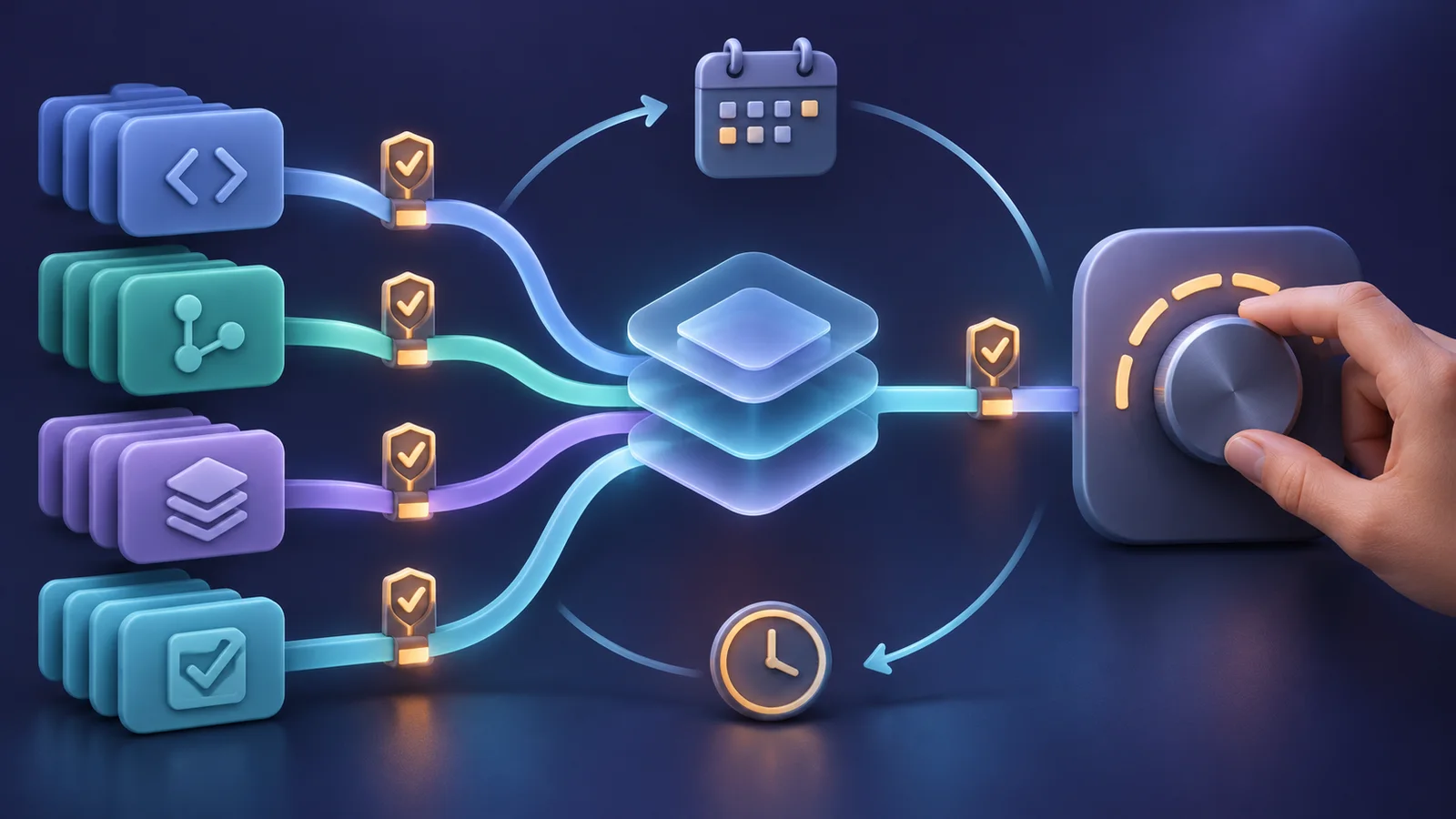
Kiro made bots generally available in Kiro Crew on Nov. 5, introducing named, long-running agents that users configure for recurring development responsibilities. Unlike isolated coding sessions, the Kiro Crew bots retain an ongoing conversation, notes, and a dedicated workspace so work and context can carry across separate runs.
According to Kiro, a bot can start multiple worker sessions in parallel, monitor their progress, redirect work that drifts from its plan, and return the results to its main conversation. If one branch needs a human decision, the bot can ask the user while continuing work that does not depend on the answer. Users can also create schedules through the conversation; Kiro cites overnight build-failure checks and weekly release-note preparation as examples.
That persistence does not give bots unrestricted authority. Users define each bot’s goal, inputs, completion criteria, review boundaries, escalation points, and schedule. Tool access and permissions are set per bot. Kiro describes a research bot that can read files but not change them, a deployment bot that requires approval before making changes, and a code-review bot that can comment or request changes but cannot approve or merge code. A bot may request another tool, but its access stays unchanged until the user approves the request.
Each responsibility also keeps its own memory. Kiro says users can inspect, edit, or delete what a bot remembers, revise its instructions, and adjust its permissions as the workflow changes. A bot can maintain a customizable dashboard and work log, giving users a view of scheduled activity, open items, and underlying sessions without combining every responsibility in one context.
Kiro also says users may choose different models for a coordinating bot and its worker agents. Crew bots can run through the product on a laptop, a Mac Mini, or an Amazon EC2 instance.
More news
AWS adds live web app previews to Bedrock AgentCore sessions
Databricks launches Unity Gateway CLI to govern coding agents
Anthropic adds cross-session messaging to Claude Code so coding agents can coordinate
Cursor launches iOS app in public beta to direct cloud AI coding agents from a phone
 Dmytro Spodarets·Jun 30, 2026