Databricks launches Unity Gateway CLI to govern coding agents
Databricks introduced the Unity Gateway CLI so administrators can centrally configure supported coding agents, model access, tools, tracing and spending controls without replacing developers’ preferred interfaces.
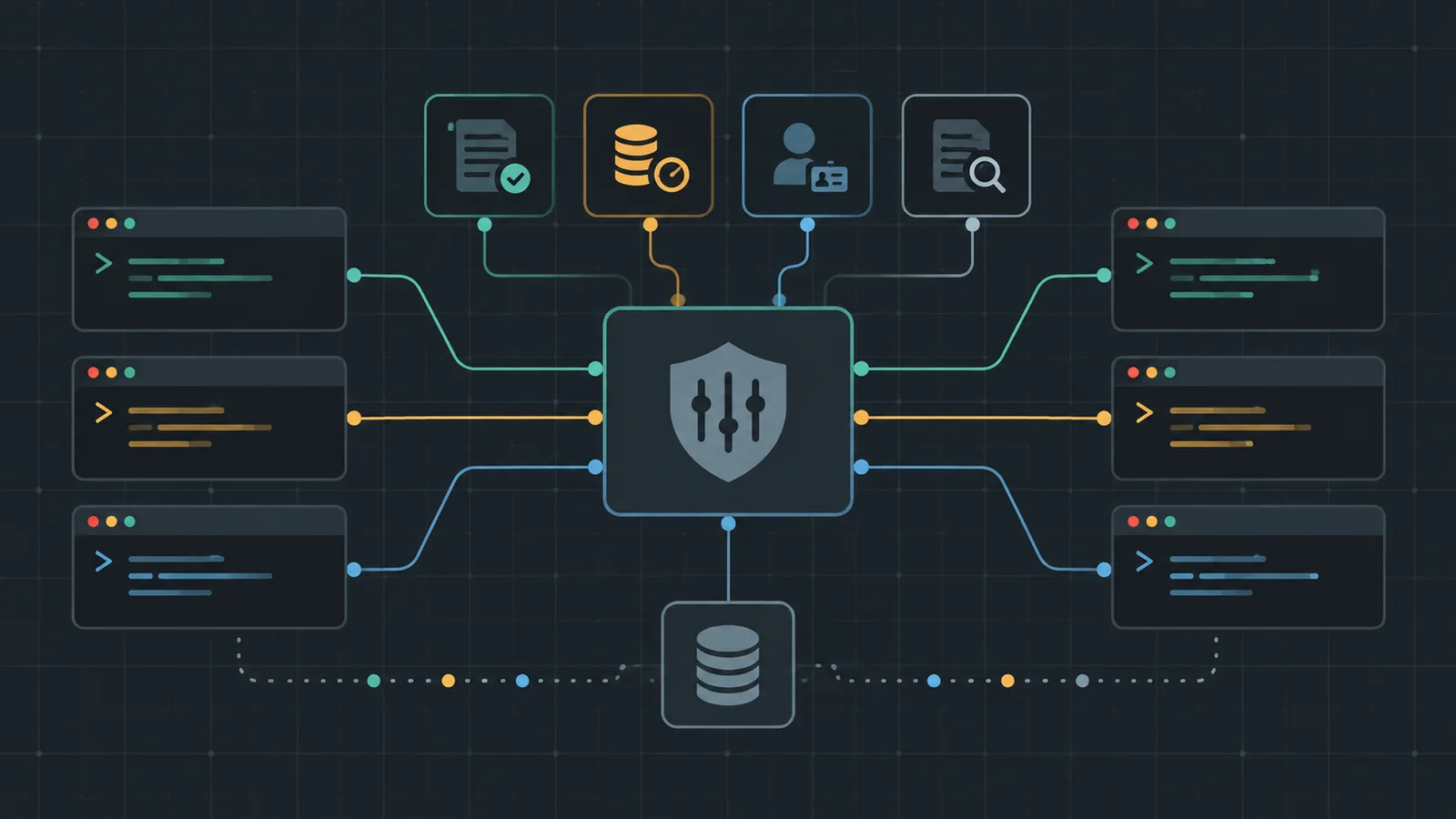
Databricks introduced the Unity Gateway CLI, a launcher for centrally configuring and governing multiple coding agents while developers continue working in their preferred interfaces.
Administrators can publish a single workspace configuration for enabled and default agents, approved model services, Model Context Protocol servers, shared skills, Smart Routing and tracing. The managed configuration is a beta feature that a workspace administrator must enable through the Unity Gateway Managed Configuration preview.
The command-line tool fetches the configuration and applies it on a developer’s machine before opening the selected agent. Databricks’ CLI reference lists launch commands for Claude Code, Codex, Gemini CLI, OpenCode, GitHub Copilot CLI and Pi. Administrators can update the shared configuration, and the CLI checks for changes the next time a developer launches an agent. The release follows Databricks’ work on shared definitions across coding-agent harnesses.
For model access, the CLI authenticates the developer to a Databricks workspace and routes requests through Unity Gateway model services. Unity Catalog permissions and Unity Gateway controls determine which models a developer can use, enforce rate limits and budgets, and record usage and cost. Databricks says this avoids placing a model-provider API key on each developer’s machine.
The governance layer also provides a common usage record across agent interfaces. Concurrence CTO John Xing said the company routes its coding-agent model and tool traffic through Unity Gateway with identity-level attribution. In a joint Databricks and Concurrence customer account, the companies said Concurrence’s coding agents generated about 360,000 requests and 61 billion cumulative input tokens after a July 10 rollout. They said each request remained tied to the engineer who made it, allowing usage, cache rates and spending to be analyzed by person and team. The figures were not independently audited.
Databricks also presents Smart Routing as a way to select a model for the task instead of leaving that choice to developers. The company says the beta system classifies the initial task and its metadata, selects a model class based on complexity, capability and cost, and keeps that model for the session to preserve cache efficiency. Databricks reported savings of 35% on an internal coding benchmark and 56% on public coding benchmarks. The company’s results have not been independently reproduced.
Tracing is meant to show tool activity and failed calls alongside model usage. Databricks says it used Unity Gateway tracing with Genie One to find and fix seven MCP-server bugs in about one hour. The company estimated that the bugs caused roughly $499,000 a year in wasted tokens and about 12,000 engineering hours, for approximately $1.2 million in combined annual lost productivity. Those savings are Databricks estimates, not audited results.
Databricks’ unified trace table documentation labels the feature beta and says trace delivery is best-effort. The company tells customers to keep using audit logs as the compliance system of record. Databricks has not disclosed pricing, rollout geography or a general-availability date for managed coding-agent configuration.
More news

Arcade launches MCP tool discovery for enterprise AI agents

Databricks adds Meta ads MCP server to its Marketplace

Databricks pitches Omnigent with Nimble search across agent harnesses