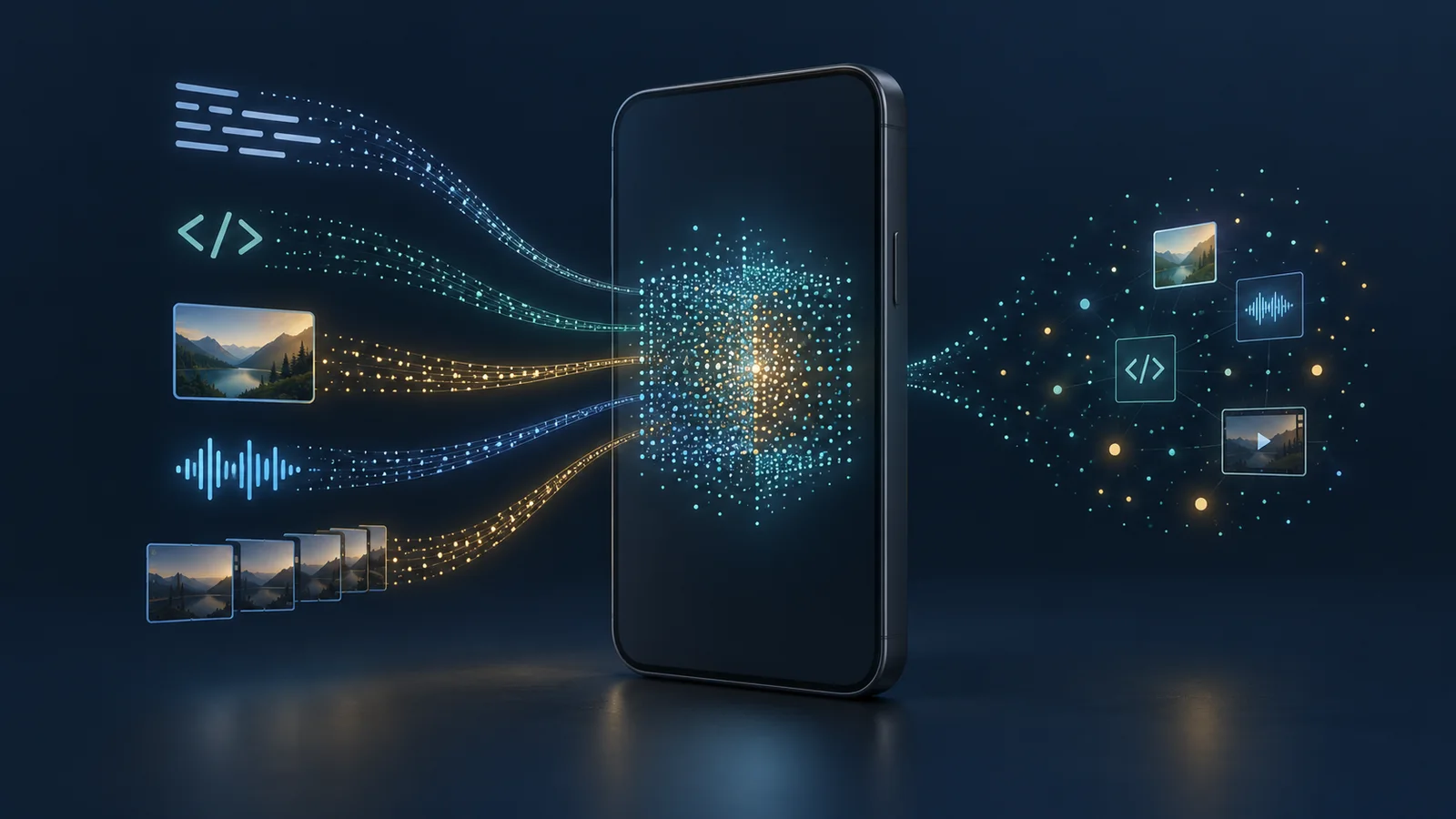
Liquid AI releases LFM3 family for on-device multimodal AI
Liquid AI released an open-weight family for text, vision, audio, multimodal and decision tasks, with single-GPU fine-tuning and edge deployment paths.
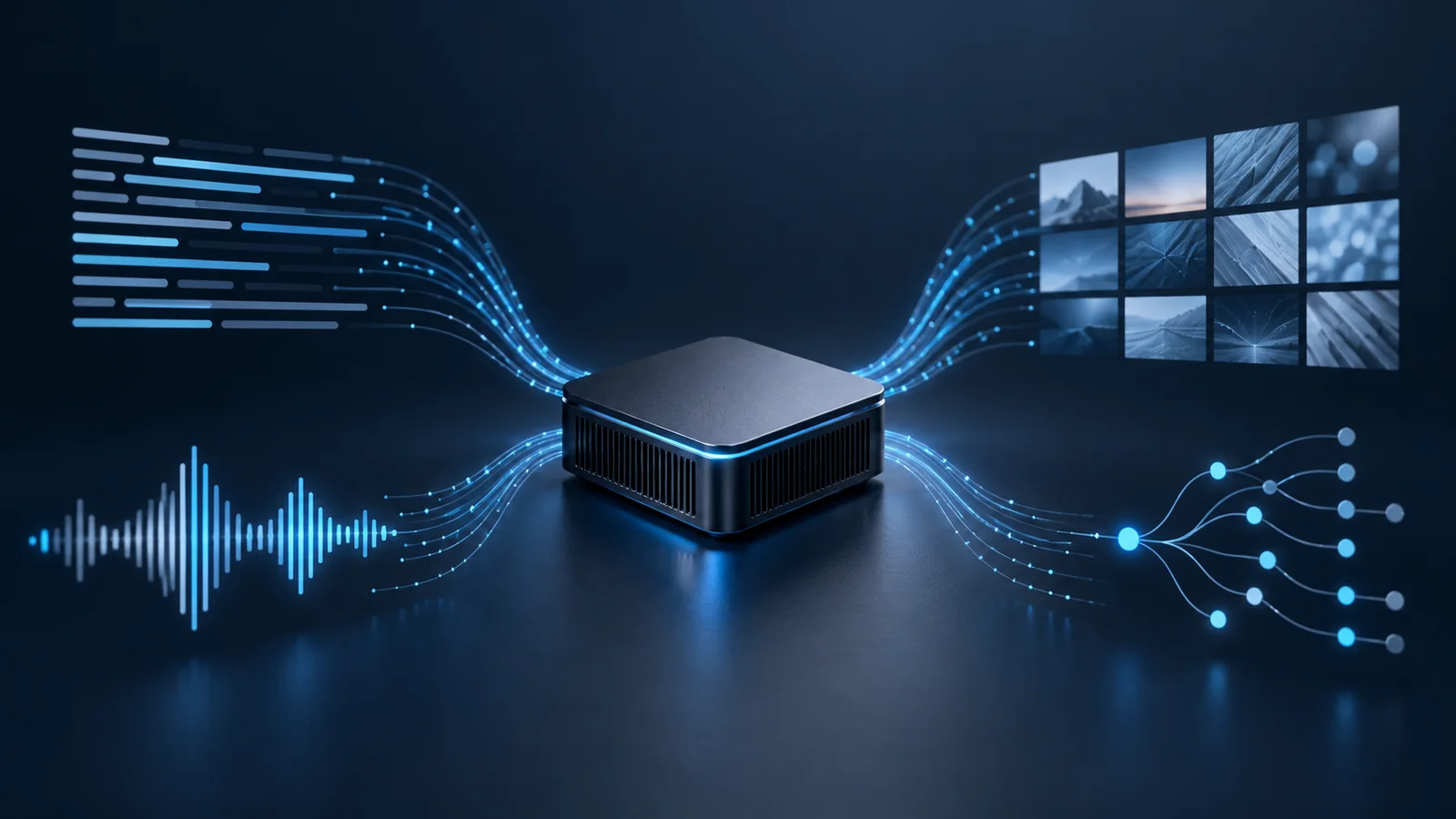
Liquid AI released the LFM3 family, a set of six post-trained models for text, vision, audio, multimodal and decision tasks. All six derive from the company’s LFM3-1.7B-Base backbone. The base checkpoint and post-trained models are available with downloadable weights through its Hugging Face collection.
The release expands Liquid AI’s on-device model lineup around a common, roughly 2-billion-parameter foundation for specialized systems that run locally. Liquid AI says every model can be fine-tuned on a single GPU. The repositories include formats aimed at phones, laptops, Raspberry Pi-class hardware, CPUs, GPUs and Qualcomm Hexagon neural processors.
The lineup starts with the 1.73-billion-parameter LFM3-1.7B text model. LFM3-VL-2B accepts text, images and video, while LFM3-Audio-2B handles text and audio and can produce text, 24 kHz speech or interleaved text and speech. LFM3-Omni-2B accepts text, images, video and audio and returns text or speech. Two decision models, d1-2B and d1-Omni-2B, complete the release. Rather than generating tokens, they return typed answers with probabilities.
The repositories publish Safetensors weights and identify the license as LFM Open License v1.0. The collection also links GGUF, MLX and ONNX variants for local runtimes. The release is open-weight, but the reviewed evidence does not establish unrestricted terms or an Open Source Initiative-approved license.
Liquid AI published notebooks for supervised fine-tuning, or SFT, across the text, vision, audio and omni models. The text-model materials also cover direct preference optimization, group relative policy optimization and continued pre-training. The vision materials include SFT and group relative policy optimization. The release does not specify a minimum GPU model or memory requirement that applies to every model and modality.
The size, context and performance figures are company specifications or issuer-run comparisons. Liquid AI lists context windows of 256,000 tokens for LFM3-1.7B, 128,000 for LFM3-VL-2B and 32,000 for the audio and omni models. The reviewed evidence does not independently test useful accuracy across those full windows.
For the text model, Liquid AI claims the 4-bit version uses about 1 GB of memory. The company also says LFM3-1.7B has 35% fewer parameters than LFM2.5-2.6B while outperforming it and runs about 25% faster than LFM2-1.2B with 8,000 tokens in context. At 32,000 tokens, Liquid AI says it prefills at least 2.5 times faster and decodes at least 1.8 times faster than compared models on three tested devices. The reviewed evidence did not independently replicate those results.
Liquid AI separately claims its 164-million-parameter vision encoder uses one-third the compute of the SigLIP2 encoder in its earlier vision models. It also says the encoder matches the accuracy of Qwen3.5-2B’s vision encoder with 2.2 times fewer floating-point operations. For audio, the company claims time to first token as low as 50 milliseconds and says its LiquidCodec speech decoder runs at about 87 times real time on one Apple M4 Max CPU thread. Those efficiency and latency results also lack independent validation in the reviewed material.
The model cards say the small text and audio models are not recommended for agentic coding or complex multi-step reasoning. Liquid AI also says LFM3-VL-2B is not recommended for coding or multi-turn conversations, while d1-2B becomes less reliable when its state exceeds about 64,000 tokens.
More news
Liquid AI releases d1 models for single-pass edge decisions
Liquid AI releases 24B mixture-of-experts model for on-device agents
NVIDIA releases Nemotron 3.5 Super VL and Bolt models