ggml-org launches a public llama.cpp benchmark dashboard for AMD systems
Separate tests show how quickly two Radeon systems process prompts and generate text. Developers can download the results of weekly runs.
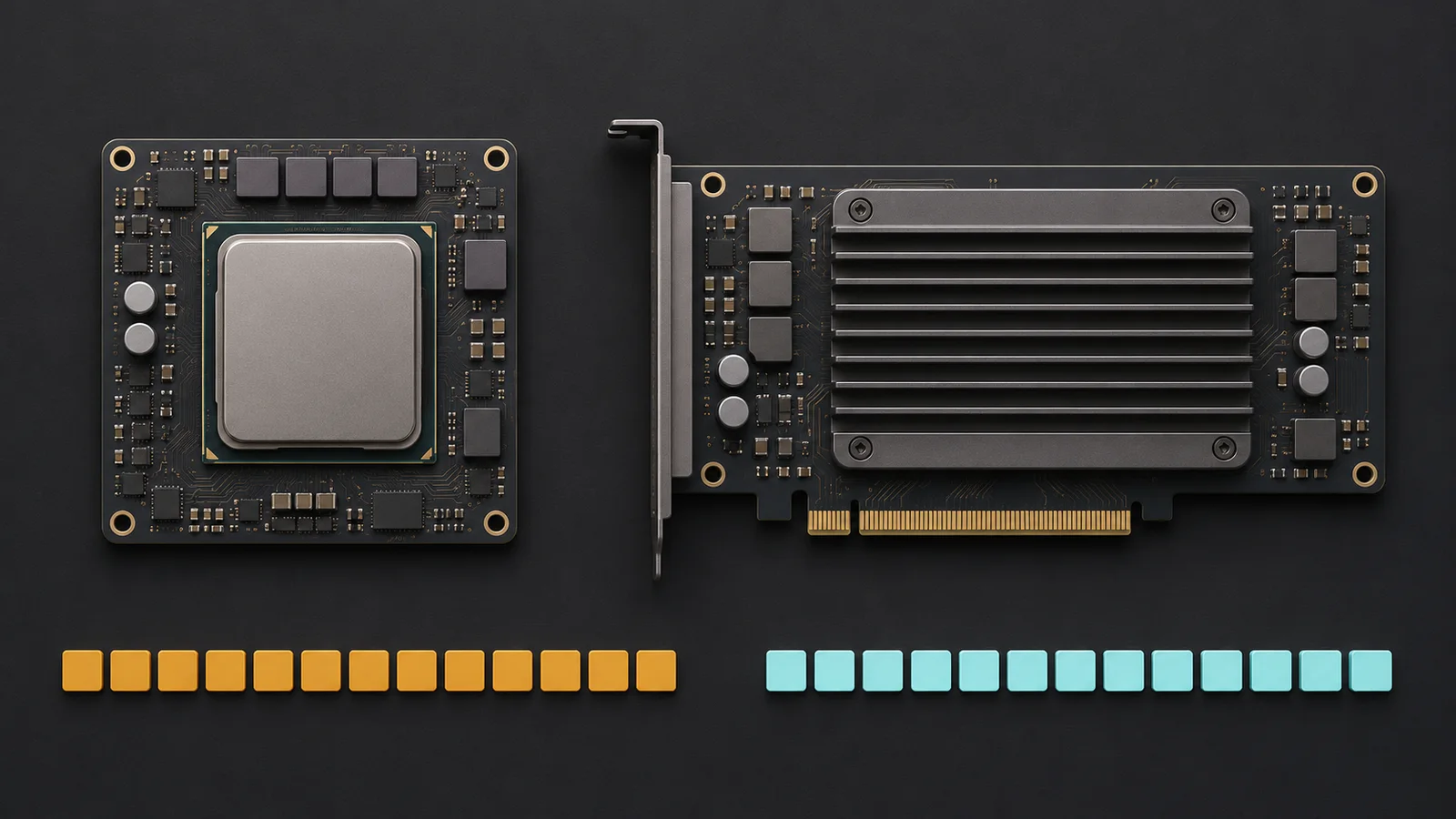
ggml-org launched a public llama.cpp benchmark dashboard on Hugging Face for two AMD systems that run language models locally. The dashboard lets developers compare results for different quantizations, which vary the precision used to store model weights, and track throughput across software builds for the same hardware, model and quantization.
For llama.cpp build b12765, ggml-org’s benchmark records identify two hosts. One uses a Ryzen AI Max+ 395 with integrated Radeon 8060S graphics (gfx1151). The other uses a 96-core EPYC 9655 with a Radeon AI PRO R9700S (gfx1201).
The dashboard shows average throughput in tokens per second for two separate tests. PP512 measures how quickly the system processes a 512-token prompt. TG128 measures how quickly it generates 128 tokens without processing a prompt. Both start with an empty context.
In ggml-org’s ROCm tests of Qwen3.5-0.8B in Q4_K_M on llama.cpp build b12765 with Flash Attention enabled and an empty starting context, the Radeon 8060S system averaged 11,062.8 tokens per second for prompt processing and 216.7 for generation. The Radeon AI PRO R9700S system averaged 24,311.8 for prompt processing and 283.1 for generation. Both used a batch size of 2,048 and a microbatch size of 512, with 16 CPU threads on the Ryzen host and 32 on the EPYC host. Throughput measurements apply to those complete systems and test settings.
The gfx1151 workflow and gfx1201 workflow are each scheduled weekly. They run llama-bench on prebuilt llama-install.sh binaries and repeat each configuration 10 times, testing with Flash Attention enabled and disabled. A separate sweep measures 128-token generation as the starting context doubles from 512 to 32,768 tokens.
The dashboard’s data link opens the folder for the selected build, hardware and model in ggml-org’s public Hugging Face storage bucket. The bucket holds separate downloadable JSON Lines files for the standard tests and the generation sweeps.
More news

Together AI open-sources Hurdle for coding-agent evaluations

Epochal debuts with Time Portal for testing AI forecasts

Anthropic publishes Siren test results for six Claude models