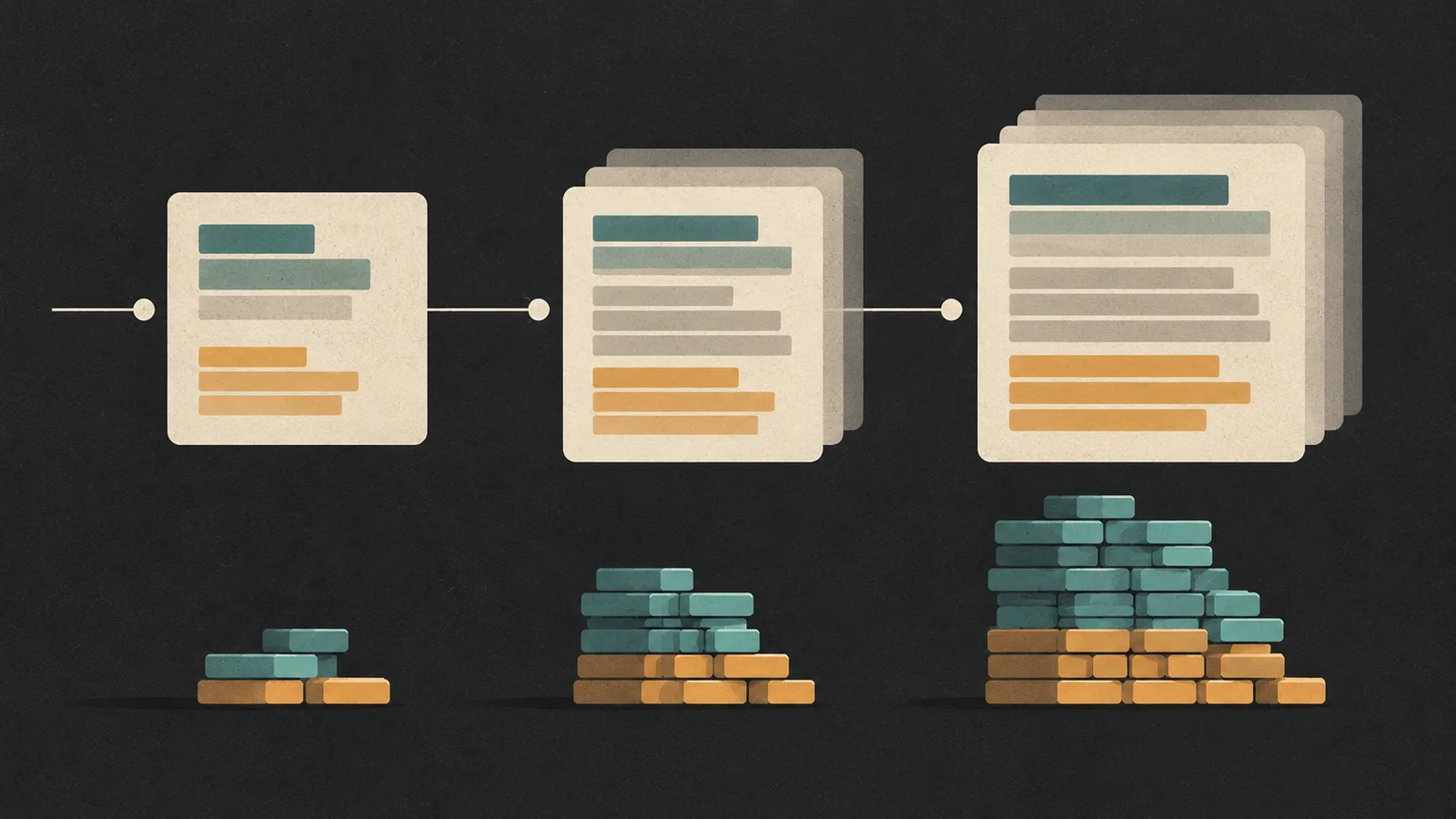
Meta launches Muse Ember for lower-cost agent workloads
Meta released Muse Ember through Muse Code and the Meta Model API, offering low token rates for repeated agent tasks but charging three times more for prompts above 200,000 tokens.

Meta released Muse Ember on November 9 through Muse Code and the Meta Model API. The small model is priced for high-volume, repeatable agent work, with uncached input listed at $0.10 per million tokens for prompts of up to 200,000 tokens.
At that prompt length, Meta charges $0.004 per million tokens for cached input and $0.50 per million tokens for output. Once a prompt exceeds 200,000 tokens, a pricing footnote triples all three rates to $0.30, $0.012 and $1.50 per million tokens, respectively.
Meta says Muse Ember accepts text, images, audio and video, has a one-million-token context window and can generate as many as 512,000 output tokens. The company casts it as an execution layer for bounded work, including tool calls, routing, extraction, long-document processing and targeted coding subtasks. For harder planning problems, Meta recommends the larger Muse Wonder model.
Muse Ember supports Meta’s Responses API. Google Cloud’s Preview listing also documents function calling, structured output and reasoning on its global endpoint. That Preview label applies to Google Cloud’s serving surface; the opened sources do not establish a release label for Meta’s first-party endpoints.
Meta’s price-performance comparison draws on Artificial Analysis testing. At maximum reasoning, the evaluator gave Muse Ember a score of 36 on Intelligence Index v5 and estimated a weighted cost of about $0.14 per task. Claude Haiku 5.5 received the same score at maximum reasoning, with an estimated cost of about $0.41 per task.
Those figures are benchmark-specific estimates, not a universal workload bill. Artificial Analysis calculates weighted task cost from the evaluated mix of input, cache-hit, cache-write, reasoning and answer tokens using list prices. Meta’s comparison uses those listed prices and the maximum-reasoning configurations.
The coding results were mixed, and the tests did not use one common agent harness. Meta’s evaluation report says Terminal-Bench 4.0 paired Muse Ember with mini-swe-agent, Claude Haiku 5.5 with Claude Code and GPT-6 Luna with Codex. The Coding Agent Index instead paired the models with Muse Code, Claude Code and Codex, respectively. Artificial Analysis found Muse Ember ahead of Claude Haiku 5.5 on Terminal-Bench 4.0 but behind it on FrontierCode 2.0. Meta cautions that its internally run competitor settings were best-effort and might not have been optimally tuned.
The documented input options also differ by serving surface. Meta says its model natively handles text, images, audio and video, while Google Cloud’s Preview endpoint currently documents only text and image inputs.
More news

Tencent launches hosted Hy4 while final model weights remain pending
Liquid AI releases LFM3 family for on-device multimodal AI
IBM and Kaggle launch maintained ScarfBench Java migration leaderboard