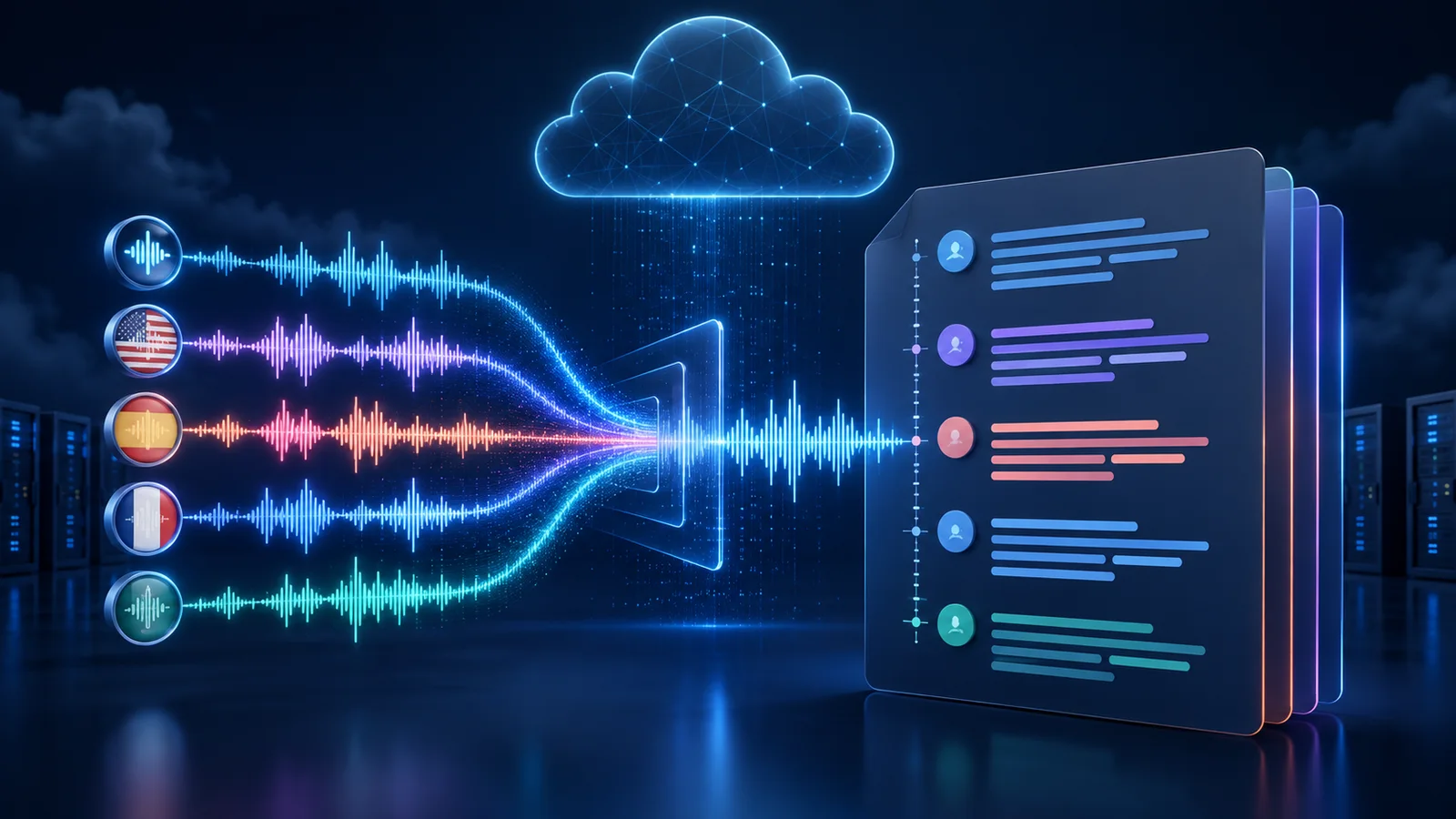
Microsoft adds voice agents and optimization tools to Foundry
Microsoft added native voice agents and resilient long-running execution to Foundry Agent Service in public preview, alongside tools for evaluating and improving agents from production traces.

Microsoft on September 24 added native voice agents, resilient long-running execution and production optimization tools to Foundry Agent Service, bringing more of the work of building, operating and governing agents into the Microsoft Foundry environment. Voice agents and long-running resilience are in public preview.
Microsoft says the voice-agent preview works with prompt and hosted agents through the same API and SDK as other Foundry agents. Conversations are stored as traces, allowing teams to monitor transcripts and runtime events, evaluate production interactions, compare versions and check for regressions within the same observability framework.
Microsoft says the voice-agent service supports GPT Realtime, Azure Realtime, MAI and bring-your-own model options, as well as more than 80 languages and more than 140 locales. Teams can add custom speech, voice and avatar options, then deploy agents to the web, Microsoft Teams, Teams Phone or Twilio-based telephony. Those scale and capability claims have not been independently tested.
For tasks that outlast a single request, long-running resilience stores work and input identities, persists inputs, uses leases to detect process loss and replays streams from a cursor. If a hosting process stops unexpectedly, the system re-enters the handler from the beginning instead of restoring its in-memory call stack. Applications still need their own durable checkpoints, idempotency controls and safeguards against duplicate external side effects.
Microsoft is also connecting production activity to a continuous evaluation loop. The company says Insights in Foundry, now in public preview, analyzes traces for recurring or previously unknown issues and surfaces supporting evidence, likely causes and recommended actions. Rubric evaluators use an LLM judge to score responses or multi-turn conversations against weighted criteria, while trace-to-dataset generation turns sampled production traces into versioned evaluation sets.
Agent Optimizer tests a baseline and candidate configurations against the same dataset, ranks them with a composite score and can propose changes to instructions, skills, function-tool descriptions or model choice, depending on the agent type. Microsoft warns that an optimization run invokes the agent for every task in the dataset, so teams should use test endpoints or mocks when tools could incur charges, mutate external systems or hit rate limits.
The release also adds runtime enforcement for governance actions originating in Microsoft Entra and Agent 365, including blocking, disabling, deleting, restoring and reassigning an agent owner. Separate network-egress controls for hosted agents let administrators define ordered destination rules, default actions and audit behavior outside agent code. Microsoft labels those controls a preview without a preview service-level agreement and says they are not intended for production use.
The September 24 announcement said rubric evaluators, synthetic and trace-to-dataset generation, and Agent Optimizer would become generally available later in the month. Microsoft Learn pages opened on September 27 still labeled the documented capabilities as previews, leaving their exact rollout status unresolved.
More news

Microsoft opens Surface AI hardware preorders and releases agent containers
Microsoft releases ThinkingBox agent benchmark through Hugging Face

Microsoft relaunches Copilot with Home, Code and Autopilot