MIT benchmark says GPT-5.5 matched 34.6% of recent theory problems
In an MIT FutureTech benchmark built from 254 recent papers, GPT-5.5 reached the same conclusions as human authors on 34.6% of theory problems, up from 2.8% for o1.
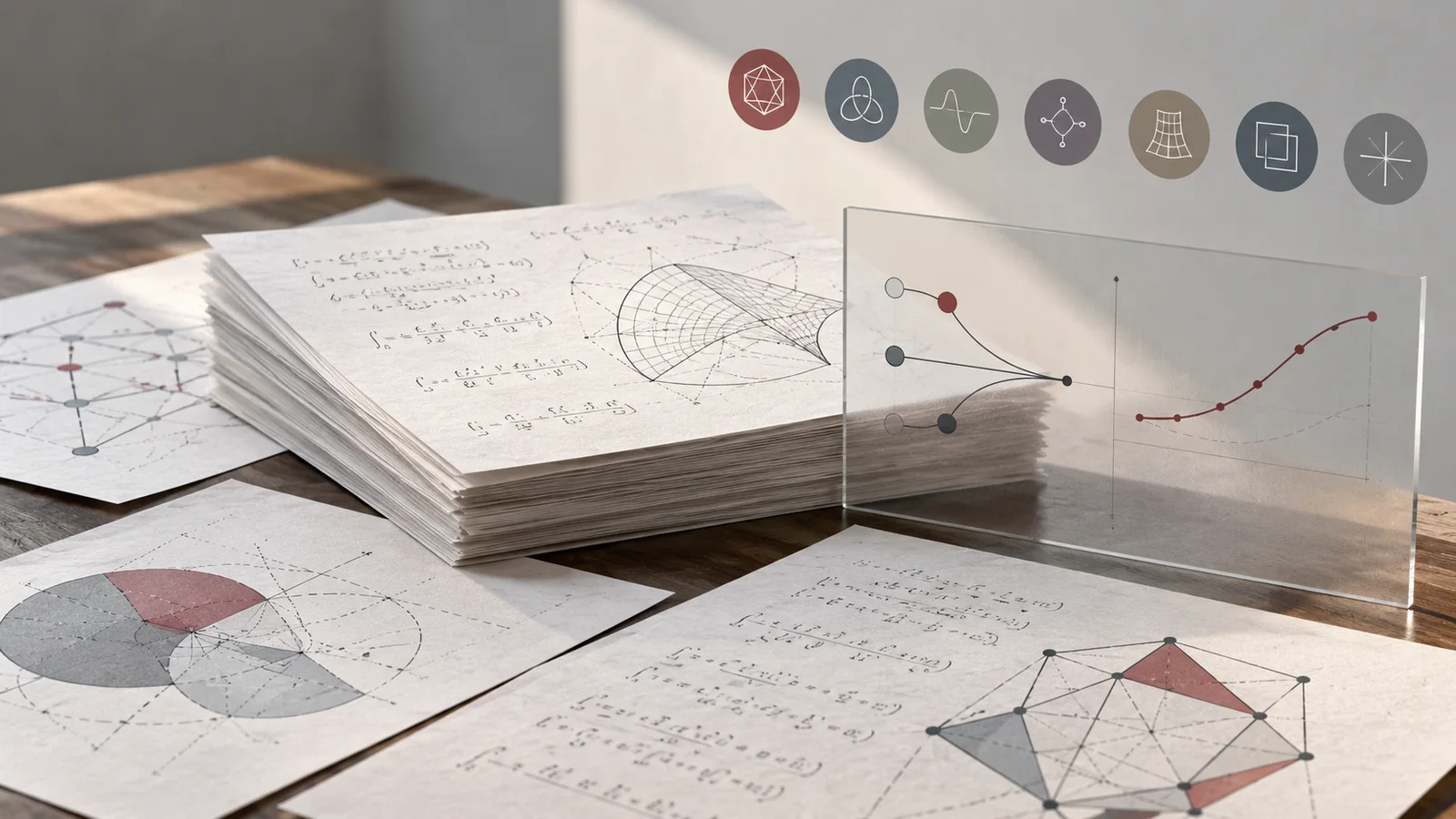
MIT FutureTech researchers said GPT-5.5 reached the same conclusions as human authors on 34.6% of recent theory problems in a benchmark released October 13. That was up from 2.8% for o1 over a 16-month comparison window.
The MIT FutureTech study record says the benchmark drew human-authored ground-truth answers from 254 recent arXiv papers across seven domains spanning mathematics, physics and economics. The researchers said the models answered problems whose human conclusions were unavailable to them at test time.
The comparison began with o1 in December 2024 and ended with GPT-5.5 in April 2026. The authors characterized the improvement as 22 percentage points per year and said performance rose at similar rates across the tested subfields.
For context, OpenAI also recently published 722 mathematics manuscripts at varied verification stages.
The authors estimated that a GPT-5.5 attempt cost about $5, with each successful result costing about $15. Those figures are benchmark estimates reported by the researchers, not an independent audit or a comparison with the full cost of human research.
The researchers said the results indicate that some theory work could become substantially more cost-effective and its tools more widely available. The benchmark itself did not demonstrate a broader transformation of scientific practice.
The evaluation was restricted to theoretical problems with available human ground truth. It did not test experimental, simulation-dependent or end-to-end scientific work, so the reported success rate does not establish performance in those settings.
More news

DeepSeek updates V4.1 Flash with 1017 refresh

Microsoft completes pre-training of 2.8-trillion-parameter MAI-Base-2
Researchers train fixed AI-agent teams to reason together