NVIDIA partners set out European AI capacity plans
NVIDIA cloud partners across Europe and nearby regions detailed live AI services and planned Vera Rubin infrastructure, including future fleets above 100,000 GPUs.
NVIDIA said its cloud partners are expanding regional AI capacity across Europe, the Nordics, Africa and Central Asia, pairing services already in production with infrastructure planned through 2027. The commitments include Nscale’s plan for more than 100,000 GPUs in Europe, Verda’s expectation of a fleet above 100,000 GPUs during 2027 and Crusoe’s new modular data-center design, though NVIDIA did not disclose an aggregate capacity figure for the partner group.
The plans span training, inference and systems intended to control AI agents. Several of the largest numbers describe future deployments rather than hardware operating today, while performance, security and economic-impact figures in the announcements are claims from NVIDIA or its partners.
Nscale: efficiency test now, Rubin rollout in 2027
In a joint test on GB300 NVL72 systems, NVIDIA and Nscale said NVIDIA’s DSX MaxLPS software let the same 264.4-kilowatt power allocation support 192 GPUs instead of 140, a 37.1% increase, while normalized aggregate throughput rose 49.2%. NVIDIA’s technical account of the evaluation said median and 75th-percentile latency remained within 5% of the baseline, but 99th-percentile time to first token increased 17%. The figures are vendor-reported test results rather than independent measurements of a production fleet.
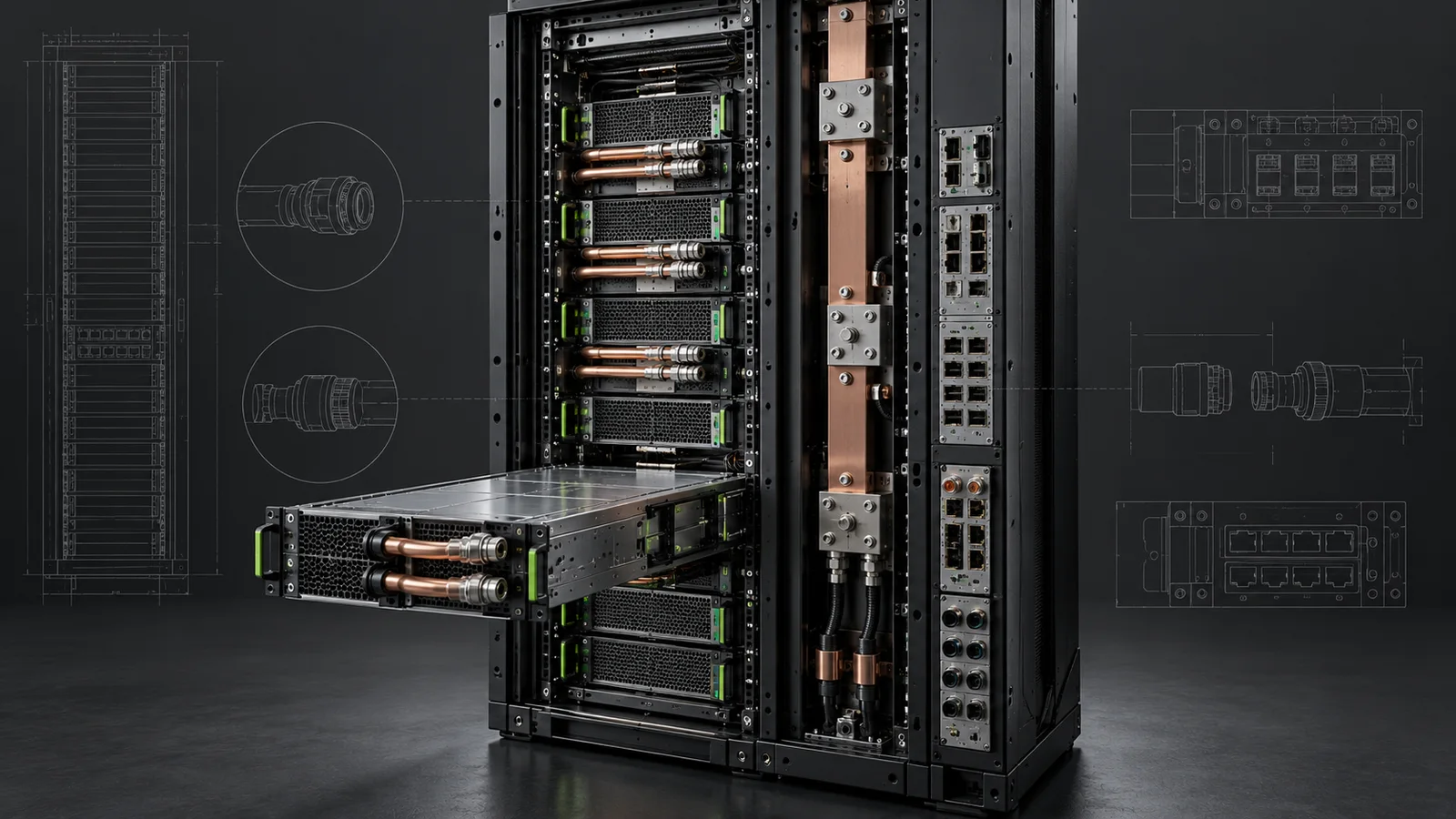
Separately, Nscale plans to deploy Vera Rubin NVL72 systems in 2027 at sites in the UK, Norway and other locations. The company describes the rollout as bringing more than 100,000 GPUs to Europe; that capacity is planned, not yet deployed. A separate review of NVIDIA’s Vera Rubin rack designs provides technical context for the planned systems.
Crusoe: existing Spark modules, future liquid-cooled design
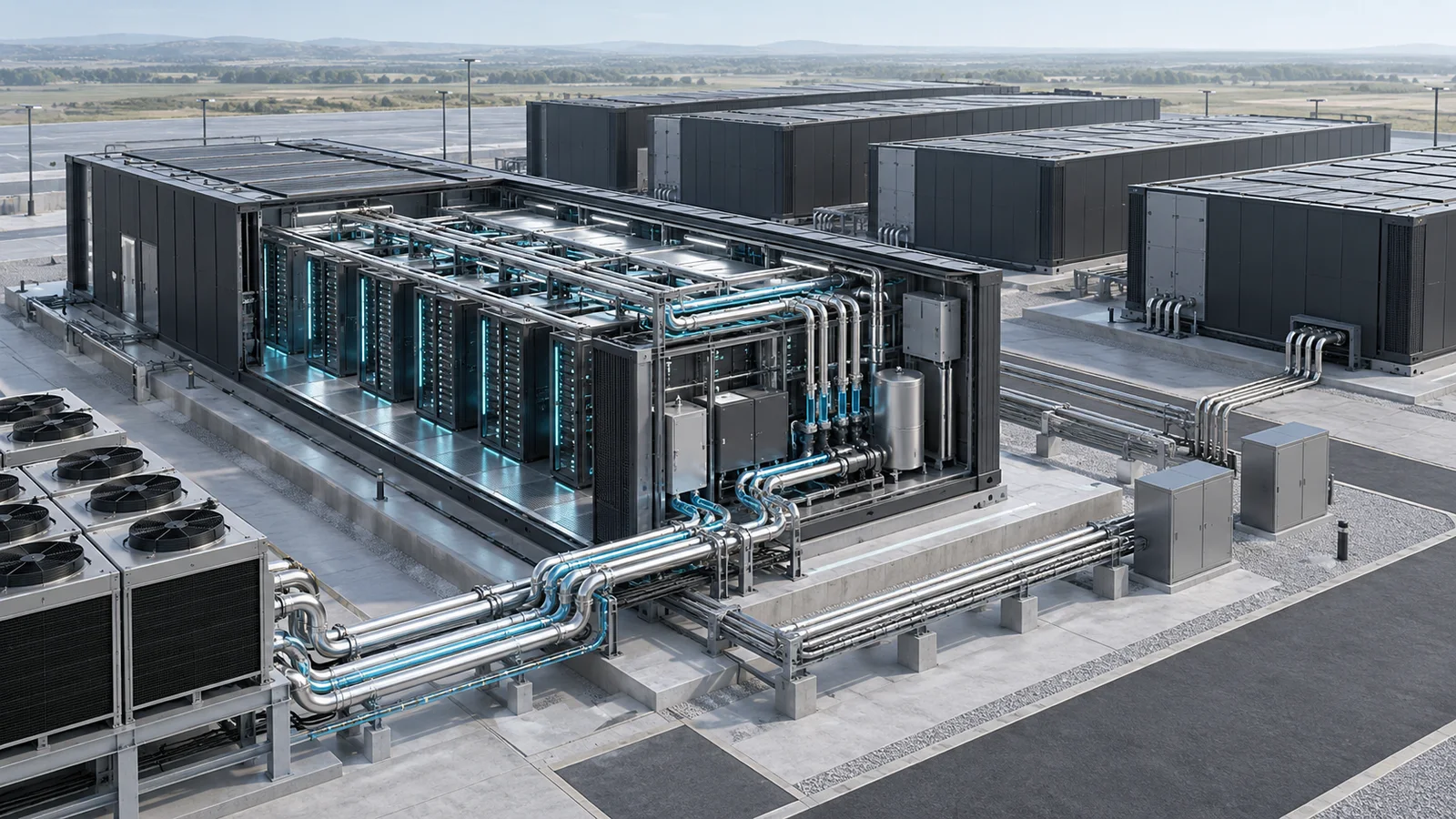
Crusoe says earlier Spark data-center modules are already running in production. Its new Spark Liquid design, however, is scheduled to enter manufacturing alongside existing production in 2027. Crusoe says each unit is designed to support as much as 3.5 megawatts of compute for GB300 NVL72 and Vera Rubin NVL72 systems.
The company also claims the design delivers five times the compute density of previous generations and can compress field-construction schedules from years to months. Those are Crusoe’s performance and deployment claims.
Nebius: live services with new hardware still ahead
Nebius’s Token Factory already provides production inference through serverless and dedicated endpoints, with autoscaling, observability, function calling and structured outputs. The company has announced adoption of NVIDIA Groq 3 LPX, but its description puts the Groq 3 LPX and Vera Rubin NVL72 integration in the future.
Other Nebius offerings are at different stages. Its Physical AI Workbench is available on GitHub, and Nebius says RoboForce, Moon Surgical, Bellboy Robotics and Sereact already use it. Three NVIDIA retail-agent blueprints are in early access for inventory experiments, store operations and warehouse fine-tuning, making them proofs of concept rather than generally available production packages.
Mistral and Verda: deployed Blackwell, planned Rubin
Mistral AI says Mistral Large 4 was trained on 3,800 NVIDIA Grace Blackwell GPUs in company-operated European data centers and that the model’s public preview runs on the same infrastructure. NVIDIA says Mistral also plans to take delivery of Vera Rubin infrastructure in 2027, a schedule not stated in Mistral’s opened model announcement.
Verda says Ampere, Hopper and Blackwell systems are already serving production workloads. It plans the earliest deployments of Vera Rubin NVL72 and HGX Rubin NVL8 systems for the second half of 2026 across Europe, the US and Asia-Pacific, and expects its capacity to exceed 100,000 GPUs during 2027. NVIDIA separately says Verda has Nemotron and Cosmos models in production and uses the open-source Dynamo framework to optimize inference, details not independently established by Verda’s Rubin announcement.
Fireworks, Era4 and other regional providers
NVIDIA says Fireworks and Era4 plan to combine Fireworks’ training and inference platform with directly liquid-cooled Blackwell Ultra capacity at Era4’s Chesterfield facility for financial-services, insurance and life-sciences offerings. No separate partner announcement was located in the research package, leaving the deployment date, operating status and capacity unconfirmed.
The roundup also names Aleria, Cassava Technologies, Firebird, G42, Radiant, SWI Compute and Vultr as developing or expanding NVIDIA-powered infrastructure, but gives no capacity, site, schedule or deployment-status details for those companies.
Agent controls are available as a design, not across every cloud
NVIDIA’s OpenShell Reference Architecture is available now. It combines Vera Rubin infrastructure for inference, Vera CPUs for agent harnesses and tool use, and BlueField-4 data processing units running Sentry for monitoring and hardware-level policy enforcement.
NVIDIA says CoreWeave, Crusoe, Firebird, Firmus, GMI Cloud, IREN, Lambda, Nebius, Nscale, Oracle Cloud Infrastructure and Vultr are working to deploy OpenShell-ready infrastructure, while Baseten, DeepInfra, Fireworks and Together AI are building integrations. Those projects are described as work in progress, not as universal production availability. NVIDIA also claims OpenShell can stop an agent that exceeds its bounds within milliseconds, Vera Rubin provides 30 times more throughput per megawatt for agentic workloads and Sentry can increase agent capacity by as much as 20%; the opened sources do not independently validate those figures.
A separate current deployment comes from Baseten, which says its finished CodeRabbit adapter is running on Dedicated Inference. Baseten reports that the evaluated workload achieved about 4% higher accuracy, roughly half the baseline API-call cost and 63.4% fewer output tokens. NVIDIA gives a final routing-agreement figure of 80.7%, while Baseten’s detailed account says supervised fine-tuning reached 80.4% and route accuracy then held during reinforcement learning; the discrepancy remains unresolved.
NVIDIA says the regional buildouts can support new organizations, jobs, sovereign computing services and economic growth, but its announcement provides no quantified employment or economic-impact analysis.
More news
NVIDIA says it contributed Vera Rubin rack designs to OCP
NVIDIA Vera Rubin NVL72 debuts in MLPerf Inference v6.1 as a Preview system
NVIDIA and Australian partners target up to 2GW of DSX AI factories by 2027