NVIDIA expands Hyperion in European mobility and robotaxi programs
NVIDIA announced European Hyperion programs spanning robotaxis, passenger cars and freight, while Bolt’s Madrid data collection and several vehicle rollouts remain future plans.
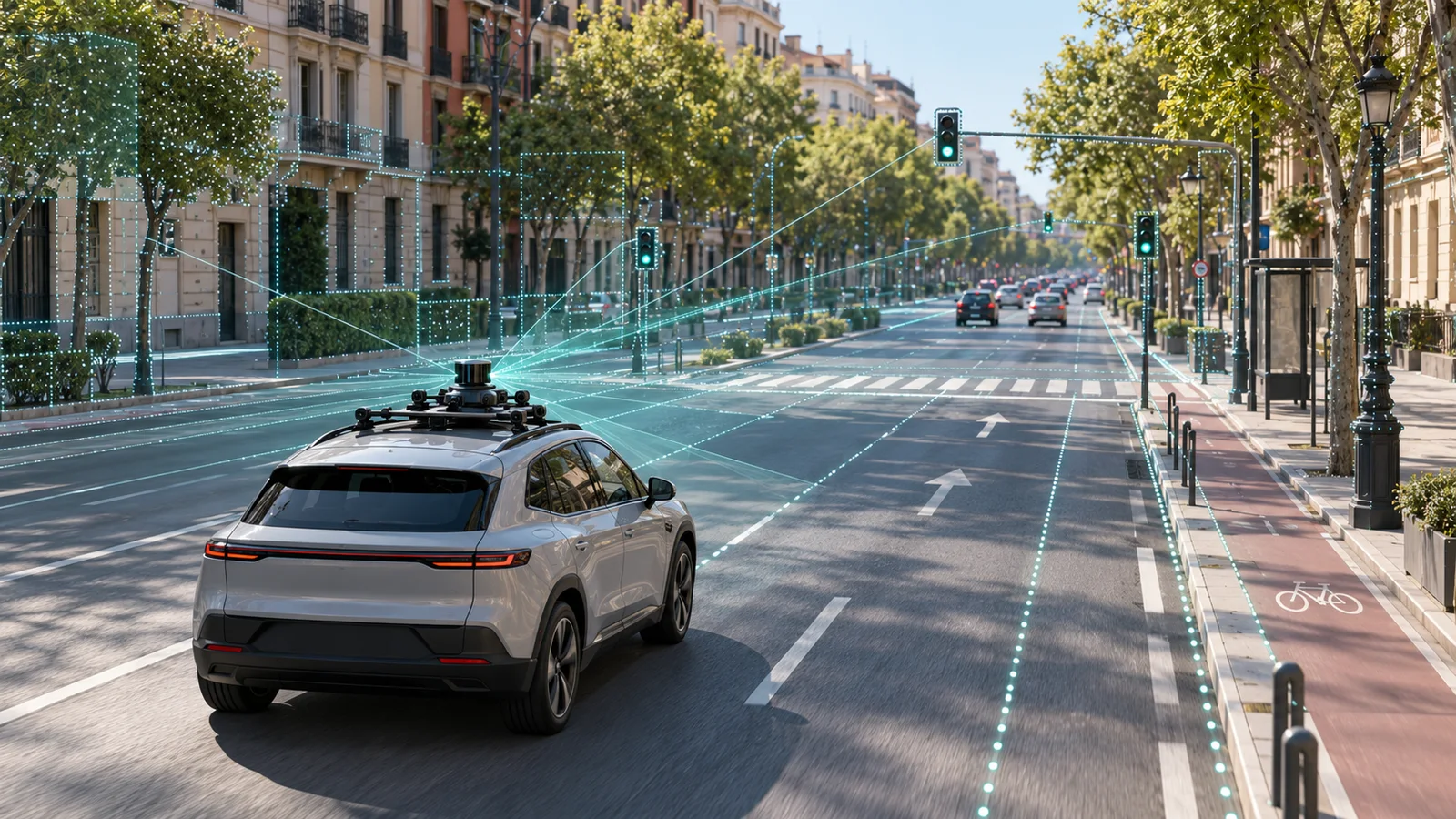
NVIDIA announced a group of European autonomous-vehicle programs using its Hyperion computing platform, including work with Bolt and Lucid, Volkswagen Commercial Vehicles, Volvo Cars, Mercedes-Benz and Einride. The programs span demonstrations, development work and planned deployments rather than commercial autonomous services already in operation.
The largest stated commitment is Bolt’s plan to deploy at least 25,000 future Lucid autonomous vehicles across Europe. NVIDIA said Bolt plans to begin collecting real-world driving data in Madrid in 2027, subject to regulatory approval, to support development and validation. Germany is a priority for a later rollout, but NVIDIA did not provide a deployment date.
Lucid and Bolt said in September that the vehicles would be based on Lucid’s upcoming Midsize platform and that the platform was expected to use Hyperion. The 25,000-vehicle figure is a target, not a current fleet count; Lucid classified statements about development, commercialization and deployment as forward-looking.
At GTC Berlin, Volkswagen Commercial Vehicles presented an autonomous ID. Buzz AD platform with Hyperion. NVIDIA said the platform could support multiple autonomous-driving systems, but the announcement did not say the vehicle was operating a commercial robotaxi service.
The other automaker projects are also at development stages. Volvo’s program builds on its expanded automated-driving partnership with NVIDIA. The joint announcement says the program combines Hyperion with NVIDIA’s Halos OS safety system and Alpamayo driving software, with the technology set to debut in a next-generation Volvo vehicle.
Mercedes-Benz’s program similarly extends its automated-driving partnership with NVIDIA. The companies’ joint release describes work on next-generation driver-assistance and automated-driving systems around MB.OS, Hyperion, Alpamayo and Halos. It identifies SAE Level 4 applications, including automated passenger services, as future development.
NVIDIA said Einride is building its next-generation Einride Driver on Hyperion for autonomous freight trucks and is using Halos, Alpamayo and Cosmos models in development and validation. The company provided no deployment date or fleet size for that program.
NVIDIA also introduced Halos SAFE, short for Safety Assurance Framework for Evaluation. The framework connects simulation, software- and hardware-in-the-loop evaluation, road testing and fleet monitoring through defined scenarios, tests and measurable criteria, with the aim of producing traceable safety evidence. NVIDIA did not describe Halos SAFE as a vehicle certification or a substitute for regulatory approval.
NVIDIA cautioned that products and features named in the release are at different stages and may be offered only if and when available. It also characterized third-party development and deployment plans and timing as forward-looking.
More news

NVIDIA opens early access to Factory Operations Blueprint for industrial agents

German ministries, NVIDIA sign industrial AI declaration

NVIDIA opens AI tools, training and compute access to European researchers