NVIDIA introduces Kumo Forecast with optional historical retrieval
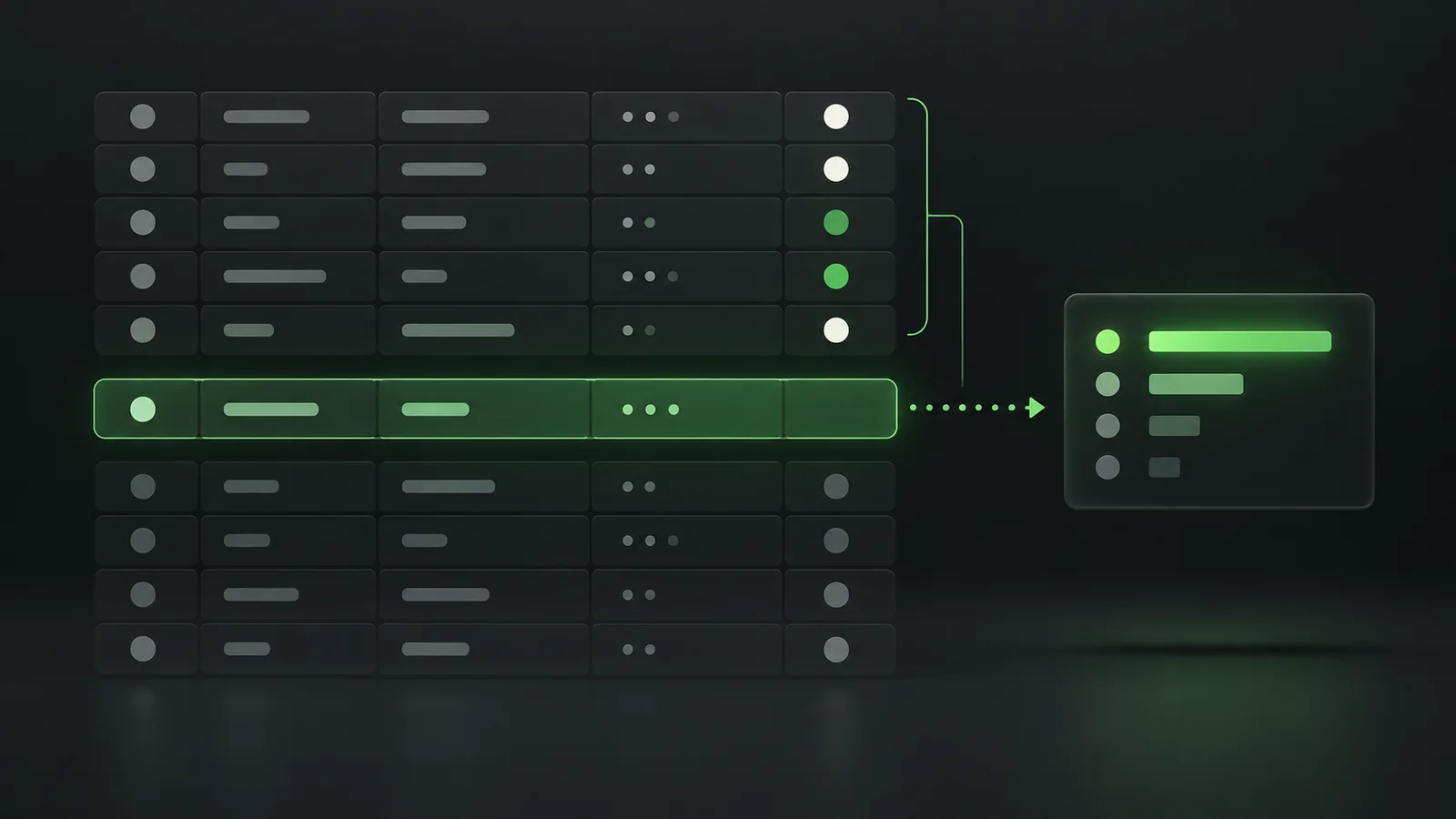
NVIDIA has introduced Kumo Forecast, an Apache-2.0 time-series model and Python library with open weights, a DataFrame-first API, optional retrieval from historical patterns and horizon-specific explanation outputs.
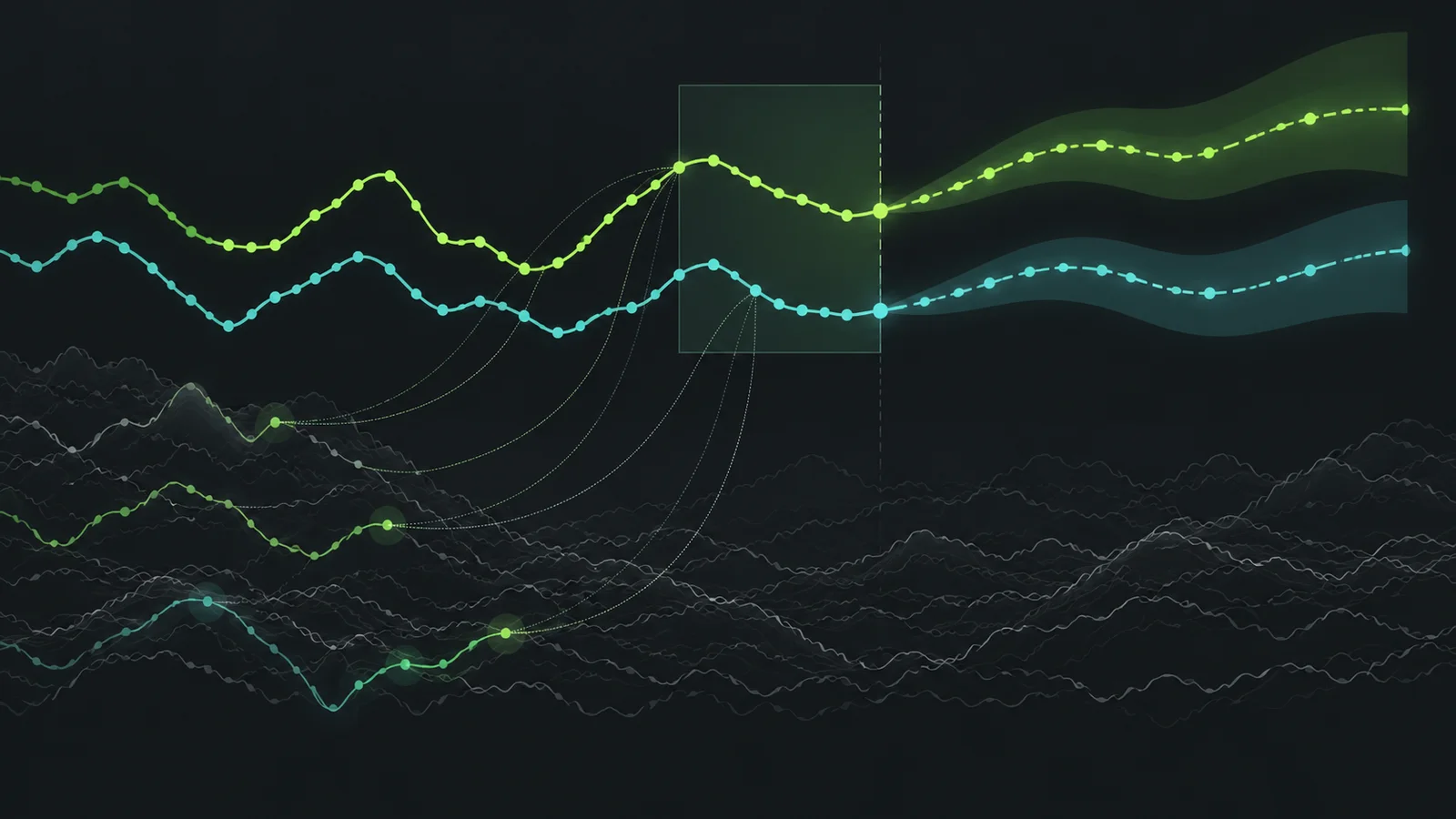
NVIDIA introduced Kumo Forecast, a multivariate time-series model and Python library that pairs a direct forecasting path with an optional retrieval system for drawing on an organization’s historical signals. The release links downloadable model weights and public code, both labeled Apache-2.0.
The library accepts recent observations in a pandas DataFrame and returns timestamps and predicted values in another DataFrame for a requested forecast horizon. In the direct path, ForecastingConfig and perform_forecasting send that input window through the pretrained encoder and forecasting head. No separate archive of historical observations is required.
Historical retrieval is an additional path, not a prerequisite. When a caller provides a separate context_df, the DARR component searches that historical context for nearest-neighbor patterns. An alpha setting controls the blend between the direct forecast and the retrieved forecast, according to the Kumo Forecast documentation. The recent input window remains distinct from the larger pool of past patterns used for retrieval.
NVIDIA describes the underlying model as a MOMENT-1-large Transformer with an approximately 340-million-parameter base encoder and a trainable forecasting head. The encoder and embedder remain frozen while the forecasting head is trained. Forecast horizons are configurable, and the model overview says requests beyond the model’s native horizon are extended autoregressively, meaning earlier generated values are fed back into subsequent forecast steps.
Interpretability is optional, too, and runs alongside the forecaster rather than changing its architecture. When enabled, the SDK can produce horizon-specific lag and feature attributions, semantic-flow and trajectory-stability diagnostics, and optional embedding Integrated Gradients. The documented outputs include JSON, CSV, image and PDF artifacts. The related NVExplain preprint describes a model-agnostic method that follows latent trajectories and aggregates semantic flow into a lag-by-horizon attribution matrix.
The model card specifies numeric temporal inputs with a timestamp column and one or more numeric value columns. Supported sequence lengths are 256, 512, 1,024 and 2,048 observations. The repository also includes an example for fine-tuning the forecasting head on a user-provided CSV while leaving the pretrained encoder and embedder frozen by default.
The opened materials do not independently establish Kumo Forecast’s predictive accuracy or show that its weights first became available with the October 21 announcement; the model card separately lists an April 7, 2026 release date. NVIDIA advises users to validate results for their intended horizons and operating conditions and to compare the direct and retrieval-enhanced configurations on held-out forecasting windows before deployment.
More news
NVIDIA releases Cosmos3-H-Dreams for real-time surgical simulation research

NVIDIA details 2.8-trillion-token Indic corpus and open pipeline

NVIDIA releases Nemotron 3.5 Super VL and Bolt models