NVIDIA packages Nemotron model and chemistry data for science agents
NVIDIA introduced Nemotron for Science, a package combining an existing vision-language model and chemistry dataset with evaluations and post-training guidance for specialized scientific agents.
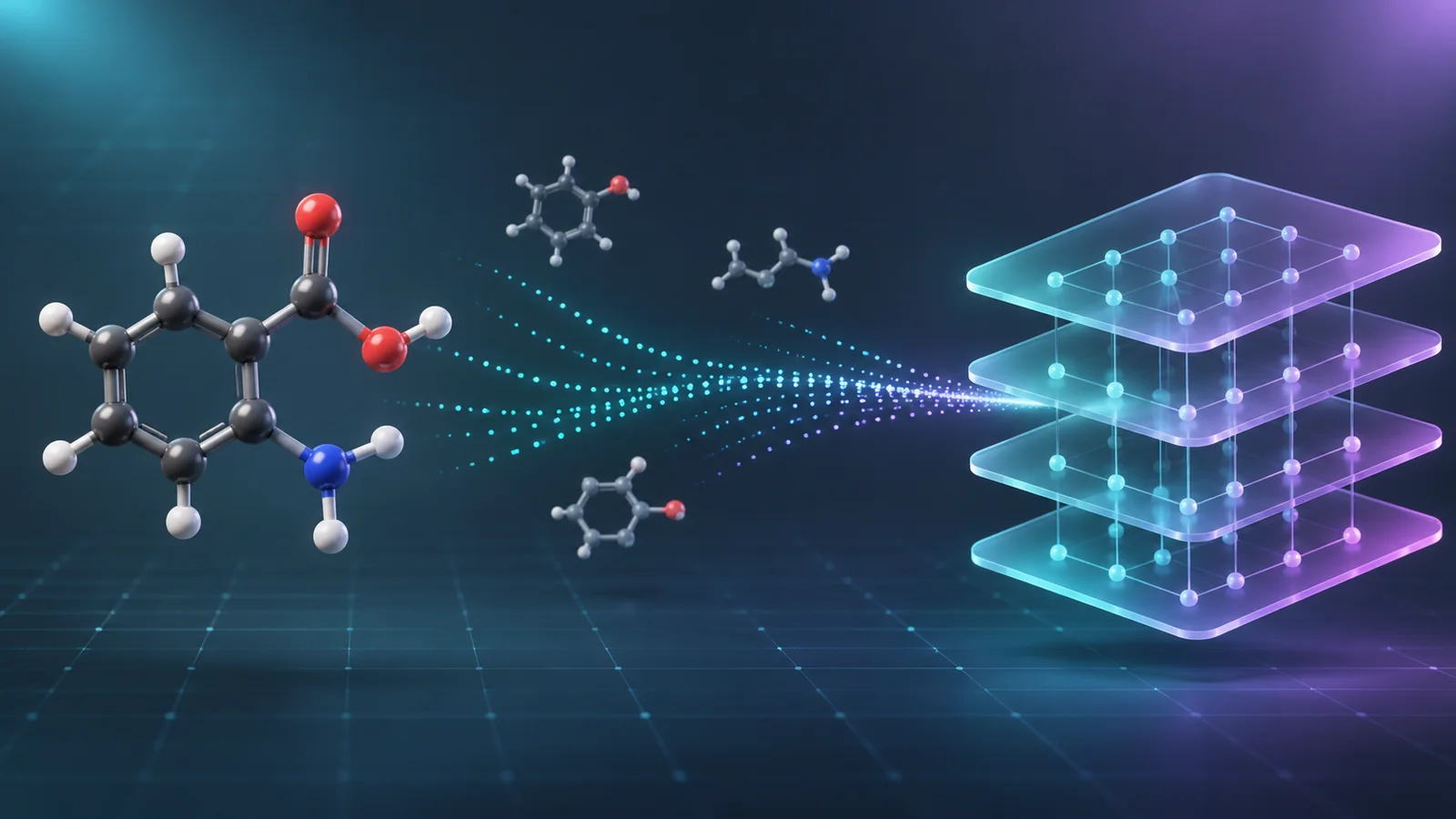
NVIDIA introduced Nemotron for Science, a package that combines Nemotron 3.5 Super VL with scientific evaluations, an open chemistry dataset and post-training materials for building specialized agents.
The package gives developers model weights, training data and adaptation guidance for building specialized scientific agents. The two main Hugging Face assets were already public before the package announcement: the Litmus-Bench v0.2 dataset card lists a September 2 creation date, while the Nemotron 3.5 Super VL model card lists an October 15 release date. NVIDIA announced the combined science package on November 16.
Litmus-Bench v0.2 contains 47,118 training questions and 2,056 test questions, or 49,174 rows in total. NVIDIA describes it as a short-answer chemistry-reasoning dataset spanning 126 molecular properties and 12 assay endpoints. The dataset card says it was built from ChEMBL, ExpansionRx and Biogen data, with RDKit descriptors used for some questions. Questions containing ChEMBL data carry a CC BY-SA 4.0 license; the remaining questions carry OpenMDW 1.1.
NVIDIA says the dataset is intended for reinforcement-learning post-training with NeMo Gym, although its environments and rollouts can be used with other frameworks. In this approach, a model generates answers and receives a machine-checkable reward based on how closely they match experimental results.
The publicly available Nemotron 3.5 Super VL weights are distributed under OpenMDW 1.1 for commercial or non-commercial use, according to the model card. For deployment context, DataPhoenix has also covered Nemotron 3.5 Super VL on SageMaker JumpStart. The model has 120 billion total parameters but activates 12 billion for a given input. It combines a Mamba-2–Transformer mixture-of-experts language architecture with a C-RADIO vision encoder and supports contexts of up to 1 million tokens.
NVIDIA’s post-training guide turns experimental records into prompts paired with reference answers, then uses the experimental ground truth as an automated verifier for reinforcement learning with verifiable rewards. In its drug-metabolism example, predicted and reference molecular fingerprints are compared using Tanimoto similarity. The guide describes direct group relative policy optimization with low-rank adapters, plus an optional path that begins with teacher-model reasoning traces and supervised fine-tuning before reinforcement learning.
For the teacher-assisted example, NVIDIA says it retained 1,123 reasoning traces from 1,934 training prompts after applying a Tanimoto threshold of at least 0.7. The public guide includes data-conversion, verifier, supervised fine-tuning and reinforcement-learning configuration snippets.
The performance results remain vendor claims. NVIDIA says supervised fine-tuning increased accuracy by 12% in its drug-metabolism environment at a 16,384-token output budget, with reinforcement-learning post-training adding another 17%. It also says Nemotron 3.5 Super VL led seven of 11 science benchmarks in its comparison, including scores of 75.9 on ChemBench and 39 on ether0; the supplied materials do not independently validate those results.
NVIDIA also attributed several user outcomes to post-training. The company says Terray Therapeutics recovered about 76% of annotated reactions on the RxnScribe test, Lila Sciences reached 61% accuracy for making quantum dots compared with 54% for GPT-6 Astra at 10–20 times lower inference cost, and a KTH Royal Institute of Technology agent fixed 81% of broken GROMACS test cases in an overnight run on one DGX Spark. The release does not provide the sample sizes, full baselines or complete test protocols needed to independently assess those claims.
More news
NVIDIA releases Nemotron 3.5 Super VL and Bolt models
NVIDIA releases Nemotron 3.5 Lightning and an open-source router to cut multi-agent costs
NVIDIA's compressed Puzzle-75B and audio-text Audex Nemotron models climb Hugging Face trending list
 Dmytro Spodarets·Jul 11, 2026