OpenAI says GPT-6 Astra helped develop a candidate lattice proof for the Standard Model
OpenAI published physicist Nathaniel Craig's candidate lattice construction for the Standard Model and credited GPT-6 Astra with helping develop the detailed proof, while stressing that scientific scrutiny and practical work remain.
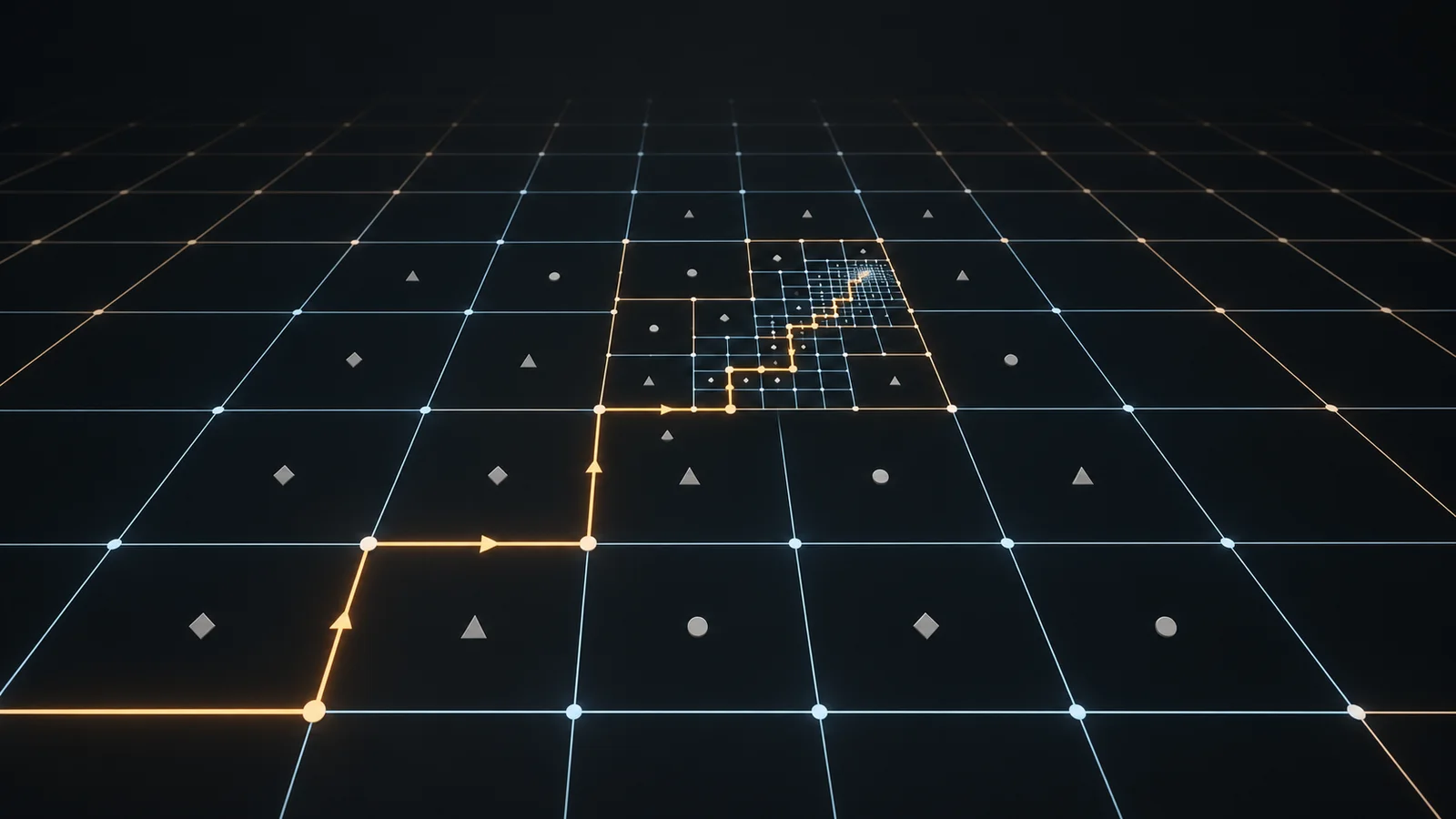
OpenAI published a guest research post by UC Santa Barbara physicist Nathaniel Craig on November 15 describing a candidate nonperturbative lattice definition of the Standard Model. The post says GPT-6 Astra helped develop the detailed proof. OpenAI and Craig frame the work as a candidate that still needs expert scientific dialogue, not a settled definition ready for practical simulations.
The construction proposes a way to represent chiral fermions — particles whose left- and right-handed forms interact differently — on a spacetime lattice while preserving gauge symmetry. A lattice replaces continuous spacetime with a finite grid, allowing physicists to study strongly interacting theories without relying on perturbative approximations. Craig’s October preprint describes a gauge-invariant fermion measure at finite lattice spacing for admissible gauge fields in nonabelian chiral gauge theories, including the Standard Model.
Craig says Astra helped turn his refinement strategy into a concrete construction. By his account, the model proposed a way to carry gauge fields to progressively finer grids, established convergence within the proposed argument and led development of the detailed proof. The available evidence does not include the prompts, full model interaction history or a reproducible audit trail that would independently verify that division of work. For context on another claimed application of the model, DataPhoenix has covered Astra’s use in physical-engineering research.
Craig also says lattice theorists Maarten Golterman, Andreas Kronfeld and Yigal Shamir questioned and reviewed the developing argument. The available sources, however, do not include independent endorsements from them.
The paper reports that 16 Lean 4 modules compiled and that kernel replay accepted the formal proofs under the assumptions recorded in the modules. Craig cautions that those checks establish only the encoded mathematical statements under those assumptions; they do not validate the construction’s physical claims by themselves. The preprint has not been independently validated in the opened sources, which also do not establish peer-review or journal-acceptance status.
Several scientific and computational steps remain. The sources leave unresolved whether the construction satisfies reflection positivity at finite lattice spacing, a property needed to connect the lattice formulation to a physically consistent quantum theory. Craig also identifies a need for numerical admissibility bounds, realistic lattice simulations and practical implementation methods. He describes the proposal as an answer in principle rather than in practice.
The construction does not define the interacting Standard Model in continuous spacetime. Craig’s paper leaves that continuum problem open, while the OpenAI post says further scientific dialogue is needed to determine whether the prescription has all the desired properties.
More news

OpenAI makes GPT-6 Astra Ultrafast available to API users

OpenAI's BioBasicsBench tests wet-lab AI agents

OpenAI launches GPT-6 Cyber for vetted security researchers