OpenAI tests Astra on a hardware prototype and starts Mazda engineering research
OpenAI says Astra helped two team members design a conversational Codex device and is being tested with Mazda engineers on aerodynamics and crash-safety workflows, with human review still required.
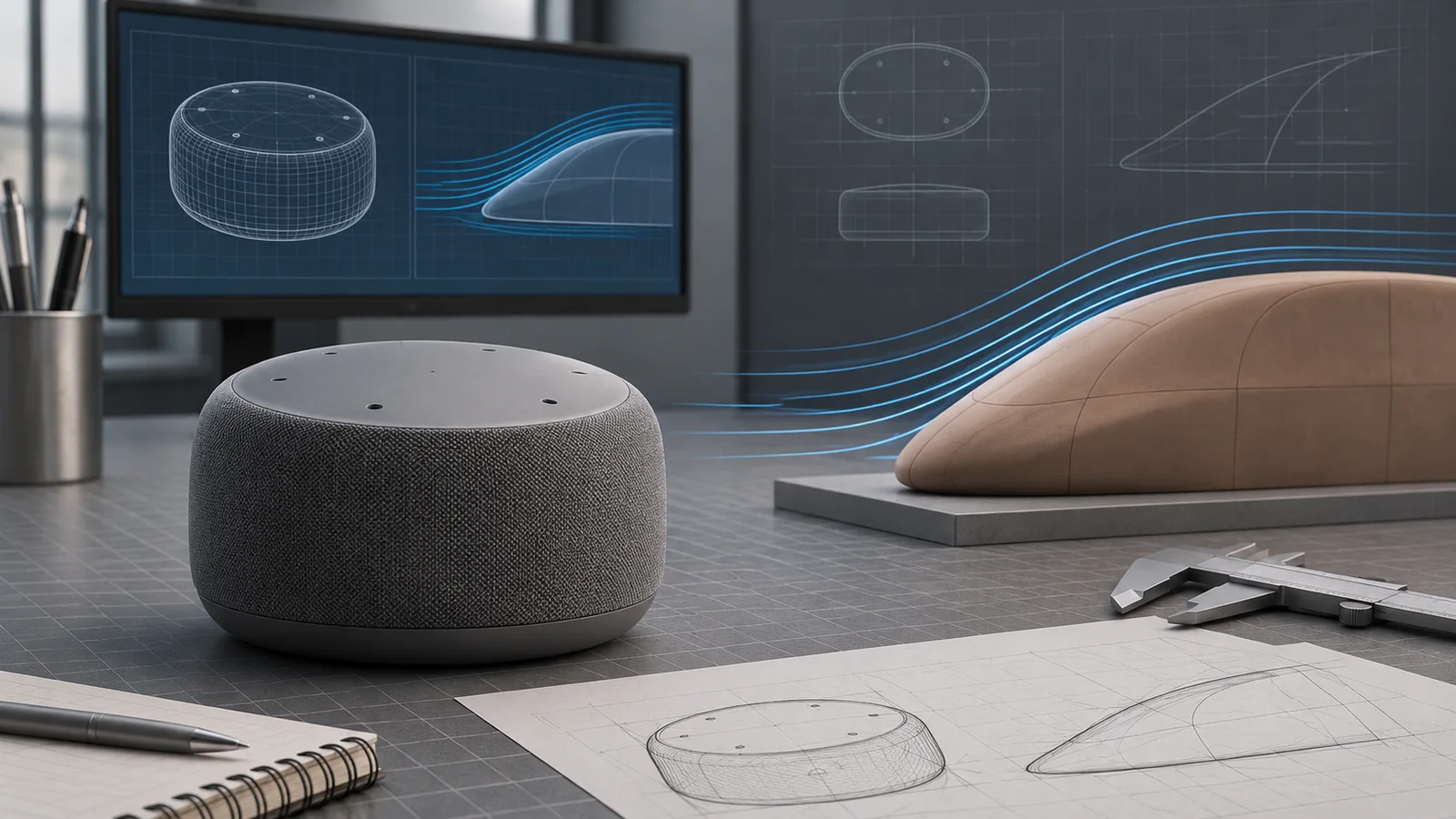
OpenAI said on November 3 that its Astra system helped two team members design a prototype device for talking to Codex and that its research and Forward Deployed Engineering teams have begun work with Mazda aerodynamics and crash-safety engineers. The projects put the model into computer-aided design, electronics and simulation tasks, but OpenAI described the industry work as early testing in which engineers review outputs for accuracy and practical use.
In the prototype project, OpenAI said GPT-6 defined requirements and designed the enclosure, printed circuit board, user interface, firmware and software integrations. Two team members completed the design in under a week as a side project, according to the company, and a contract manufacturer produced a small batch in under a month. OpenAI did not identify the manufacturer, disclose the batch size or provide independent validation of the timeline.
OpenAI said the prototype was not ready to manufacture without intervention and that several rounds of human review and iteration were needed because Astra did not consistently account for production constraints, tolerances and assembly details.
The Mazda research uses airflow and structural-behavior simulations to explore performance improvements while accounting for styling and cost, according to OpenAI. For aerodynamics, the company said GPT-6 Astra in Codex helps engineers model alternative vehicle nose shapes, simulate airflow and refine promising designs in an effort to reduce drag.
Mazda principal engineer Akihiro Nakata said the system helps the team identify which features affect aerodynamics and where designers have room to explore. OpenAI disclosed no vehicle program, measured drag reduction, crash-safety result, road test, wind-tunnel validation or deployment date.
Mazda’s technical publications show that the proposed tasks fit established engineering processes, but they do not independently confirm the new OpenAI work. A 2020 technical review documents Mazda’s use of computational fluid dynamics to balance vehicle design with lower aerodynamic drag. A 2026 review describes Mazda’s model-based crash-safety development used to balance safety performance, cost and weight; it does not mention OpenAI or Astra. Mazda’s 2026 newsroom index contained no separate announcement of the collaboration through releases dated November 9.
OpenAI also reported a narrow design-benchmark result. An unnamed newer internal model averaged 0.875 on BenchCAD 2.0, compared with 0.594 for GPT-6 Astra at its highest reasoning setting. The company said the benchmark covers 3D reconstruction and identification of circuit-board connections, while acknowledging that engineering extends beyond design. It did not provide an independent evaluation connecting those scores to overall engineering speed or productivity.
More news

Legora brings OpenAI models into legal workflows and its own teams

OpenAI says Third Moment runs 10,000 research agents at once
OpenAI reports 130,000 ChatGPT users and 95,000-plus Codex users at Oracle