OpenAI report says student AI use outpaces guidance in Europe
OpenAI says a ThinkYoung survey found student AI use for schoolwork is running ahead of guidance, as education programs in Estonia, Greece and Slovakia move into training, rules and evaluation.
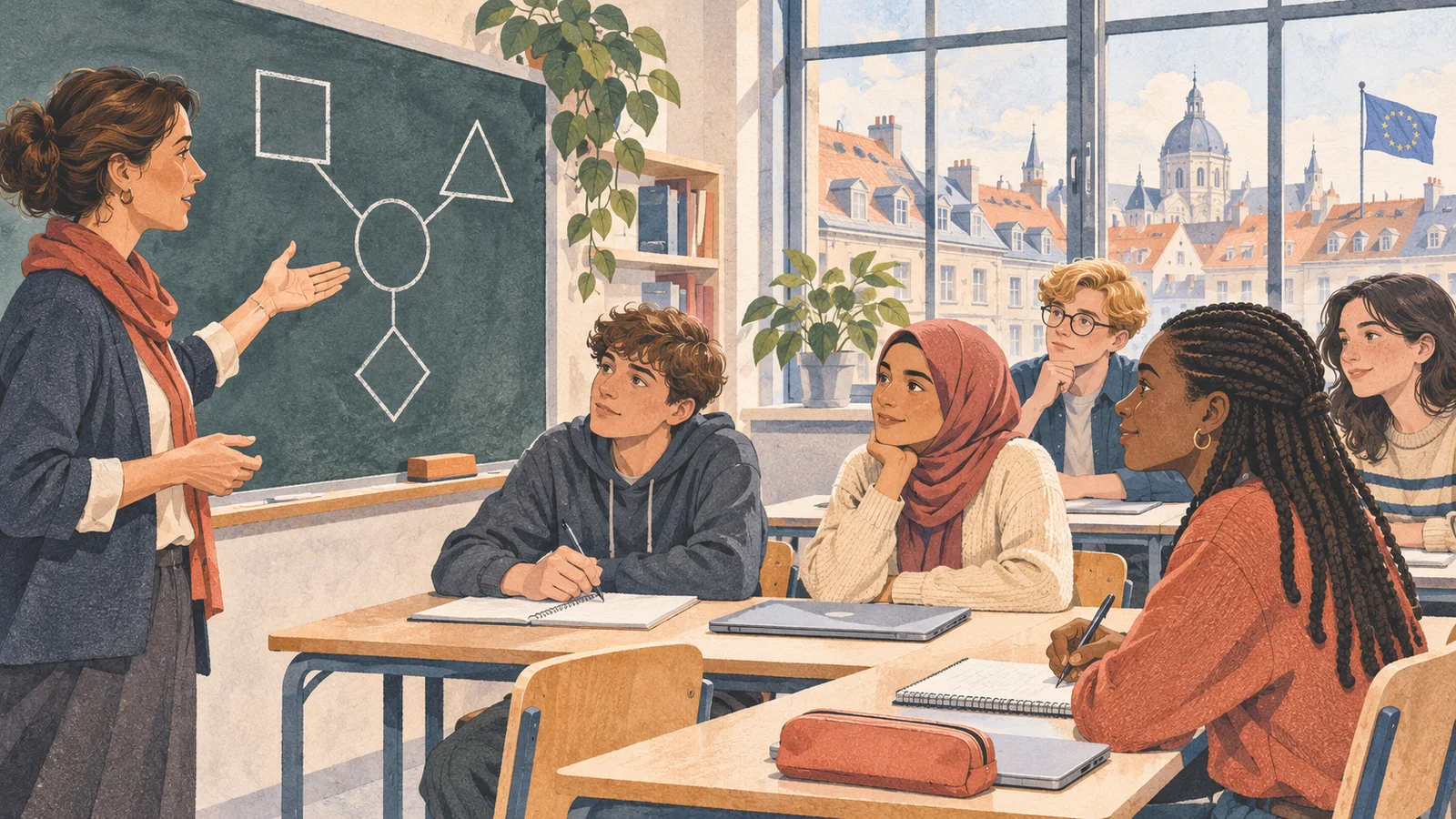
OpenAI published a report on November 10 saying 79% of 5,000 surveyed secondary students used AI for homework or assignments, while 47% said they had been shown how to use it for those tasks. The company attributed the findings to ThinkYoung research covering students aged 13 to 19 in 10 European countries.
The report’s 79%-versus-47% comparison is OpenAI’s account of the research, not an independently verified result. ThinkYoung’s public page describes a broader study spanning 5,000 students, 600 teachers and focus groups in 12 EMEA countries, but the underlying survey tables and methodology for the comparison were not available in the opened sources. The sources do not explain whether the 10-country group was a subset of the broader study.
OpenAI names Estonia, Slovakia, Greece and Italy among the governments and education systems it is working with. The company says the programs share three priorities: providing access to AI tools, designing AI-literacy training with educators and measuring how the tools affect teaching and learning. Its report does not give a deployment scale, timeline or measured result for Italy.
The country programs are at different stages. Estonia’s education ministry launched AI Leap with an initial target of 20,000 students in grades 10 and 11 and 3,000 teachers from September 2025, followed by a planned expansion of another 38,000 students and 2,000 teachers in September 2026.
In an AI Leap survey, 794 of 828 respondents said they had used AI in their teaching work during the school year. Among 723 teachers who answered a time-savings question, the self-estimated average was 1.8 hours a week and the median was two hours; 84 reported no savings. The questionnaire was sent to participating grade 10 and 11 teachers who had received ChatGPT Plus licenses, so the results do not establish a causal productivity gain.
A separate University of Tartu study involving about 9,000 students is still examining the program’s learning application, with results expected in late 2026. Until those results are available, the Estonia evidence describes use and teacher perceptions rather than changes in learning outcomes.
Greece’s May 2026 school framework makes AI use voluntary and teacher-supervised, according to the country’s education ministry. It bars fully automated evaluation and profiling, limits AI use in examinations and requires each school to appoint an AI-use coordinator.
Slovakia’s education ministry said a pilot with OpenAI supplied 20,000 ChatGPT licenses to students at faculties that train future teachers. The ministry presented the March 2026 program as part of teacher preparation and digital-skills development.
OpenAI characterizes the reported teacher adoption and time savings as encouraging early signals. Its report also says activation, usage and satisfaction measure implementation but do not by themselves demonstrate better learning, wellbeing, equity or net educator workload.
More news

Cognizant puts more than 25,000 professionals in OpenAI deployment group
OpenAI brings ChatGPT Enterprise to AWS Marketplace

OpenAI says more than 20,000 veterans and servicemembers claimed a free year of ChatGPT Plus