Oracle and Google to bring TPUs to OCI in 2027
Oracle and Google said Google's Tensor Processing Units will become available on Oracle Cloud Infrastructure starting in 2027, making OCI the first hyperscaler outside Google to offer the chips.
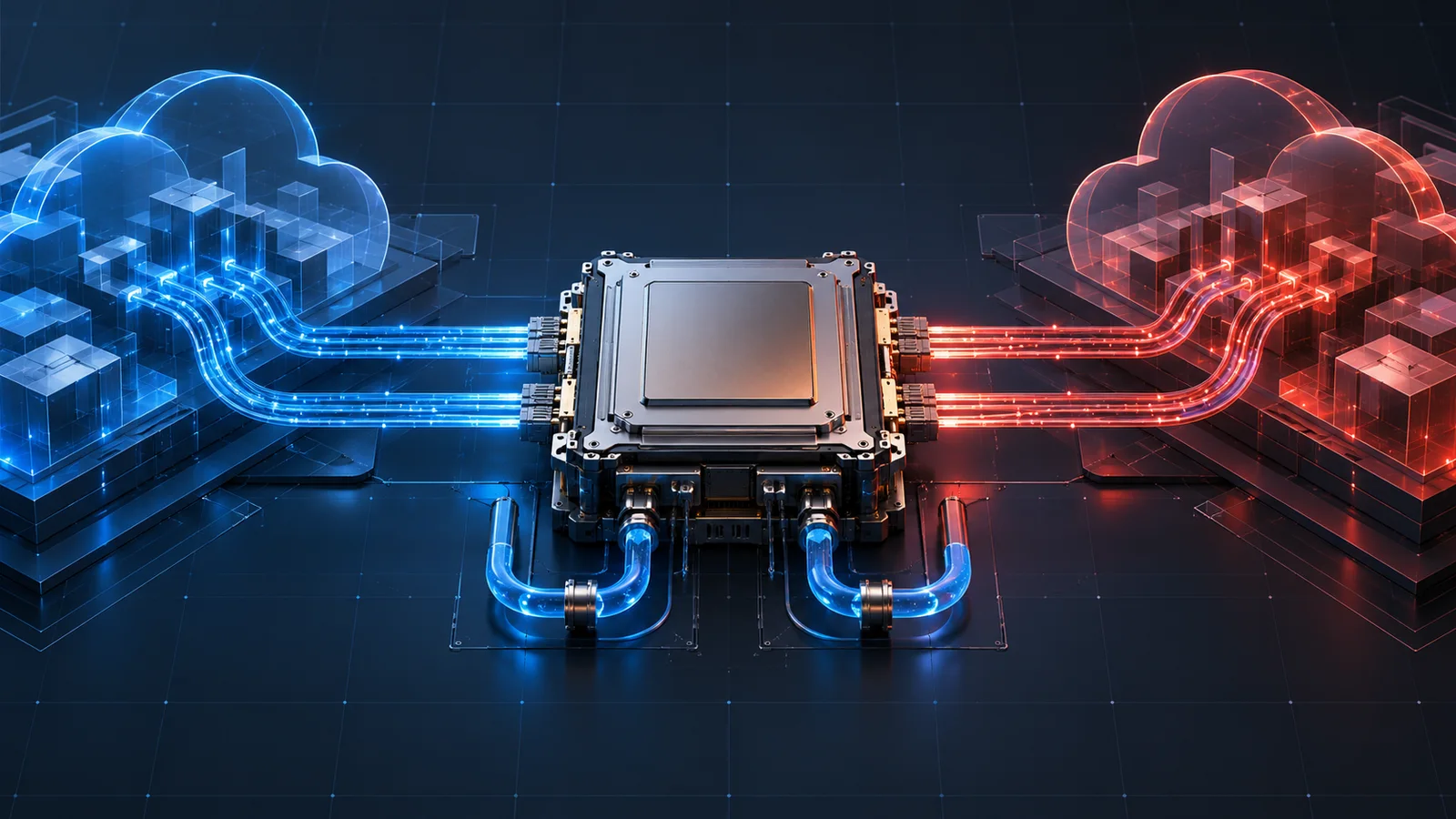
Oracle and Google said they will bring Google’s Tensor Processing Units (TPUs) — custom chips Google designs to train and run AI models, an alternative to Nvidia’s graphics processors — to Oracle Cloud Infrastructure starting in calendar year 2027, according to a joint announcement the companies published Oct. 27.
The companies said the deal makes OCI the first hyperscale cloud provider outside Google itself to offer Google TPUs, extending Google’s purpose-built accelerator architecture to a rival hyperscale cloud. Oracle plans to offer the TPUs alongside Nvidia-based GPUs, letting customers match each stage of an AI workload — from training to inference — to what Google called the most suitable accelerator.
The joint announcement appeared in a blog post co-authored by Karan Batta, Oracle’s senior vice president of Oracle Cloud Infrastructure, and Gurmeet Goindi, a Google Cloud senior director of product management.
Google said its latest-generation TPU delivers up to 12.6 petaflops of native FP4 compute per chip — more than 100 times the 92 teraflops the original TPU produced — with up to twice the performance per watt of the prior generation. The company also said it has sustained more than 97 percent goodput, or productive compute time, across thousands of chips during large training runs, using its on-die Inter-Chip Interconnect combined with optical circuit switching to route around hardware failures without restarting jobs.
Oracle said its Acceleron networking — including SmartNIC hardware with tenant isolation, a high-performance fabric and what the company calls Zero Trust Packet Routing — will connect the TPU capacity to the rest of OCI. The companies also said TPU systems are designed for direct liquid cooling at rack scale, which OCI’s next-generation data centers are built to support, and that Oracle’s capacity can shift between frontier-model training and production inference.
Oracle and Google said the arrangement will let customers run fine-tuning and inference next to Oracle databases that serve as enterprise systems of record, avoiding cross-cloud data transfers. Google said it has also open-sourced TorchTPU, its native PyTorch software stack for TPUs, on GitHub, along with support for tools including vLLM, SGLang, llm-d, TorchTitan, Ray, TorchRec, Hugging Face and LiteRT.
The TPU addition follows Oracle’s broader push to diversify OCI’s accelerator lineup, which also includes a planned Cerebras inference service targeted for the same year.
Oracle and Google did not disclose which TPU generation will be deployed on OCI, which specific OCI regions will host the capacity, or what pricing and capacity will be available when the service launches in 2027.
More news
NVIDIA partners set out European AI capacity plans

Bloomberg reports Microsoft targets more than 38 GW of data-center capacity by 2032

NVIDIA and Australian partners target up to 2GW of DSX AI factories by 2027