Senate passes permitting bill with data-center grid-cost rules
The Senate passed a broad permitting package that would make computational-load operators cover more of the grid costs caused by their facilities. The measure now returns to the House and is not law.
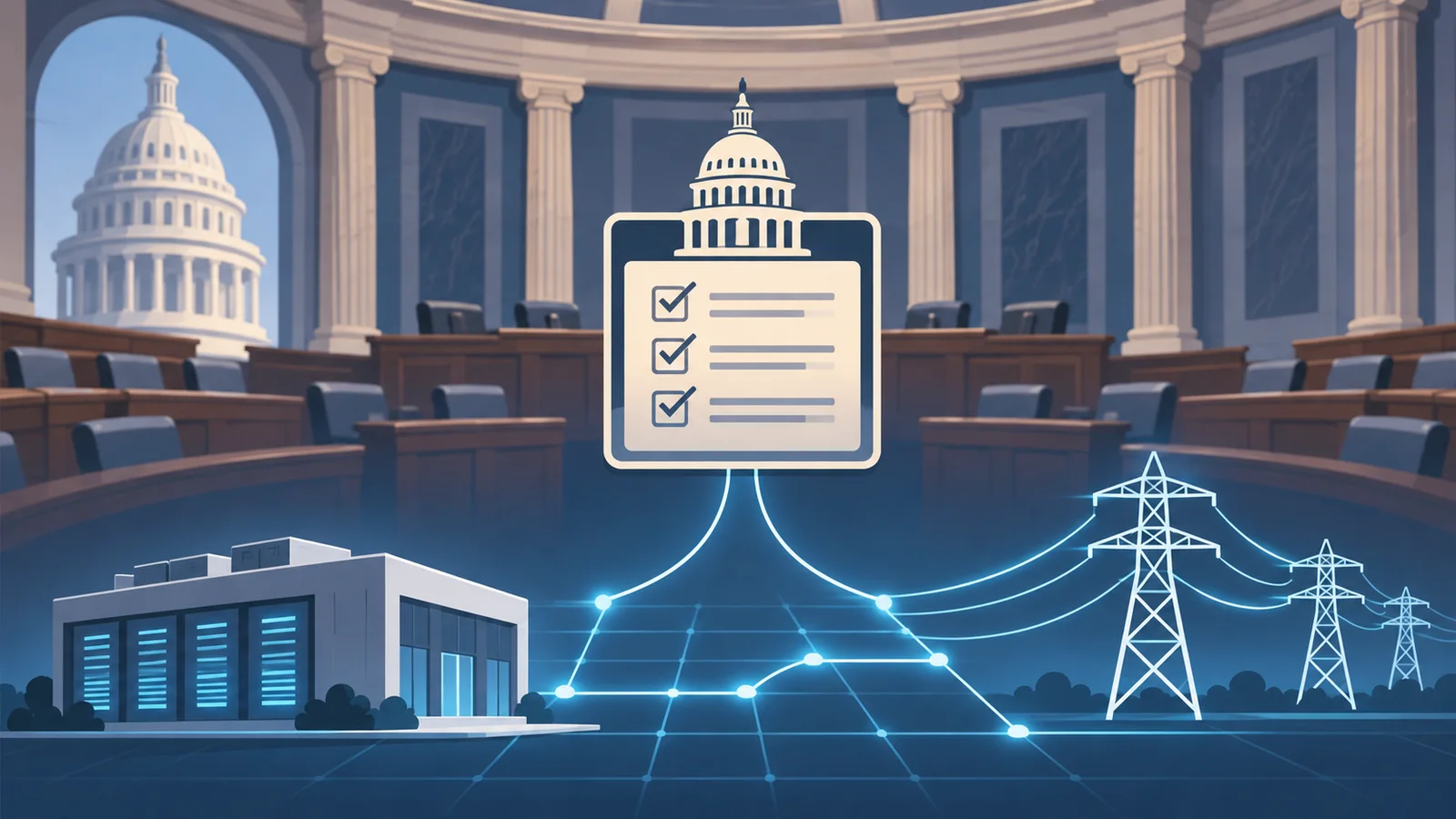
The U.S. Senate passed H.R. 2347 as amended by 62-33 on Nov. 19, advancing a broad permitting package with proposed federal and state rate rules for data centers and other large computing sites.
The measure, renamed the Bipartisan American Affordability and Jobs Act of 2026, would shift more of the infrastructure costs tied to those facilities to their owners and operators instead of other electricity customers. It now returns to the House, which must approve the Senate-amended bill before it could be sent to the president. The legislation is not law, and none of its proposed ratepayer provisions is in effect.
Under the adopted Senate substitute, a “computational load site” is a location primarily housing information-technology infrastructure for software services, artificial intelligence, cryptocurrency mining or other data-center computing and connected to the bulk-power system. Ancillary computing equipment at a facility whose main purpose is another commercial or industrial activity is excluded.
The substitute declares a federal policy that computational-load owners and operators should bear the full cost of the electric service and infrastructure they require. Within 90 days of enactment, the Federal Energy Regulatory Commission would have to revise its 1994 transmission-pricing policy so eligible computational-load customers are charged the embedded cost of transmission plus a reasonable assessment of incremental transmission costs. FERC would also have to begin a rulemaking, with a final rule due no later than one year after the proposal.
For computational-load sites that interconnect on or after enactment, utilities could not allocate the site’s retail incremental costs to other customers. The bill defines those costs as expenses that would have been avoided if the facility were not served, including generation, storage, transmission and distribution costs. Rates or service agreements would have to continue recovering the full incremental cost even if an operator ends its power purchase early. Before building or upgrading facilities needed to serve a site, a utility would also have to obtain reasonable financial assurances or contributions covering the expected cost.
States would retain room to create a separate customer class for computational loads. They could charge more than embedded and incremental costs, use excess revenue to reduce other customers’ rates, allocate service through open seasons or competitive solicitations, require a site to arrange new generation, or limit how much power it may take and under what conditions.
The package would also direct the Energy Information Administration to revise Form 861 to collect computational-load information separately. Within 180 days of enactment, the Energy Department would have to establish a Data Center Community Assistance Program offering state, local and Tribal governments technical help on electricity, water, infrastructure and economic effects.
Those provisions sit inside a much larger measure that would change federal permitting and environmental-review rules for energy and infrastructure projects, including provisions affecting the National Environmental Policy Act, the Clean Water Act and the Endangered Species Act. Senate floor records show that a managers’ amendment was blocked by an objection before the final vote.
More news
House panel discloses US approvals for more than 879,000 AI chips to China

California subpoenas Nvidia over China-risk disclosures
Four senators introduce AUDIT AI disclosure bill