Skild AI, NVIDIA introduce open-source Steel solver for Newton
Steel brings an open-source, GPU-accelerated rigid-body solver to Newton, designed to cut wasted work across mixed robot-simulation batches.
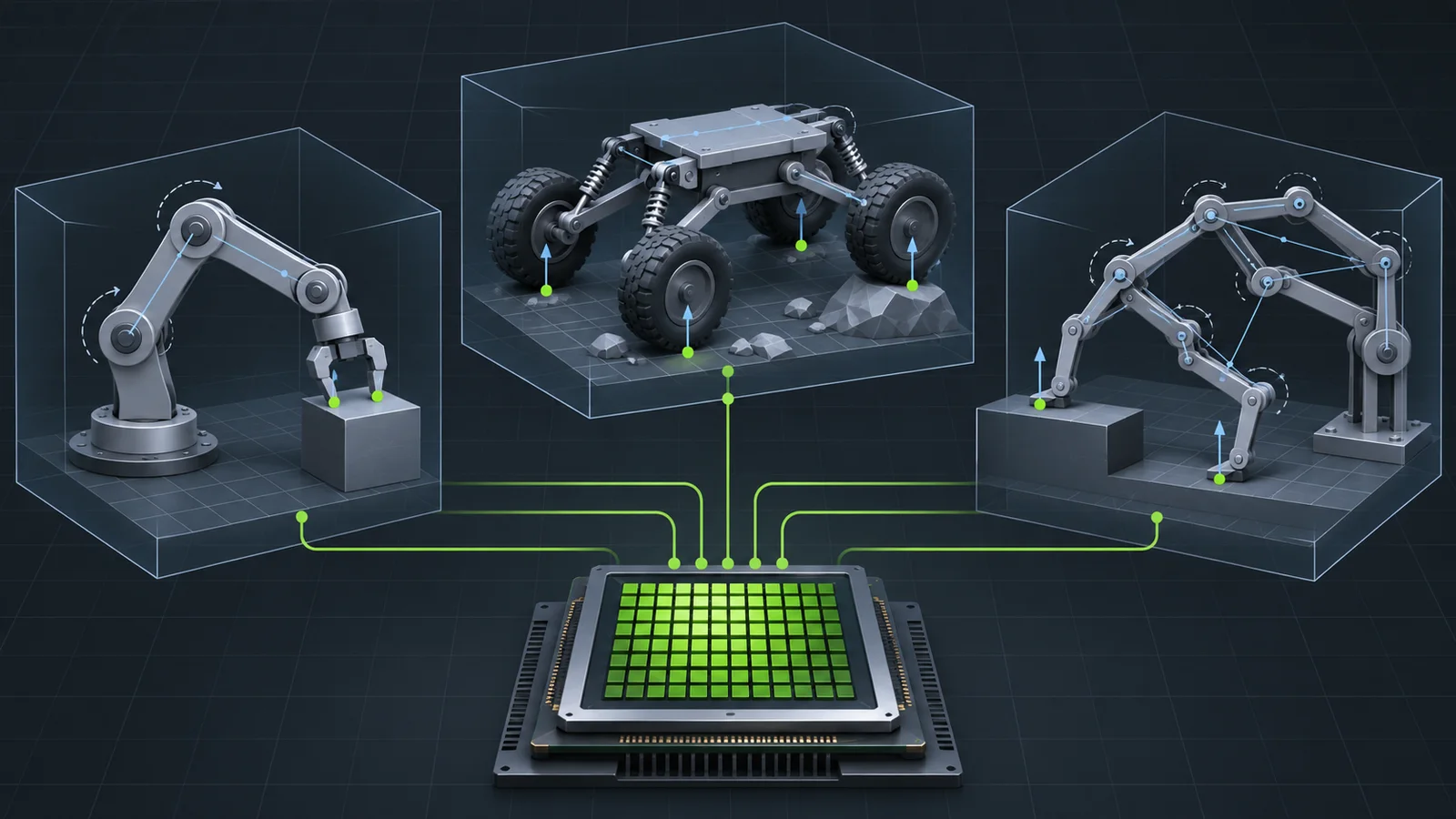
Skild AI and NVIDIA introduced Steel, an open-source, GPU-accelerated rigid-body solver integrated into the Newton physics engine. Available as newton.solvers.SolverSteel, it is designed for simulation batches that mix robots, tasks and contact workloads.
Newton v1.8.0, released November 11, lists SolverSteel as an experimental solver for articulated rigid bodies developed with Skild AI. The Steel repository dates the open-source launch to November 9 and says the code is distributed through Newton under the Apache License 2.0.
The solver joins NVIDIA’s broader robot-training and simulation stack, although Steel has a narrower role: rigid-body simulation inside Newton.
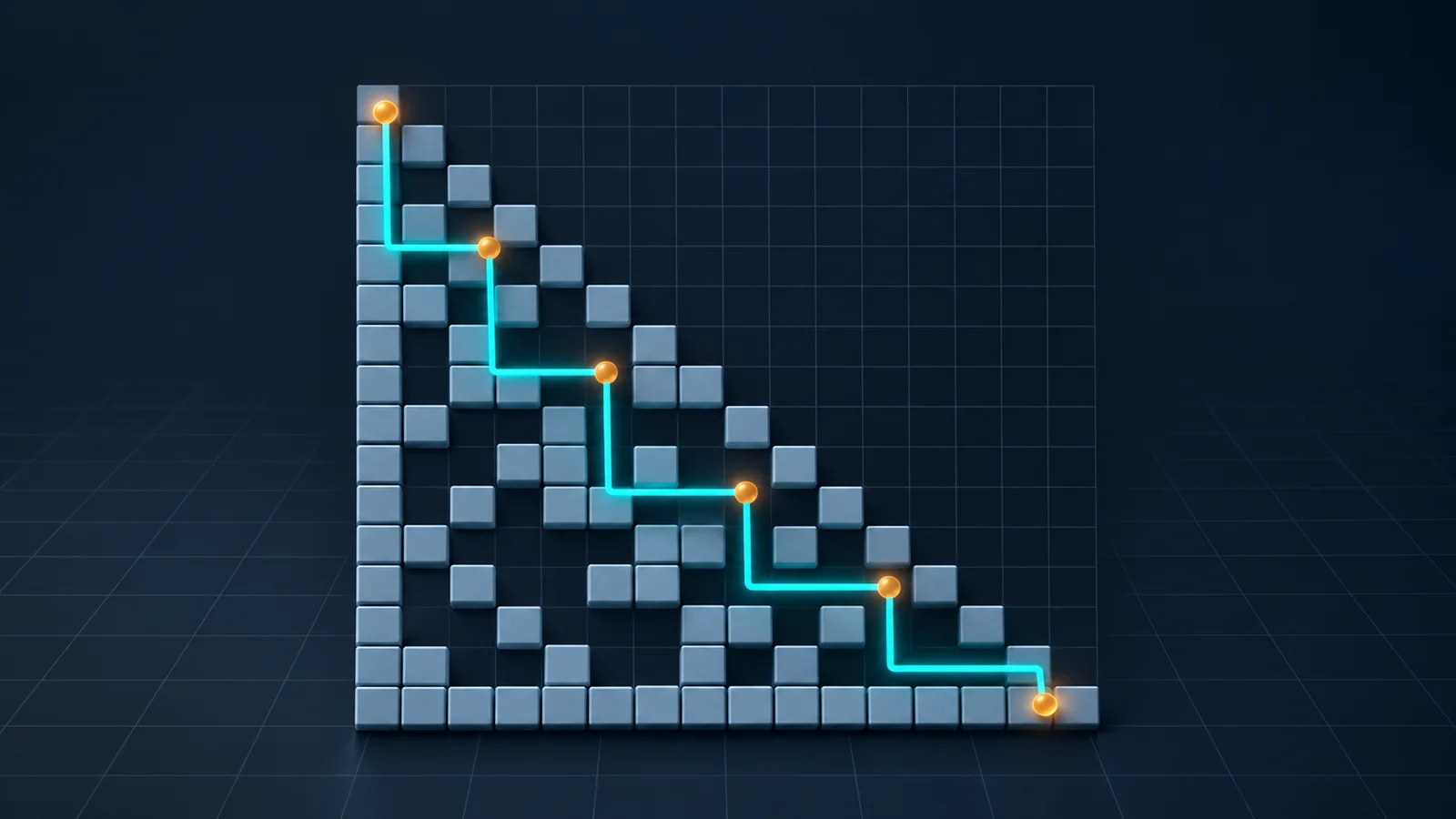
Steel targets the overhead created by heterogeneous GPU simulation batches. Environments can contain different numbers of joints, bodies and contacts, yet uniform allocation can force every environment to pay the computational cost of the largest case. Skild says Steel instead sizes work by environment, groups articulations with similar joint counts for GPU execution and routes contact-solving work according to current demand. According to the company, that approach reduces padding and unnecessary computation when a batch spans many robot and task types.
The benchmark results have not been independently reproduced. In Skild’s simulation-only suite of 20 tasks, the company said Steel ran faster than PhysX on 19 and delivered 3.8 times PhysX’s geometric-mean throughput. Skild also measured Steel at about 1.3 times MuJoCo Warp’s throughput, with each engine tested at its best measured batch size.
In mixed batches of 5, 10, 15 and 20 task types, Skild reported 9.2 to 13 times PhysX’s peak measured throughput. At a matched batch of 61,440 environments across 20 tasks, the company measured 12 times the throughput with about 11 GiB of GPU memory, versus 29 GiB for PhysX—a reduction of roughly 62%.
The figures cover simulation, not end-to-end policy training, and each run used one NVIDIA RTX PRO 6000 Blackwell GPU. The single-task tests excluded observations, rewards and resets. For that suite, Skild used MuJoCo Warp 3.17 and PhysX from Isaac Sim 6.1.0. The company also disclosed that, in the mixed-task comparison, PhysX from Isaac Sim 6.0.0 ran the mixtures up to about 2.7 times faster than the 6.1.0 version used for the headline comparison.
Newton’s SolverSteel documentation describes a reduced-coordinate articulated-dynamics solver using a matrix-free projected Gauss-Seidel constraint method. Newton’s release notes say it supports multiple rigid bodies and articulations, deterministic runs, island-based sleeping and patch-based Coulomb friction.
More news

GlobalFoundries plans Atlas humanoid tests in chip fabs for early 2027

California DMV bars Waymo driverless vehicles from state freeways
NereidVLA brings language-guided control to underwater robot navigation