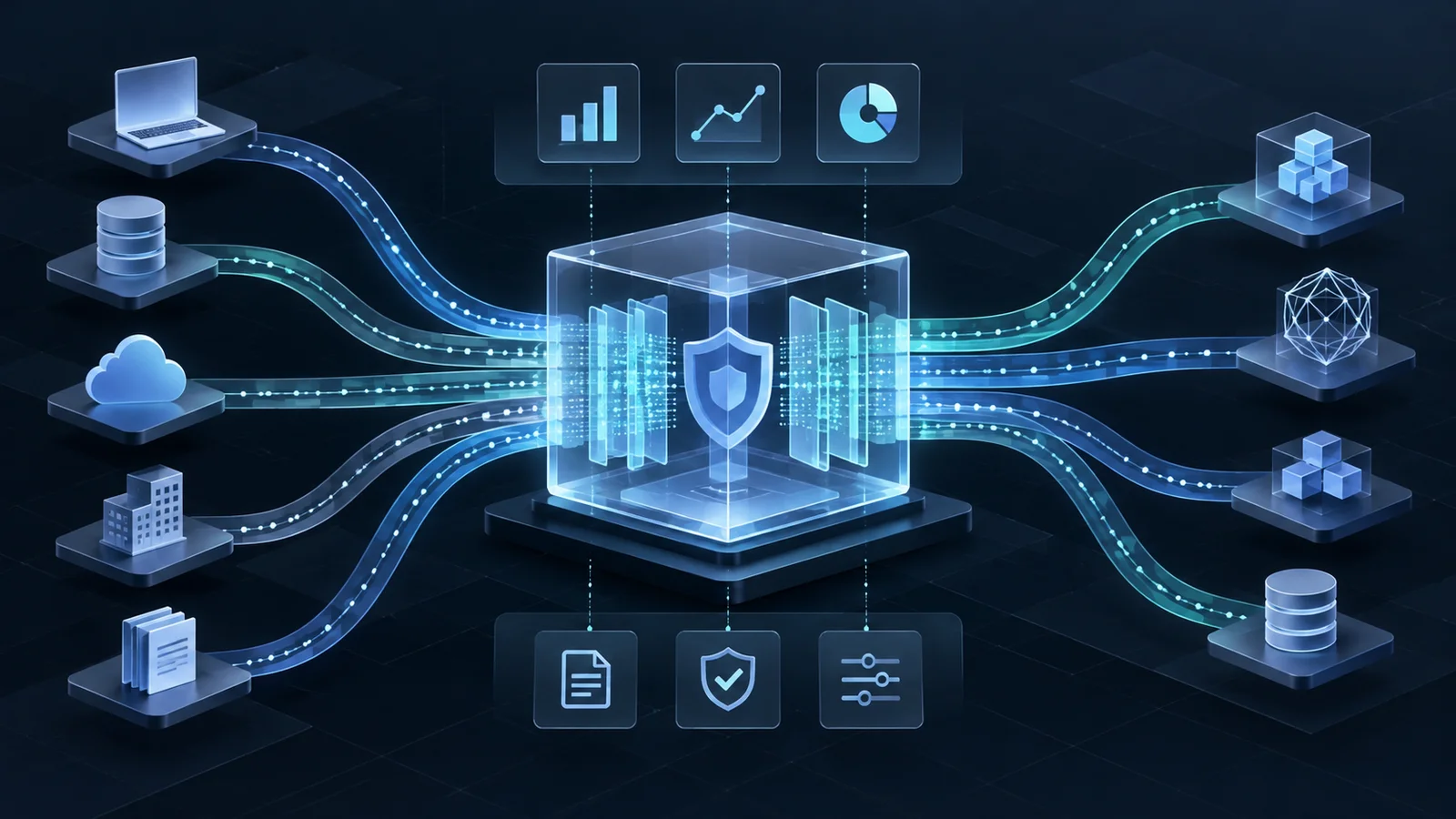
Snowflake puts 18 Horizon Context connectors in public preview
Snowflake put 18 Horizon Context connectors, narrower steward permissions and column-description propagation into public preview within Horizon Catalog.

Snowflake has put Horizon Context metadata connectors for 18 external sources, targeted permissions for data stewards and automatic column-description propagation into public preview within Horizon Catalog. The October 20 announcement follows an October 12 feature update that documented the preview.
The release gives customers catalog and governance tools to collect metadata from supported systems and inspect cross-platform lineage. Selected stewards can edit descriptions without broader control over data objects, while eligible downstream columns can reuse those descriptions. Snowflake presents these capabilities as a way to give AI agents more consistent business context, but its materials provide no independent benchmark or customer result showing that they improve AI accuracy.
The connector list spans nine business-intelligence systems—Amazon QuickSight, Hex, Looker, Metabase, Microsoft Power BI, Omni, Sigma, Tableau and ThoughtSpot—and eight databases: Amazon Redshift, BigQuery, Databricks, IBM Db2, MySQL, Oracle, PostgreSQL and SQL Server. It also includes the dbt pipeline tool. Depending on the connector and configuration, Horizon Context can collect schemas, query logs, dashboard definitions and popularity data. Snowflake says the connectors read metadata without requiring customers to replicate the underlying datasets into Snowflake.
That metadata is indexed alongside Snowflake objects. Snowflake’s Horizon Context documentation says the service combines Snowflake query history, external query logs, BI systems and OpenLineage feeds into a column-level graph. Users can browse and search external assets and trace a column through supported databases, transformations and dashboards.
Metadata access remains separate from permission to query the associated data. Under Snowflake’s access-control model, administrators can grant roles visibility into connector metadata and lineage without granting access to the external system or its underlying data. A new APPLY COMMENT privilege lets stewards change object and column descriptions without receiving the broader MODIFY or OWNERSHIP privileges.
Description propagation uses lineage to carry a description to supported downstream columns when values pass through unchanged, including when a column is renamed. Propagation stops when values are transformed, combined or aggregated. It does not overwrite a description written directly on a downstream column, and the catalog identifies descriptions as propagated or user-written.
The October 12 release note also says customers can edit descriptions and apply tags and contacts to Power BI and Tableau dashboards from Horizon Catalog. It separately labels lineage through temporary tables as generally available rather than part of the preview, preserving source-to-destination lineage after intermediate temporary objects are dropped. Horizon Context is available in AWS and Azure commercial regions, excluding government regions and China, and external systems are not connected until a customer creates a connection.
More news

Snowflake adds Gemini 4 Argon to Cortex AI in public preview
Snowflake makes Semantic Studio generally available
Snowflake puts Decision model into Cortex AI Functions private preview