US voters back local restrictions on data-center expansion
November 3 votes favored a construction prohibition, a temporary moratorium and a public-approval rule, while several Ohio returns remain unofficial.
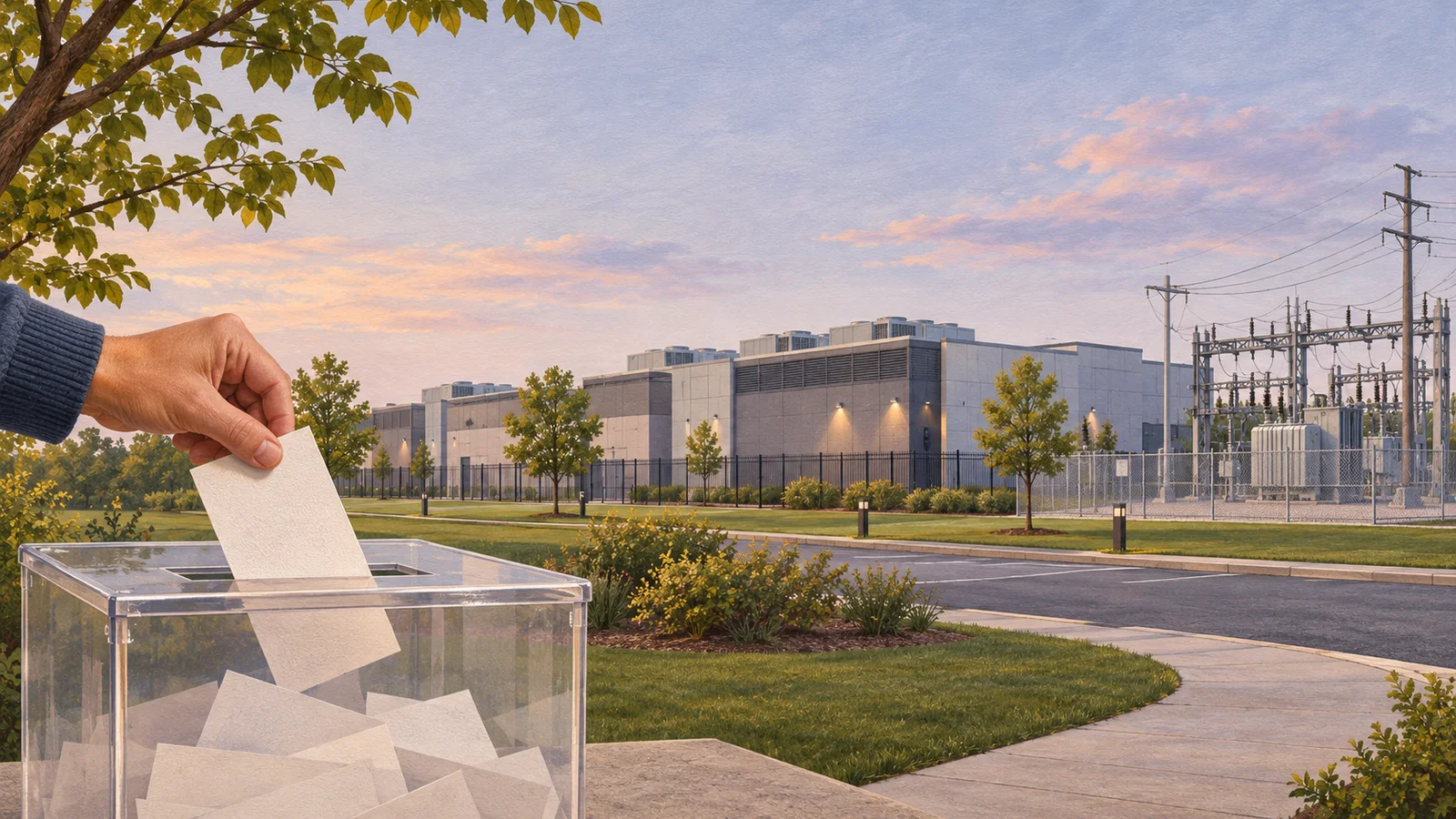
Voters in Ohio and Maine backed measures on November 3 that would ban, pause or add approval requirements to data-center development. The results create jurisdiction-specific constraints for AI infrastructure projects, although the cited local returns remain unofficial and the measures do not have a uniform legal effect.
Some measures impose binding restrictions if certified, while others create temporary or procedural constraints. Together, the results turn local opposition already shaping data-center siting risk into direct ballot outcomes, but they do not establish a nationwide moratorium.
In Trenton, Ohio, voters supported Issue 17, a charter amendment titled “Prohibition of Construction of a Data Center”. The unofficial election-night count showed all eight precincts reporting and a vote of 3,541 to 903, or 79.68% to 20.32%, in favor.
Licking County’s unofficial canvass showed data-center charter amendments winning in Pataskala by 5,418 to 1,941 and in Granville by 2,015 to 429. The Ohio results remain unofficial: state canvassing instructions direct county boards to begin official canvasses between November 8 and November 18 and certify no later than November 24. Cured absentee ballots and eligible provisional ballots can be counted during the official canvass.
Wiscasset, Maine, approved a six-month moratorium on accepting, processing, reviewing or approving applications for new or expanded data centers filed on or after November 3. The town’s unofficial results showed 1,363 votes in favor and 712 against. The town’s voter guide says the measure permits extensions of up to 180 days under specified conditions, making it a temporary processing pause rather than a permanent ban.
Grove City, Ohio, approved Issue 28 by an unofficial 11,317 to 9,411. The charter amendment requires voter approval for developments that meet at least one of three thresholds: 50 contiguous acres, more than 20 megawatts of peak demand or more than 500,000 gallons of water per day. The measure adds another decision point instead of categorically prohibiting data centers.
Candidate victories are different from ballot-enacted restrictions. Winning office does not itself impose a data-center moratorium; any statewide pause would require later executive, administrative or legislative action.
More news

Murata plans ¥1 trillion MLCC expansion through fiscal 2030

Oracle limits additional funding through fiscal 2030 to $20 billion

Tata Communications plans up to $450 million AI fiber network in India