vLLM extends pipeline copy-engine transfers across NVLink nodes
To use copy engines across machines, workers need access to the same NVIDIA Internode Memory Exchange (IMEX) channel. vLLM’s merge also covers stages split across multiple GPUs.
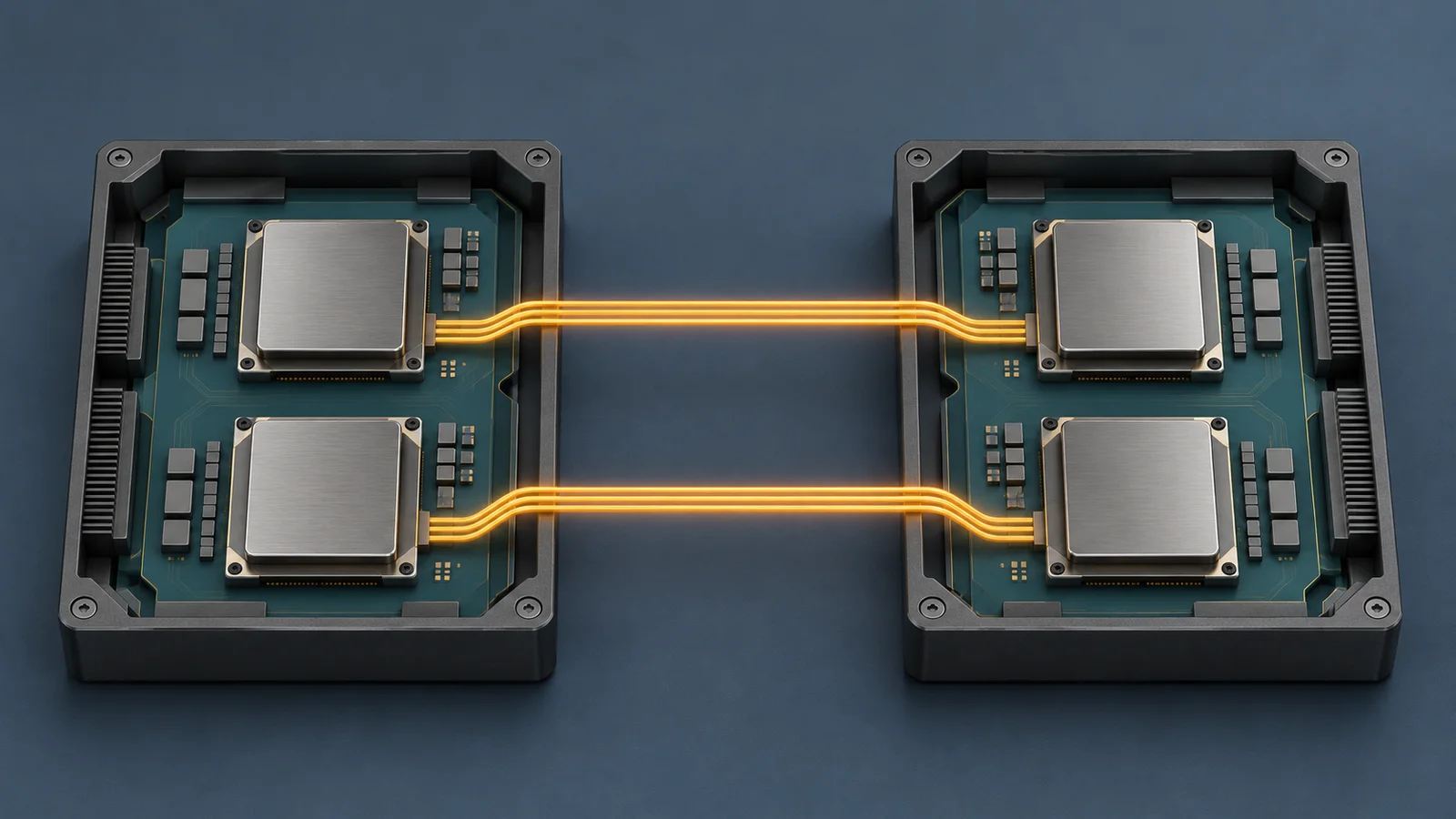
vLLM merged support for GPU copy-engine transfers across nodes into its main branch, letting successive stages of a model pass intermediate results between machines in the same NVIDIA NVLink domain. vLLM uploaded its latest stable version, v0.34.0, to PyPI before the merge.
Pipeline parallelism divides a model into stages that run in sequence. Dedicated copy engines move each stage’s output, leaving the GPU’s compute units free to run model operations. The merge also supports tensor parallelism, which splits a stage’s computation across GPUs. Each GPU sends the stage’s output to its counterpart in the next stage.
Across nodes, vLLM shares CUDA fabric handles so each sender can access the next stage’s receive buffer. To share that memory, workers must have access to the same NVIDIA Internode Memory Exchange (IMEX) channel. If copy-engine setup fails, vLLM’s automatic mode switches the group to the NVIDIA Collective Communications Library (NCCL), the previous automatic choice for these layouts.
Contributor Nick Hill compared the copy-engine path with forced NCCL using MiniMax-M3.1-Flash and the Rust frontend on two GB300 NVL72 trays, with two pipeline stages total and two-way tensor parallelism per tray. The two servers ran side by side on separate GPU halves, which Hill swapped between rounds.
In each 90-second pass, requests arrived on a Poisson schedule without waiting for earlier responses. The tests used a cached 100,000-token prefix, limits of 32,768 batched tokens and 64 sequences, and a block size of 128. The pull request includes no independent benchmark of that setup.
Near saturation, Hill reported that median time to first token was 27–29% lower than with NCCL at 44 requests per second with 1,500–2,500 new input tokens. He reported a 6–17% reduction at 10 requests per second with 6,000–10,000 new input tokens, and little change under light load or in the time between generated tokens.
Hill reported a roughly five-second stall in each of two first-round passes with 6,000–10,000 new input tokens. In those passes, 99th-percentile time to first token rose 355% at five requests per second and 155% at 10 requests per second compared with NCCL. The stalls did not recur in later rounds, and Hill said the cause was unknown.
More news
Hugging Face demonstrates LTX-2.5 video generation on AWS Trainium3
Intel releases Compute Runtime 26.44.40734.8 with OpenCL 3.0
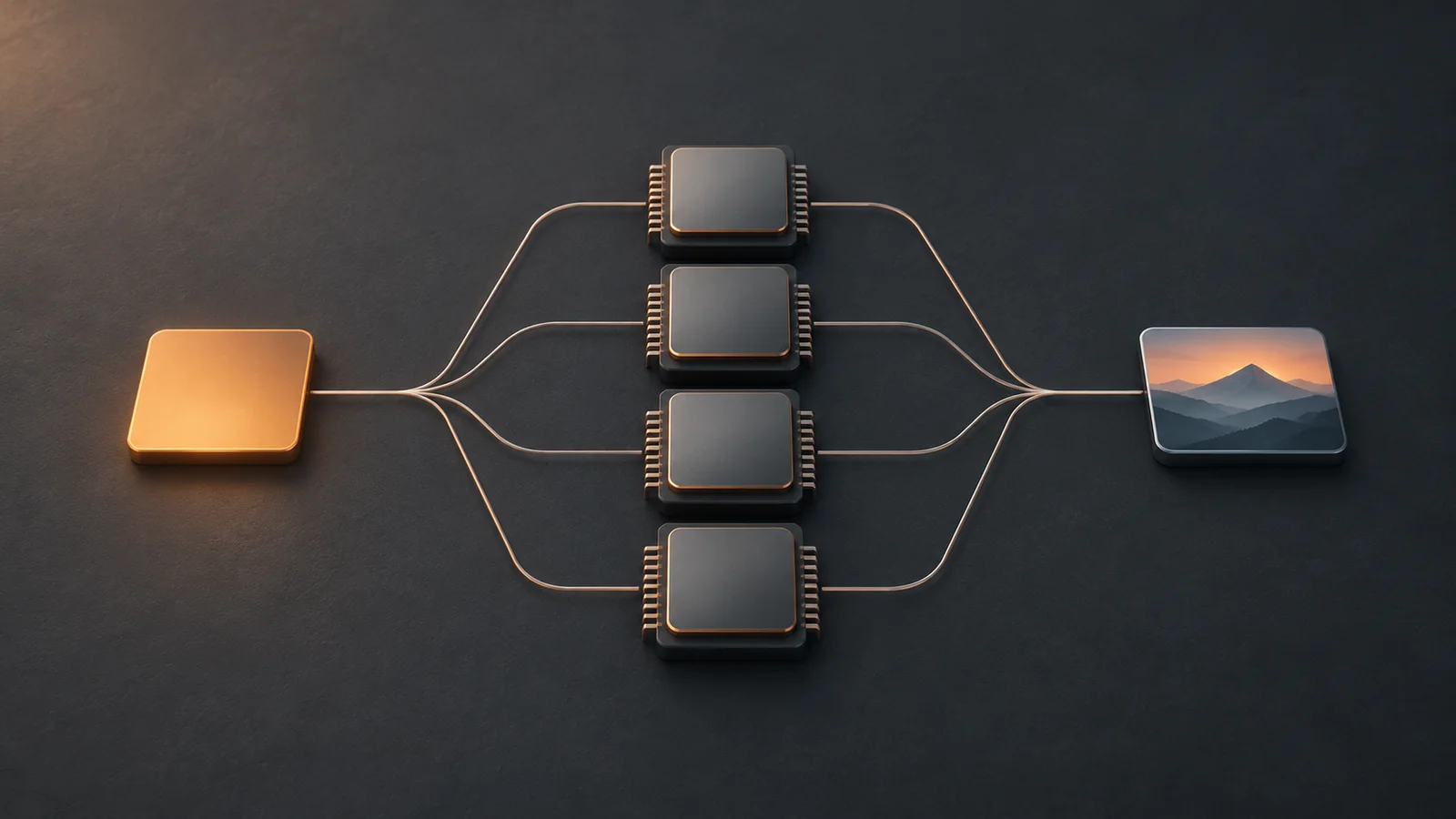
AMD introduces a multi-GPU xDiT workflow for ComfyUI